Fire Pump Commissioning Checklist for Commercial Systems
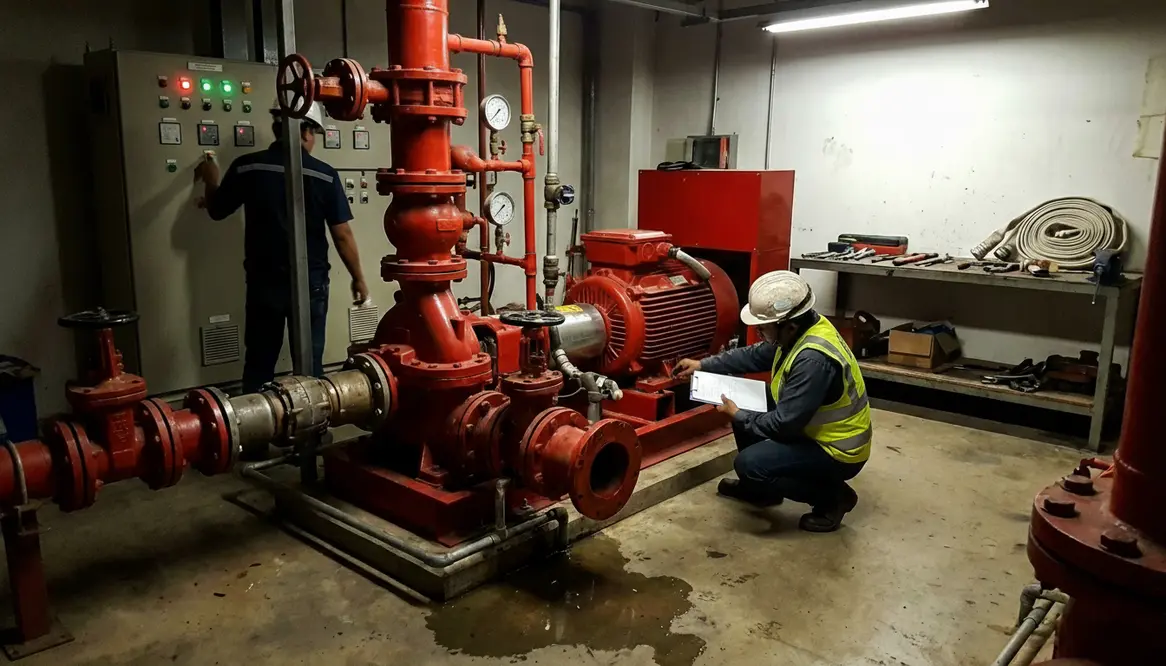
I have stood in plenty of mechanical rooms that smell like fresh paint, hot steel, and just a little bit of contractor anxiety. That moment right before a system goes live always carries a certain gravity. In commercial and industrial buildings, a fire pump is not just another piece of equipment. It is the heartbeat of the fire protection system. And before that heartbeat begins, the commissioning process must be handled with care.
That is where a proper fire pump commissioning checklist comes into play. In the first phase of any project I lead, I rely on a structured commissioning guide to verify installation quality, confirm performance, and ensure every component responds exactly as it should. Over the next few sections, I will walk through the commissioning process step by step. By the end, you will understand how professionals validate a system before it protects a large commercial property or industrial facility.
What Happens During Fire Pump Commissioning?
Fire pump commissioning is the process of verifying that the installed fire pump system performs exactly as designed. It sounds simple. In practice, it is more like directing a small orchestra of valves, sensors, controllers, and power systems that must all play in perfect rhythm.
First, I confirm that the installation matches the design drawings. Even small deviations can cause large problems later. For example, incorrect suction piping can starve the pump of water. That is a bit like asking a marathon runner to compete while breathing through a coffee straw.
Next, I inspect mechanical components. I check alignment, coupling integrity, pump rotation, lubrication levels, and controller configuration. Every step matters because commercial facilities often depend on high capacity fire pumps that must deliver water instantly during an emergency.
Then comes the functional testing phase. This is where the system begins to show its true character. We simulate fire demand, trigger automatic starts, and confirm that pressure and flow meet the design requirements.
Finally, we document everything. Fire protection systems in high rise buildings, data centers, warehouses, hospitals, and manufacturing facilities must meet strict codes. Documentation proves the system passed testing and operates within compliance.
Commissioning is not a ceremonial ribbon cutting. It is the difference between confidence and uncertainty when alarms start ringing.
How I Prepare a Fire Pump Commissioning Checklist for Large Buildings
Translating design intent into a living checklist
Preparation is where commissioning either succeeds or quietly unravels. Before testing begins, I develop a structured fire pump commissioning checklist tailored to the specific facility. Large commercial properties rarely use identical systems, so the checklist must match the pump type, driver configuration, and control strategy.
Most commissioning preparations begin with document review. I study the pump curves, electrical diagrams, controller programming, and system layout. Then I verify that the installation team followed those plans.
Coordinating the people and the plan
Preparation also includes coordination with multiple stakeholders. Fire protection engineers, electrical contractors, building owners, and local authorities often attend the commissioning event. Think of it like the Avengers assembling, except instead of saving the universe we are validating pressure gauges.
Additionally, I verify that test equipment is ready. Flow meters, pressure gauges, tachometers, and recording devices must all be calibrated. Without accurate data, even the most dramatic water flow test is just an expensive fountain show.
Proper preparation reduces surprises. And in fire protection, surprises are rarely the fun kind.
Mechanical and Electrical Verification Before the Pump Starts
Laying the groundwork for a clean startup
Before any pump spins, I conduct a detailed verification of mechanical and electrical components. This phase might seem slow, yet it prevents catastrophic issues later.
First, I inspect the suction and discharge piping. Proper support, alignment, and valve placement ensure water can move freely. If air pockets exist or strainers are clogged, the pump will struggle to reach rated performance.
Next, I examine the pump itself. Couplings must be aligned, lubrication must be correct, and rotation must match the manufacturer specification. Starting a pump with reversed rotation is like trying to row a boat backward. Technically possible, but not helpful.
Electrical systems require the same attention. I verify incoming power, controller wiring, alarm circuits, and emergency power transfer if the building uses generators. Commercial facilities depend on reliable automatic starts. When a sprinkler system calls for water, hesitation is not an option.
Only after these checks pass do I authorize the initial startup.
Field Testing Using a Fire Pump Commissioning Checklist
Turning design numbers into real-world data
Testing is the moment when theory meets physics. During this stage, I use the fire pump commissioning checklist to guide each test step and record the results.
The goal is simple. Confirm that the pump delivers the required pressure and flow across multiple demand conditions.
Key Flow Test Steps
- Verify pump start from pressure drop
- Confirm automatic controller operation
- Measure churn pressure
- Conduct 100 percent flow test
- Conduct 150 percent flow test
- Observe vibration and temperature
Performance Data Collected
- Suction pressure
- Discharge pressure
- Flow rate through test header
- Motor amperage or engine RPM
- Controller response times
- Alarm and supervisory signals
During these tests, the room becomes lively. Water roars through the discharge lines. Gauges jump. Clipboards fill with numbers.
However, I always watch the pump itself. Vibrations, unusual noise, or pressure instability often signal deeper issues. Experienced technicians learn to read these signals the way a mechanic listens to an engine.
When the pump meets its rated curve, everyone relaxes a little. It is the fire protection equivalent of a rocket launch clearing the tower.
Common Commissioning Problems in Commercial Facilities
Where fire pump commissioning checklists earn their keep
Even well built systems can stumble during commissioning. Over the years, I have seen a few recurring problems inside large commercial buildings.
Air trapped in suction piping appears more often than you might expect. This condition reduces pump performance and can cause erratic pressure readings.
Controller configuration errors are another frequent issue. Sometimes settings do not match the design intent, especially in facilities with complex alarm integration.
Power supply inconsistencies also surface during testing. Industrial properties with large electrical loads sometimes experience voltage drops that affect pump motors.
Then there are installation details. Misaligned couplings, closed valves, or improperly wired sensors occasionally appear. I like to think of commissioning as the final exam for the entire construction process.
Fortunately, identifying these problems early allows corrections before the building becomes fully occupied. That peace of mind is worth every minute spent testing.
Documentation and Final Approval for High Value Properties
Capturing the story your pump tells on test day
Once testing concludes, the commissioning process moves into documentation and approval. In large commercial and industrial facilities, the paperwork carries nearly as much weight as the physical testing.
I compile performance data, equipment settings, and verification notes into a formal commissioning report. This document proves the system meets design specifications and applicable codes.
Authorities having jurisdiction often review the report along with witnessing tests. Their approval confirms that the building’s fire pump system is ready to protect the property.
Additionally, the final documentation becomes a valuable resource for facility managers. Years later, when maintenance teams review system performance, these records provide a baseline for comparison.
Think of it as the birth certificate of the fire pump system. Except instead of recording weight and length, we record pressure curves and flow rates.
FAQ About Fire Pump Commissioning
Below are some of the most common questions that come up when people start building their own fire pump commissioning checklist for commercial and industrial properties.
Ensuring Fire Pump Readiness for Critical Facilities
From commissioning day to long-term performance
Commissioning a fire pump system is not just another step on a construction schedule. It is the moment when design, installation, and engineering prove their worth. In large commercial and industrial buildings, a properly commissioned system protects lives, infrastructure, and business continuity.
If you want confidence in your fire protection system, start with a structured commissioning approach and experienced professionals who understand every detail of the process. Pair your fire pump commissioning checklist with a long term inspection and maintenance plan so the system is ready years after the ribbon cutting.
For owners who want outside support, working with a specialized fire pump service provider, such as the team at Kord Fire Protection, can help keep commissioning records, pump testing, and annual inspections synchronized rather than treated as one time events.
Because when the alarm sounds, preparation should already be finished.