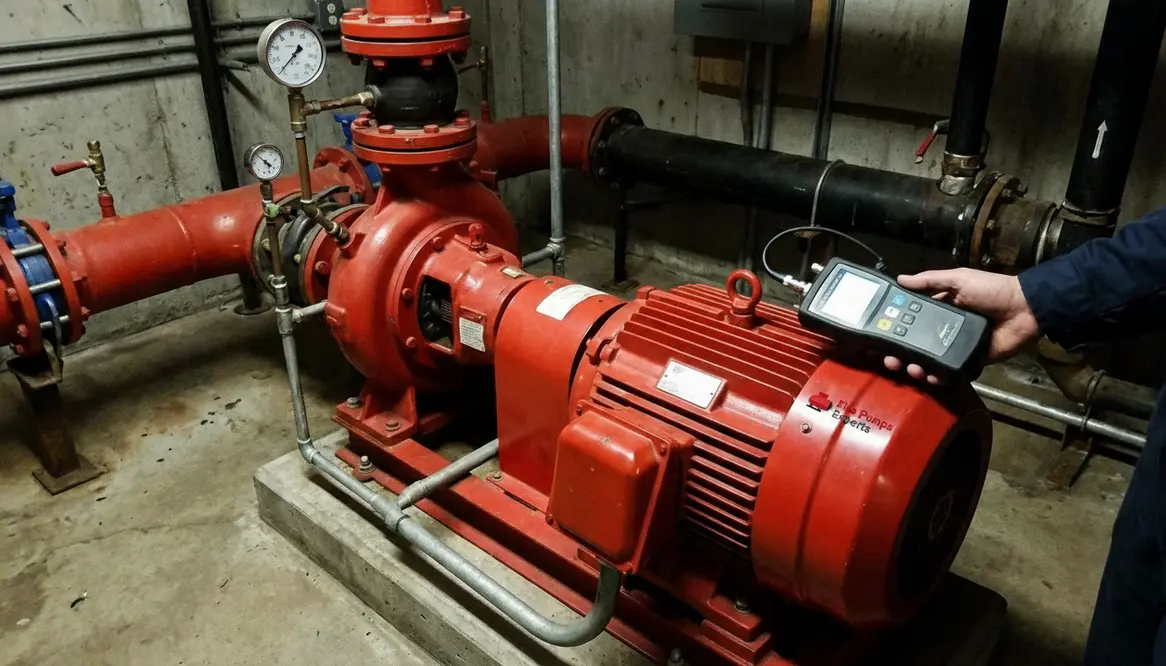
Fire Pump Vibration Causes and Solutions Explained
I have stood in many pump rooms. Some are quiet as a library at midnight. Others sound like a garage band practicing for its first show. When a fire pump begins to shake, rattle, or hum like an old refrigerator, facility managers start asking the same thing. What exactly is going on inside that machine? More importantly, how do we fix it before something expensive breaks?
That is where understanding fire pump vibration causes and solutions becomes essential. In large commercial and industrial buildings, a fire pump is not just equipment. It is the heart of the fire protection system. When noise or vibration appears, it is usually the first warning sign that something deeper needs attention. Throughout this guide, I will walk through the most common issues, how I diagnose them, and what practical solutions keep systems running smoothly in major facilities.
Fire Pump Vibration Causes and Solutions I Look For First
When I walk into a mechanical room and hear a pump vibrating, I do not panic. Pumps are machines. Machines speak through sound and movement. The trick is learning their language.
First, I check alignment. Even a slight misalignment between the motor and pump shaft can create vibration that spreads through the entire frame. Over time, this small shake becomes a big problem. Bearings wear down. Couplings stress out. Eventually the pump begins to complain louder than a smoke alarm with a dying battery.
Next comes foundation stability. Commercial buildings often install pumps on concrete pads, yet if the mounting bolts loosen or the base settles unevenly, vibration travels through the structure. Consequently, the pump may sound louder than it should even though the internal components are fine.
Early Mechanical Red Flags
Another issue involves worn bearings. Bearings allow rotating parts to spin smoothly. However, once they degrade, the pump develops a rough vibration pattern. I sometimes describe it as the difference between a smooth jazz record and a scratched vinyl. Same music. Completely different experience.
Finally, I always inspect the impeller. Debris, corrosion, or imbalance can cause uneven rotation. This problem often grows slowly, which is why many facilities miss it until the vibration becomes obvious.
In large properties such as hospitals, data centers, manufacturing plants, and high rise towers, these early checks prevent downtime and protect critical fire protection systems by tackling fire pump vibration causes and solutions before they turn into major failures.
Why Does My Fire Pump Sound Like a Drum Solo?
Let us be honest. A properly operating fire pump should not sound like the percussion section of a rock concert. When the noise level climbs, I immediately start tracing the mechanical path of the sound.
First, I listen closely to the rhythm. Consistent vibration often points to rotational imbalance. Meanwhile, irregular knocking may signal cavitation or internal wear.
Cavitation deserves special attention. It occurs when the pump does not receive enough water pressure at the suction side. Tiny vapor bubbles form and collapse inside the pump. The result sounds like gravel bouncing around inside the casing. Not ideal.
Additionally, pipe strain can transfer noise directly into the pump housing. In large buildings, piping networks stretch across long distances. If the pipe alignment pulls on the pump flanges, vibration travels back into the equipment.
Then there is the classic suspect. Loose hardware. I once inspected a fire pump in a distribution facility where the vibration came from four bolts that had slowly backed out over several years. The pump sounded dramatic. The fix took fifteen minutes.
Sometimes the simplest answers hide behind the loudest noises.
Fire Pump Vibration Causes and Solutions Inside the System
Mechanical inspection only tells half the story. To truly understand fire pump vibration causes and solutions, I look at how the entire fire protection system behaves under load.
Large commercial facilities place heavy demands on pumps. Flow rates surge during testing. Pressure changes across long pipe runs. Therefore, system conditions can introduce vibration even when the pump itself is healthy.
For example, sudden pressure changes create hydraulic shock. When water changes direction quickly, it produces force against pipe walls and pump components. That force travels back into the pump housing as vibration.
Another system factor involves suction supply. Industrial buildings often rely on storage tanks or underground water supplies. If the intake conditions fluctuate, the pump may experience unstable flow patterns.
Quick Inspection Checklist
| Common Cause | What I Check Immediately |
| Motor and pump misalignment | Laser alignment readings and coupling wear |
| Foundation movement | Anchor bolts, grout condition, and base flatness |
| Impeller imbalance | Internal inspection and rotation smoothness |
| Cavitation | Suction pressure and intake pipe restrictions |
| Pipe strain | Flange alignment and pipe support positions |
By evaluating both mechanical and hydraulic conditions, I usually pinpoint the true source quickly. That matters because guessing with critical equipment is never a good strategy, especially when you are working through fire pump vibration causes and solutions in mission critical buildings.
Monitoring and Maintenance That Prevents Future Vibration
Once I solve a vibration problem, my next goal is preventing its return. After all, no facility manager wants to revisit the same issue every year.
First, vibration monitoring tools make a huge difference. Modern sensors measure frequency patterns in rotating equipment. Instead of waiting for noise, maintenance teams can detect subtle changes early.
Second, regular alignment checks protect the motor and pump relationship. Over time, thermal expansion and building movement can shift equipment slightly. Periodic verification keeps everything centered.
Routine Tasks That Pay Off
Lubrication schedules also play a critical role. Bearings depend on proper lubrication to reduce friction and heat. Without it, vibration builds slowly until failure becomes likely.
In addition, system flow testing reveals hydraulic problems before they cause equipment stress. During these tests, I observe pressure stability and listen carefully for changes in pump behavior.
Commercial and industrial facilities benefit the most from structured maintenance because their fire protection systems run larger pumps with greater loads. The bigger the machine, the louder it complains when neglected.
How I Apply These Fixes in Large Commercial and Industrial Facilities
Every building tells a different story. A hospital pump room feels different from a manufacturing plant or a logistics warehouse. However, the principles behind fire pump vibration causes and solutions remain consistent.
High Rise Towers
In high rise towers, vertical piping runs create unique pressure dynamics. Therefore, I focus heavily on pipe supports and expansion movement. If those supports shift, vibration travels directly into the pump assembly.
Data Centers
Data centers present another challenge. Their systems must operate flawlessly because downtime risks millions in lost service. In these environments, proactive vibration monitoring becomes part of routine facility management and ties directly into fire pump vibration causes and solutions that prevent unplanned outages.
Manufacturing Plants
Meanwhile, manufacturing plants often deal with environmental stress such as heat, dust, and heavy mechanical activity nearby. Consequently, pumps may experience external vibration from surrounding equipment. Isolation mounts and reinforced bases help solve this issue.
Across all these properties, the goal remains simple. Identify vibration early. Fix the root cause. Protect the fire protection system that protects the entire building.
And yes, when the pump room finally goes quiet again, it feels oddly satisfying. Like turning off a car alarm that has been echoing across a parking lot for twenty minutes.
If you need help beyond basic troubleshooting, working with a specialist who lives and breathes fire pump systems makes a real difference. Service teams like Kord Fire’s fire pump service experts handle inspection, testing, and repair every day and can translate complex fire pump vibration causes and solutions into an action plan for your specific facility.
FAQ About Fire Pump Noise and Vibration
Below are some quick answers I share often when facility teams start asking about fire pump vibration causes and solutions and how they affect reliability.
Keep Your Fire Pump Quiet, Stable, and Ready
When a pump begins to shake or roar, it is sending a message. Understanding those signals and applying the right fixes protects the entire fire protection system. If your commercial or industrial facility is dealing with unusual pump noise, vibration, or performance issues, the right inspection can uncover the root cause quickly.
Whether you manage a high rise, a data center, a warehouse, or a manufacturing plant, staying ahead of fire pump vibration causes and solutions is far cheaper than replacing damaged equipment after the fact. Structured monitoring, smart maintenance, and experienced eyes on the system turn that noisy, rattling pump room back into a quiet, confident part of your building.
If your facility is dealing with unusual pump noise, vibration, or performance issues, connect with experienced fire pump specialists who understand large building systems and can restore reliability before small vibration turns into a very expensive surprise.