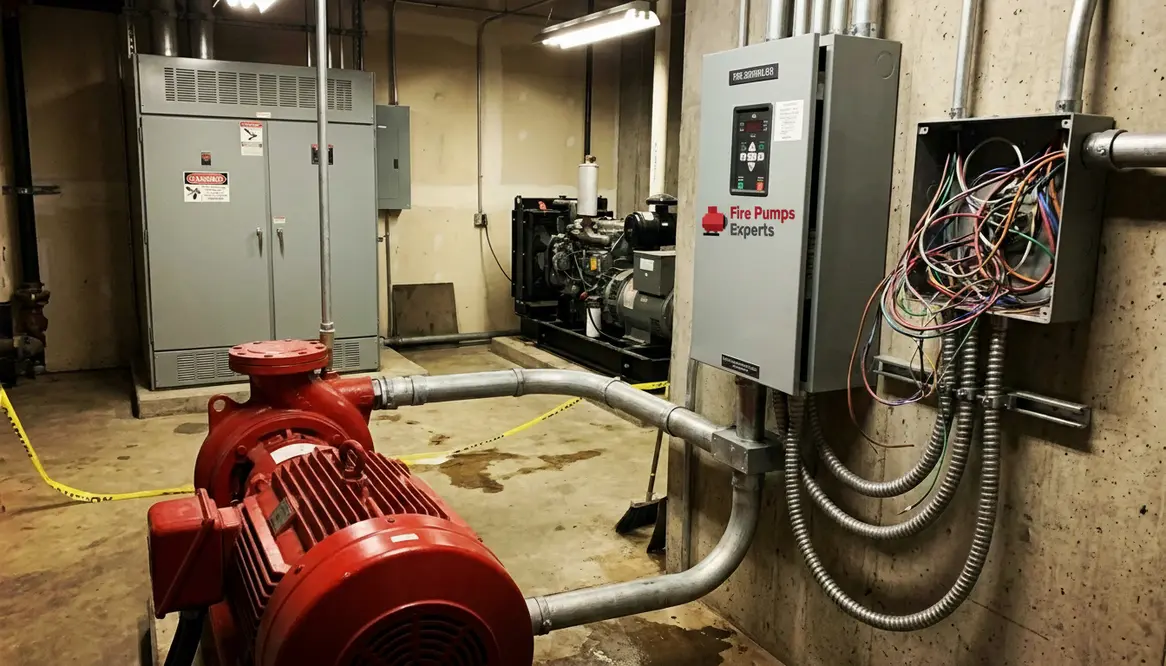
Electric Fire Pump Wiring Requirements Guide
I have spent enough time around mechanical rooms to know one truth. When things go wrong, they go wrong fast. That is why electric fire pump wiring requirements matter more than most people realize. In commercial and industrial buildings, these systems are not just equipment. They are lifelines. And if the wiring behind them is careless, outdated, or misunderstood, you are essentially trusting a parachute packed by guesswork. I prefer certainty. Let me walk you through it in a way that actually sticks.
What are electric fire pump wiring requirements in real world terms
At their core, these requirements exist to ensure one thing. The fire pump starts and keeps running no matter what chaos is happening around it. Codes like NFPA 20 set the tone, but I like to translate that into plain language. The wiring must be reliable, protected, and independent.
First, the power supply needs to be direct and dedicated. No sharing circuits with your break room fridge or that suspicious vending machine that eats dollars. Second, the wiring must be protected against fire exposure. That often means routing through fire rated assemblies or using specific insulation types.
Finally, redundancy is not a luxury. It is expected. If the primary power source fails, a backup source should step in without hesitation. Think of it like having both Batman and Superman on call. You do not want to wait around hoping one shows up.
Power sources that keep your system alive when it matters
Now we get into the heartbeat of the system. Power supply design. I always recommend looking at this from a risk first mindset. What happens if the main utility fails during a fire event
Most commercial installations rely on one of two setups. Either a reliable utility feed with strong protection, or a combination of utility and generator backup. In high value properties, I often see dual utility feeds. Yes, it costs more. No, it is not overkill when lives and millions in assets are on the line.
Additionally, transfer switches must operate smoothly and quickly. Delays are not your friend here. Even a few seconds can feel like an eternity when a fire is spreading.
If you are unsure how your building stacks up, working with experienced providers like commercial electrical system specialists can help ensure your setup meets both code and real world reliability standards.
How should wiring be routed and protected
This is where details quietly make or break the system. Routing is not just about getting from point A to point B. It is about surviving a hostile environment.
I always prioritize separation. Fire pump wiring should not run alongside general building wiring. If a fire damages one system, it should not take everything else down with it. Independence is key.
Protection methods include conduit systems, fire rated cable assemblies, and strategic routing away from high risk zones. Also, penetrations through walls or floors must maintain fire ratings. Skipping that step is like locking your front door but leaving the windows wide open.
Good Practices
- Dedicated circuits only
- Fire rated cable or conduit
- Separate routing paths
- Minimal bends and stress points
Common Mistakes
- Sharing circuits with other loads
- Routing through high heat zones
- Ignoring fire stopping at penetrations
- Overcomplicating cable paths
Controllers and connections that cannot fail
The controller is the brain of the operation. And like any good brain, it needs clear, uninterrupted signals. Wiring to the controller must be precise and secure. Loose connections are not just sloppy. They are dangerous.
Every termination should be tight, labeled, and easy to inspect. I also recommend regular testing. Not just once a year when everyone suddenly remembers the system exists. Consistent checks catch small issues before they become big ones.
Moreover, voltage drop should be carefully calculated. If the pump does not receive enough voltage, it may fail to start or run inefficiently. That is not a gamble worth taking.
Electric fire pump wiring requirements for large facilities
When we scale up to industrial plants or high rise buildings, complexity increases. However, the principles stay the same. Reliability, protection, and independence.
Large facilities often require longer cable runs, which increases the risk of voltage drop and physical damage. Therefore, conductor sizing becomes critical. Bigger is often better here, within reason.
Additionally, coordination with other systems matters. Fire alarms, emergency lighting, and backup power all interact. A well designed system ensures they work together, not against each other.
I have seen setups where one small oversight caused a chain reaction of failures. It is like a bad sequel. Everything falls apart because someone ignored the original formula.
Why electric fire pump wiring requirements matter across every facility type
Whether you are dealing with a compact commercial building or a sprawling industrial complex, electric fire pump wiring requirements are the quiet backbone of your life safety strategy. They determine how power is fed, protected, and kept available when conditions are at their worst, not when everything is calm.
The same themes keep showing up: dedicated power, protected routes, clean terminations, and credible backup. If any of those are weak, you are depending on luck instead of design. Getting electric fire pump wiring requirements right means stepping back and asking one blunt question: “Will this still run when the building is literally under fire”
FAQ about electric fire pump wiring requirements
Final thoughts and next steps
Electric fire pump wiring is not the place to cut corners or rely on guesswork. Every connection, every route, and every design choice plays a role in whether your system performs when it matters most. If you manage a commercial or industrial facility, now is the time to review your setup, ask tough questions, and bring in experts who understand the stakes. Because when the alarm sounds, you want confidence, not uncertainty.