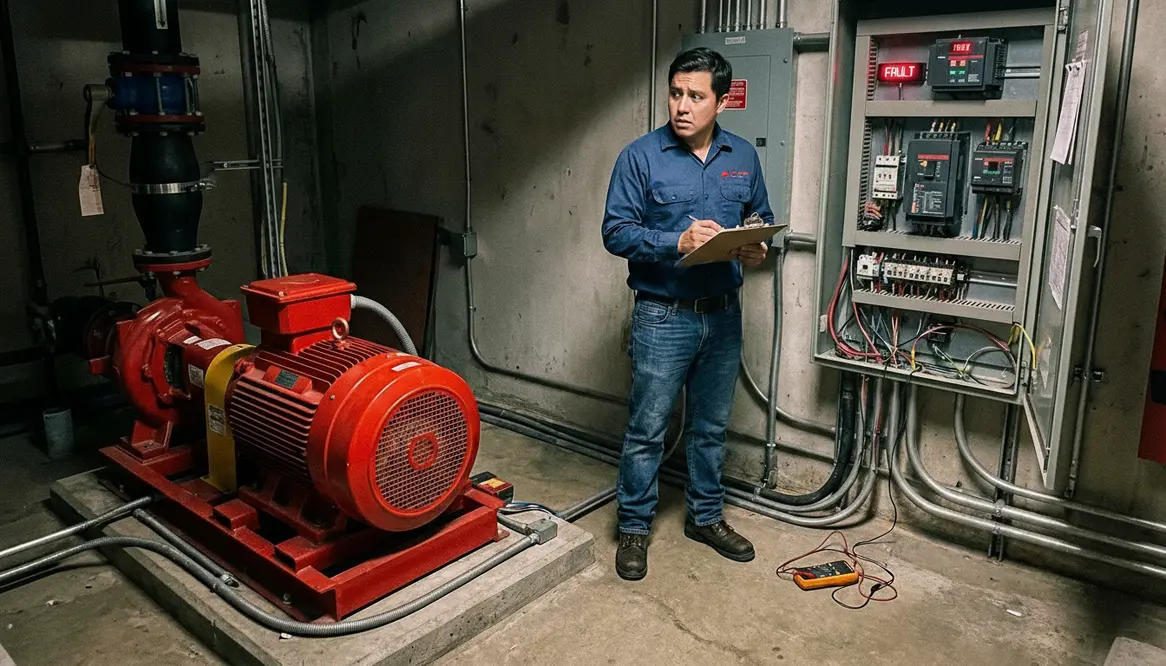
Electric Fire Pump Not Starting Electrical Causes
I have seen it happen more times than I care to count. You walk into a mechanical room, confident, checklist in hand, and then it hits you. The electric fire pump not starting. No hum. No movement. Just silence where there should be certainty. And in commercial and industrial facilities, silence is rarely a good sign. It is the kind of moment that feels like a scene from a suspense film, except the stakes are very real and the villain is often hiding in plain sight. More often than not, the root cause lives in the electrical system.
So, let me walk you through it. Calmly. Clearly. Maybe with a chuckle or two along the way, because even serious systems deserve a little humanity.
When an electric fire pump not starting becomes more than a nuisance, it turns into a liability. The good news? Electrical causes follow patterns. Once you learn to see them, you will never look at a mechanical room the same way again.
Think of this as a guided walkthrough of the most common electrical reasons your fire pump refuses to cooperate, and what you can do about them before they show up during an emergency.
Why Electrical Failures Stop Fire Pumps Cold
First, let me set the tone. Fire pumps do not fail randomly. They follow logic. And when they refuse to start, electricity is usually the first suspect I interrogate.
Electrical issues interrupt the chain of command. Power must travel from source to controller, then to motor, without hesitation. However, even a small break in that chain can stop everything. Think of it like a relay race where one runner decides to tie their shoe mid sprint. The whole team loses.
Common electrical culprits include:
- Power supply interruptions that starve the system
- Faulty controllers that fail to send the start signal
- Tripped breakers or blown fuses that silently cut power
- Loose or corroded connections that weaken current flow
Each of these may seem small on its own. Yet together, they form a perfect storm that leaves your pump sitting idle when it should be leading the charge.
electric fire pump not starting: Power Supply Problems I Look For First
When I approach a non responsive pump, I always start with the power supply. It is the simplest place to begin, and surprisingly often, the answer is right there.
First, I check voltage levels. If the incoming power does not meet the required range, the controller may refuse to engage. Additionally, inconsistent voltage can confuse protective devices, causing unnecessary shutdowns.
Next, I look at circuit breakers and disconnect switches. A tripped breaker might seem obvious, but I have seen panels where the trip indicator was about as clear as a plot twist in a Christopher Nolan movie. You have to look closely.
Then, I verify phase alignment in three phase systems. If phases drop or reverse, the motor will not start properly. It is like trying to dance with two left feet. Technically possible, but not effective.
And finally, I inspect upstream equipment. Transformers, feeders, and switchgear all play their part. If one of them falters, the pump never even gets a chance. When you face an electric fire pump not starting, this is often where the trail begins.
Inside the Controller: Where Signals Live or Die
The controller is the brain of the operation. And when the brain misfires, the body does not move.
I always examine the control panel carefully. Burned contacts, failed relays, or damaged wiring can interrupt the start command. Moreover, modern controllers rely on sensors and logic boards that are sensitive to electrical noise and surges.
Here is where things get interesting. Sometimes the issue is not a failure but a refusal. The system detects a condition it does not like and chooses not to start. Low pressure signals may not register. Automatic transfer switches may fail to engage. Even a minor fault can trigger a lockout.
Therefore, I read fault codes like a detective reads clues. They tell a story. And if you listen closely, they usually confess.
What electrical issues cause a fire pump not to start?
Let me answer this the way I would if you asked me over coffee in a noisy plant break room.
Primary Electrical Causes
- Loss of incoming power
- Undervoltage or overvoltage conditions
- Open circuits or broken conductors
- Ground faults affecting safety systems
Secondary Contributing Factors
- Improperly set protection devices
- Worn contactors or relays
- Poor maintenance of terminals
- Environmental damage like heat or moisture
Each issue may operate quietly in the background. However, when combined, they create a situation where the system simply refuses to respond. It is not stubbornness. It is self preservation.
electric fire pump not starting: Wiring, Connections, and Human Oversight
Now, let me be honest. Not every issue is glamorous. Some are as simple as a loose wire.
I have opened panels where connections looked secure but were barely holding on. Over time, vibration loosens terminals. Heat expands metal. Corrosion sneaks in like an uninvited guest. Eventually, resistance builds, and current flow suffers.
Additionally, human error plays a role. Incorrect wiring during installation or maintenance can introduce hidden faults. It is like assembling furniture without the manual. Sure, you might get a chair, but do you trust it?
That is why I always recommend working with experienced professionals who specialize in commercial and industrial systems. A provider like industrial electrical system specialists understands the scale and precision required for these environments. They do not guess. They verify.
Preventing Electrical Failures Before They Start
Testing and Inspection Rhythm
Prevention, in my experience, is where the real power lies. Because fixing a failure is good, but avoiding it altogether is better.
I focus on routine testing and inspection. Weekly churn tests, monthly controller checks, and annual load testing all reveal early warning signs. Moreover, thermal imaging can detect hot spots in electrical panels before they become failures.
Maintenance Habits That Matter
Regular tightening of connections, cleaning of components, and verification of settings keeps everything aligned. And yes, documentation matters. If you do not track changes, you are flying blind.
Think of it like maintaining a classic car. Treat it well, listen for strange noises, and it will reward you with reliability. Ignore it, and it will leave you stranded at the worst possible moment. When you are responsible for an electric fire pump not starting is not the kind of surprise you want.
Conclusion: Keep the Power Flowing When It Matters Most
When an electric fire pump stays silent, it is rarely random. Electrical causes leave clues, and with the right approach, those clues lead to answers. I encourage you to take action now. Inspect, test, and partner with qualified experts who understand complex systems. Because when the moment comes, your fire pump should not hesitate. It should respond instantly, confidently, and without question. The next time you encounter an electric fire pump not starting, you should have a clearer roadmap for where to look and what to correct.