Residential High Rise Fire Pump Requirements Guide
A practical walkthrough of the hidden systems that keep tall residential towers safe, pressurized, and ready for the worst day they may ever face.
I have spent many years walking through tall buildings that hum quietly with life. Elevators glide, lights flicker on at dusk, and somewhere below it all sits a system that rarely gets applause. The fire pump. When we talk about residential high rise fire pump requirements, we are really talking about the hidden muscle behind every sprinkler head and standpipe. Without it, water pressure fades long before it reaches the top floors.
In high rise living, gravity is not your friend. Water pressure drops the higher you go. Therefore, building designers rely on carefully engineered pump systems to push water where firefighters and sprinklers need it most. Today I will walk through how these systems work, why codes demand them, and what property owners and facility managers should know to keep their towers safe and compliant.
The Real Job of Fire Pumps in Tall Residential Towers
Let me paint the picture. A fire breaks out on the thirty fifth floor. Sprinklers open. Firefighters connect hoses to the standpipe. Everyone expects strong water pressure instantly.
However, municipal water alone rarely delivers that kind of power at that height. That is where the fire pump steps in. It boosts water pressure so suppression systems perform exactly as designed.
From my experience working with large properties, a fire pump does three essential things.
- First, it ensures sprinkler systems maintain required pressure across every level of the building.
- Second, it supports standpipe systems that firefighters rely on when attacking fires in tall structures.
- Third, it compensates for pressure loss caused by long pipe runs, elevation, and system friction.
In other words, the pump becomes the beating heart of the building’s fire protection system. And if that heart is weak or poorly designed, the entire system struggles. Nobody wants that moment of panic when water trickles out like a lazy garden hose.
Codes such as NFPA 20 and local building standards make sure that never happens. They require pumps capable of delivering high pressure and consistent flow even under the worst case scenario.
What Drives Residential High Rise Fire Pump Requirements in Modern Codes
If you have ever opened a fire protection code book, you know it reads a bit like a rulebook written by extremely cautious engineers. And honestly, that caution saves lives.
Modern residential high rise fire pump requirements come primarily from national standards such as NFPA 20 and NFPA 14, along with local building codes. These rules determine how pumps are sized, installed, powered, and tested.
Several key factors influence the required pump performance.
Core Design Pressures
- Building height. Taller structures demand higher discharge pressure because water must travel farther vertically.
- Standpipe demand. Firefighters need reliable hose connections with specific pressure levels.
- Sprinkler system demand. Each sprinkler head requires a minimum pressure to distribute water effectively.
- Friction loss. Long piping networks reduce pressure as water moves through them.
From Calculation to Compliance
Engineers calculate these variables carefully. They do not guess. They analyze hydraulic demand across the entire system and select pumps capable of meeting that load.
And here is a little industry truth. The pump itself is only part of the equation. Controllers, power supply, valves, and system monitoring all work together to create a dependable fire protection system.
Think of it like assembling the Avengers. Iron Man alone is impressive. But when the whole team shows up, the mission gets done.
How Engineers Size Fire Pumps for High Rise Living
I often hear property managers ask a simple question.
How big does the fire pump need to be for a high rise building?
The answer begins with hydraulic calculations. Engineers map out the worst case fire scenario within the building. They identify the highest and most demanding area in the system.
Then they calculate how much pressure and flow the system needs at that point.
Once they determine that demand, they work backward through the piping system to determine how much boost the pump must provide.
Typical fire pumps for large residential towers often range from 500 gallons per minute to well above 1500 gallons per minute depending on system design. Pressure ratings can climb well beyond 150 PSI.
Additionally, redundancy becomes critical in large properties. Backup power supplies and diesel driven pumps often appear in major developments where electrical outages could compromise safety.
Because when the lights go out, the fire protection system must still perform like a champion.
Inside the Pump Room: Equipment That Makes the System Work
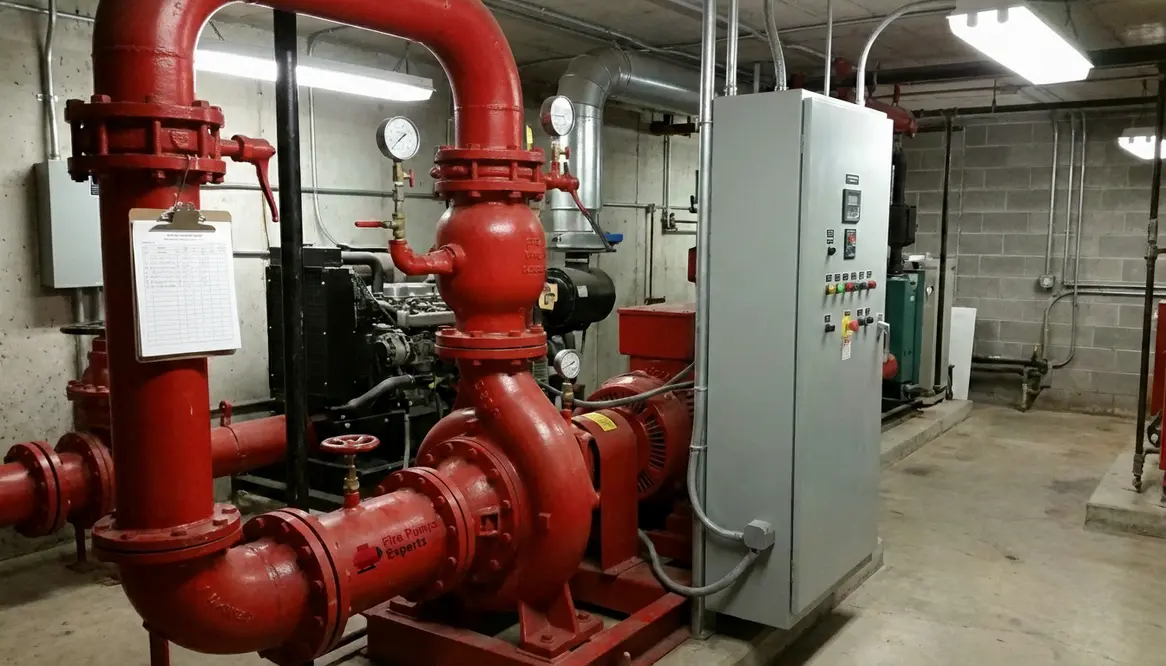
The pump itself tends to steal the spotlight. Yet the pump room contains several critical components that keep everything running smoothly.
Core Components
- Fire pump unit
- Electric or diesel driver
- Fire pump controller
- Pressure relief valves
- Test header connections
Supporting Infrastructure
- Dedicated water supply
- Backflow prevention
- Pressure sensing lines
- Emergency power source
- System monitoring alarms
Each element plays a role. For example, the controller senses pressure drops and automatically starts the pump. Meanwhile, the test header allows technicians to verify pump performance during inspections.
And yes, inspections matter. A lot.
Large commercial and multi residential properties must perform regular testing to confirm the system delivers rated pressure and flow. Because the worst time to discover a problem is during an emergency.
Trust me. Fire marshals are not fans of surprises.
Common Compliance Pitfalls Property Owners Should Avoid
Over the years I have seen some impressive buildings stumble over surprisingly simple mistakes.
- First, many owners underestimate how critical proper pump maintenance is. Even the most powerful system can fail if valves stick or controllers malfunction.
- Second, pump rooms sometimes become accidental storage closets. I once saw a beautifully engineered pump room filled with holiday decorations and folding chairs. That might work for a sitcom episode, but fire inspectors rarely laugh.
- Third, outdated equipment can quietly drift out of compliance as codes evolve. What met standards fifteen years ago might not meet modern expectations.
Because of that, large property operators often work with specialized fire protection contractors who focus on major commercial facilities and high density residential towers. These professionals understand code updates, inspection schedules, and performance testing.
And frankly, when you manage a skyscraper, peace of mind is worth every penny.
Maintaining Fire Pump Reliability in Large Residential Buildings
Once installed, the job is not finished. Fire pumps demand regular testing and monitoring to stay ready.
- Weekly visual checks confirm controllers display normal readings.
- Monthly churn tests ensure the pump starts properly.
- Annual flow tests verify the system delivers its full rated capacity.
Additionally, property managers should track vibration, temperature changes, and unusual sounds from the pump assembly.
Yes, pumps can talk if you listen carefully. They hum, shake, and sometimes complain like an old pickup truck climbing a hill.
Preventive maintenance programs help facility teams identify issues long before they become serious failures. In large properties, these programs often integrate with building management systems that track alarms and performance metrics.
The goal remains simple. When a sprinkler opens on the fiftieth floor, water arrives immediately with the pressure needed to control the fire.
Residential High Rise Fire Pump Requirements in Action
When you zoom out, residential high rise fire pump requirements are not just pages in a standard. They are the reason water still has punch at the top of a 40 story tower, the reason firefighters trust the standpipe connection in a smoke filled stairwell, and the reason residents sleep more easily on the upper floors.
Those requirements tell engineers how to size the pump, how to route power, how to locate the test header, and how to verify that everything performs as designed year after year. From NFPA 20 to local amendments, each line in the code translates into something very real: pressure, flow, and reliability when the alarms sound.
If you manage a tall residential building, understanding these residential high rise fire pump requirements at a high level helps you ask better questions, budget for the right upgrades, and partner more effectively with your fire protection contractor.
For example, teaming with a specialist that lives and breathes fire pumps can simplify compliance. Contractors like Kord Fire Protection’s fire pump service team handle inspection intervals, testing documentation, and the fine print that sits behind your pump’s performance curve.
FAQ: Fire Pumps in High Rise Residential Buildings
These quick answers help put residential high rise fire pump requirements into everyday language for owners, managers, and residents.
Building Safety Starts Below the Surface
When people admire a high rise skyline, they notice glass towers, rooftop views, and penthouse balconies. Yet the true guardian of those buildings often sits quietly in the basement. Fire pumps protect thousands of residents by delivering powerful, reliable water pressure exactly when it matters most.
If you manage or develop major residential properties, now is the time to review your fire protection infrastructure and ensure every component meets current standards. Residential high rise fire pump requirements are only effective when they are translated into well designed, well maintained systems that actually work on the day they are needed.
Connect with experienced specialists who focus on large commercial systems and high density residential towers, keep your documentation inspection ready, and treat that quiet pump room as the mission critical space it really is. Your residents may never see it, but they are counting on it every single night.