AS 2118 Fire Pump Requirements for Sprinkler Systems
I have seen plenty of buildings look calm on the outside while their fire protection setup hides all the drama of a soap opera. When a sprinkler system needs water fast, the fire pump becomes the quiet workhorse in the background. That matters even more under the AS 2118 sprinkler framework, because commercial and industrial buildings, along with major properties, need a system that performs without hesitation. In this article, I will walk through the key fire pump requirements, what they mean in practice, and how I approach them when looking at real world sprinkler protection.
What AS 2118 fire pump requirements mean for sprinkler systems
AS 2118 sets the rules for sprinkler system design in Australia, and the fire pump plays a major role when the water supply alone cannot do the job. In simple terms, I rely on the pump to boost pressure and flow so the sprinklers can control fire as intended. That sounds straightforward, yet the details matter. The pump must match the system demand, support the hazard level, and work with the water source and tank arrangement. If it does not, the whole setup can wobble like a bad sequel nobody asked for.
For commercial and industrial sites, I look at the expected fire load, the building size, and the water supply pressure. Then I check whether the pump can maintain the required performance for the full design duration. AS 2118 sprinkler systems do not forgive weak planning. They need a pump that starts quickly, delivers steady pressure, and stays reliable under stress.
Key impacts on AS 2118 sprinkler system performance
When I review a system against AS 2118, I look at how the pump interacts with:
- The hazard classification and required density
- The available water supply, including pressure and flow
- The length and layout of the sprinkler pipework
- Tank capacity and refill expectations
- Any additional fixed fire protection loads sharing the pump
How I check fire pump size and performance
Size is not just about buying a bigger pump and calling it a day. I check flow, pressure, and the system curve so the pump fits the sprinkler demand. If the pump is too small, the sprinklers may not cover the hazard properly. If it is too large, the system can waste energy and create control problems. Nobody wants a fire protection setup that behaves like it is auditioning for a stunt scene.
Step-by-step review of pump selection
- Step 1: I confirm the sprinkler demand for the hazard classification.
- Step 2: I review the static and residual water supply conditions.
- Step 3: I select a pump that meets the required flow at the right pressure.
- Step 4: I check the suction source, tank size, and pipe losses.
- Step 5: I verify that the pump can support the full sprinkler system when needed.
That process keeps the design honest. It also helps avoid costly changes later, because in fire protection, small mistakes can turn into very expensive lessons.
Common sizing issues I see
- Assuming town main pressure will always stay at today’s reading
- Ignoring elevation changes between the pump and remote sprinkler heads
- Forgetting friction losses from long pipe runs and fittings
- Adding extra zones later without revisiting the original pump duty
- Letting the pump curve run too far to the right, making control valves work overtime
AS 2118 sprinkler pump setup for commercial and industrial sites
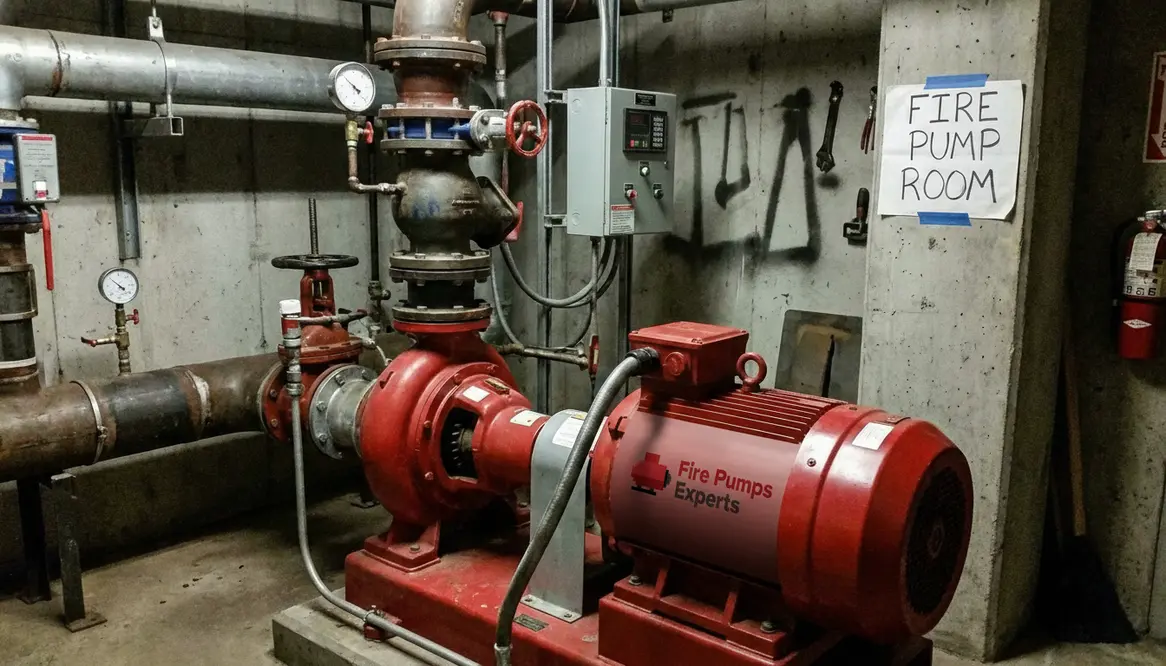
Now let me get practical. In major buildings, I focus on the pump room, the water source, and the control gear. These parts must work together, not fight each other like characters in a reality show. The pump room should allow safe access, clear maintenance space, and proper ventilation. The controls should allow automatic starting, manual testing, and fault monitoring. If the pump depends on guesswork, it is already off track.
I also look at the water supply. Some sites use tanks, some use town mains, and some use a mix of both. Whatever the source, it must support the sprinkler demand for the required time. For industrial sites, that often means I need extra care with water volume and pump reliability, because heat, process risks, and large floor areas can raise the stakes fast.
Pump room essentials for AS 2118 compliance
- Clear and safe access routes for operators and maintenance
- Adequate lighting that actually lets you read gauges and labels
- Ventilation that suits electric or diesel drives as specified
- Space around the pump set for removal, repair, and testing
- Protected and labelled control panels and isolation switches
- Drainage that can cope with test flows and minor leaks
What I check in installation and testing
Installation is where good design proves itself. I want to see correct pump alignment, secure pipework, proper suction conditions, and clean electrical or diesel support systems. A poor install can make a good pump act tired before it even starts. That is not exactly a hero moment.
Testing matters just as much. I check the start sequence, pressure output, and run stability. I also make sure alarms and controls respond the way they should. If the pump starts late, surges, or drops pressure, I treat that as a serious issue. In fire systems, “close enough” is a dangerous phrase.
Installation checks
- Pump and driver alignment within tolerance
- Suction pipe sized and arranged to avoid air pockets
- Non-return and isolating valves installed in the right order
- Flexible connections used where vibration is an issue
- Cables, fuel lines, and controls routed neatly and labelled
Testing checks
- Automatic start from pressure drop or signal
- Manual start and stop confirmed at the controller
- Discharge pressure and flow matching calculated duty
- Stable running without hunting or nuisance trips
- Alarm, fault, and status indications reporting correctly
Dual column guide for quick review
Design focus
- Match pump flow and pressure to sprinkler demand
- Confirm water supply and duration
- Set up the pump room for safe access
- Use reliable automatic controls
- Verify the AS 2118 sprinkler design aligns with future expansion plans
Field focus
- Check suction conditions and pipe losses
- Test start and run performance
- Confirm alarms and fault signals
- Keep maintenance access clear
- Log test results so AS 2118 sprinkler performance trends are easy to spot
Why ongoing maintenance keeps the system ready
Once the pump is in place, I do not treat the job as finished. A fire pump needs regular checks, because time, wear, and dust have a way of showing up uninvited. I inspect the engine or motor, valves, gauges, batteries where used, fuel supply where used, and the overall condition of the set. I also watch for leaks, corrosion, vibration, and odd sounds. A pump usually gives signs before it fails, and I prefer to catch those signs while they are still whispers.
For commercial and industrial buildings, maintenance supports business continuity as much as safety. A fault found during a routine check is far better than a fault found during an emergency. That is the kind of surprise nobody wants on their calendar.
Maintenance habits that keep pumps ready
- Routine weekly or monthly test runs recorded with pressure readings
- Battery, charger, and fuel checks for diesel-driven sets
- Cleaning strainers and confirming valves are in the correct position
- Listening for new noises and feeling for unusual vibration
- Reviewing trends over time instead of treating each test in isolation
- Comparing current results with the original AS 2118 sprinkler design data
Choosing the right support for AS 2118 sprinkler pump systems
Not every contractor is comfortable with fire pumps, especially when the site has multiple water supplies, complex controls, or integration with other systems. When I look for support, I want specialists who understand hydraulic calculations, real-world commissioning, and what happens when theory meets a noisy pump room at 2am.
Independent guidance can help when deciding whether to upgrade a pump, add redundancy, or revise an existing AS 2118 sprinkler layout. There are resources and case studies available from industry bodies and specialist groups, including sites such as https://firepumps.org, which explore practical aspects of fire pump design and operation.
FAQ
Conclusion
When I look at AS 2118 fire pump requirements, I see more than hardware. I see the heart of a sprinkler system that protects large commercial and industrial spaces when it matters most. If you manage a major property, do not leave pump selection, testing, or maintenance to chance. Review your system now, check the performance, and speak with a qualified fire protection team if you need support. Calm planning today can save a building tomorrow.