Big Box Retail Fire Pump Requirements Guide
I have walked through more large format retail buildings than I can count, and I can tell you this much right away: fire does not care how wide your aisles are or how bright your signage glows. It only cares about fuel and time. That is why big box retail fire pump requirements sit at the heart of any serious fire protection plan. Within the first few minutes of an incident, the right system either takes control or steps aside. And in buildings the size of small cities, hesitation is not an option. So let’s talk about how we keep these giants safe without turning the process into a snooze fest.
What makes fire safety in large retail buildings so complex?
First, size. Then scale. Then the sheer unpredictability of what is stored inside. One day it is patio furniture, the next it is pallets of electronics wrapped in plastic that burns like it has a grudge.
Because of this, I approach every facility with a layered mindset. Sprinklers, alarms, and suppression systems must work together, but more importantly, they must respond fast. Additionally, ceiling heights in these buildings often stretch far above standard limits, which changes how heat and smoke behave. Fire does not rise politely. It builds, rolls, and then spreads sideways like it owns the place.
And then there is occupancy. Hundreds, sometimes thousands of people moving at once. So while the structure matters, human movement patterns matter just as much. Fire safety here is not just engineering. It is choreography under pressure.
Designing systems that actually keep up with demand
I have seen systems that look impressive on paper but struggle in real conditions. That is why I focus on performance, not just compliance.
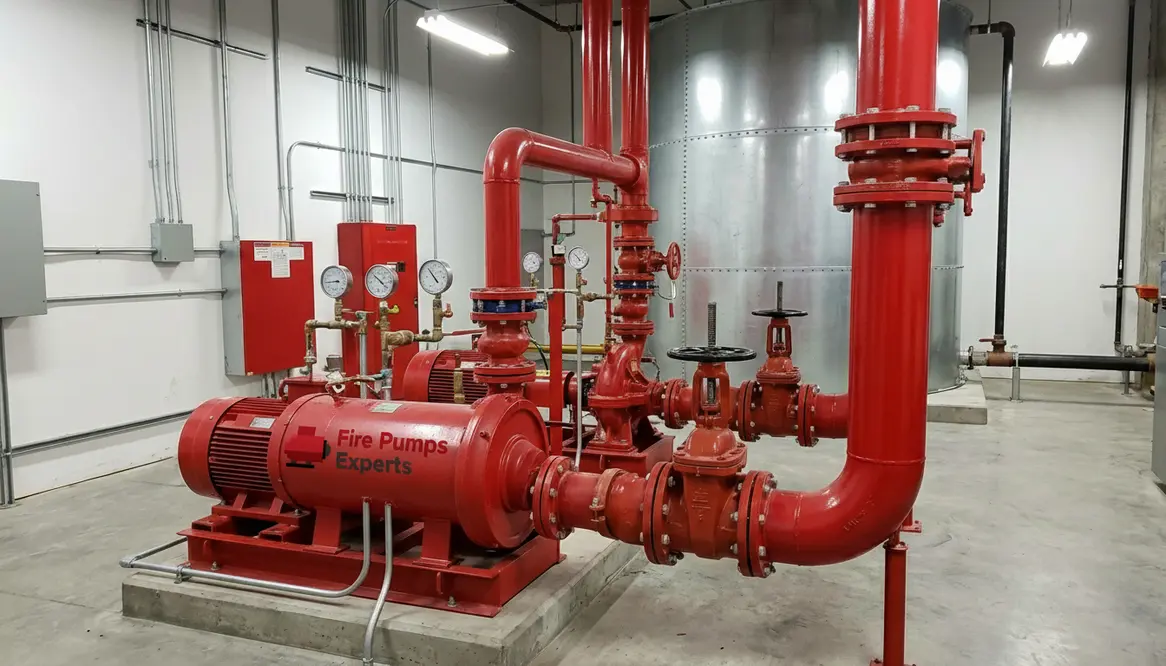
At the center of it all sits the fire pump. It ensures water moves with enough force to reach the highest racks and the furthest corners. However, meeting big box retail fire pump requirements is not just about installing a pump and calling it a day. It is about matching capacity to hazard levels, storage configurations, and future expansion.
For example, a retail space that shifts to high pile storage without adjusting its fire protection system is basically inviting trouble in for coffee. Therefore, I always recommend planning for flexibility. Buildings evolve. Your system should too.
Moreover, redundancy plays a key role. Backup power, secondary pumps, and reliable water supply lines ensure that when one piece fails, the system does not collapse like a poorly written sequel.
Key components I never overlook in large format facilities
Water Supply Strength
I verify consistent pressure and volume. Weak supply turns even the best design into a suggestion.
Pump Reliability
Routine testing keeps pumps ready. Because the worst time to discover a failure is during an actual fire.
Sprinkler Coverage
I ensure proper spacing and alignment with storage layouts. बदलाव in inventory means adjustments in coverage.
Control Systems
Modern monitoring provides real time alerts. Therefore, issues get handled before they grow.
Zoning Strategy
Separating areas limits spread. It is like closing doors in a spaceship. Containment buys time.
Maintenance Access
If technicians cannot reach equipment easily, maintenance will slip. And when maintenance slips, risk rises.
How do big box retail fire pump requirements affect compliance and insurance?
Let me put it simply. Insurance providers pay very close attention to fire protection systems in large commercial properties. And yes, they will absolutely notice if your setup falls short.
Meeting big box retail fire pump requirements often translates into lower risk profiles. Consequently, that can mean better insurance terms and fewer headaches during inspections. On the flip side, gaps in compliance tend to show up at the worst possible time, usually during a claim review.
Additionally, local codes and national standards are not static. They evolve as new risks emerge. So I treat compliance as an ongoing process, not a one time achievement. Think of it like updating your phone. Ignore it long enough, and things start breaking in strange ways.
Operational habits that quietly prevent disasters
Technology does a lot of heavy lifting, but people still make or break fire safety outcomes. Therefore, I focus on daily habits that reduce risk without slowing operations.
First, clear storage rules matter. Blocking sprinkler heads or stacking goods too high creates hidden hazards. Second, regular inspections catch small issues early. A minor valve problem today can become a system failure tomorrow.
Training also plays a role. Staff do not need to become firefighters, but they should know how to respond calmly and quickly. Because in those early moments, clarity beats panic every single time.
And yes, I always remind teams that fire drills are not just a formality. They are rehearsals for a scenario no one wants to improvise.
FAQ: Fire safety in large format retail buildings
When planning around big box retail fire pump requirements, a few recurring questions come up in almost every project. These touch everything from how pumps actually function in the real world to what building owners and facility teams should expect during inspections and upgrades.
Closing thoughts that lead to action
Fire safety in large format retail buildings is not about checking boxes. It is about building systems that respond with speed and strength when it matters most. If your facility depends on performance, then your fire protection strategy should too. Take a close look at your current setup, test its limits, and refine where needed. Because in this line of work, preparation is not just smart. It is everything. And I am here to help you get it right.