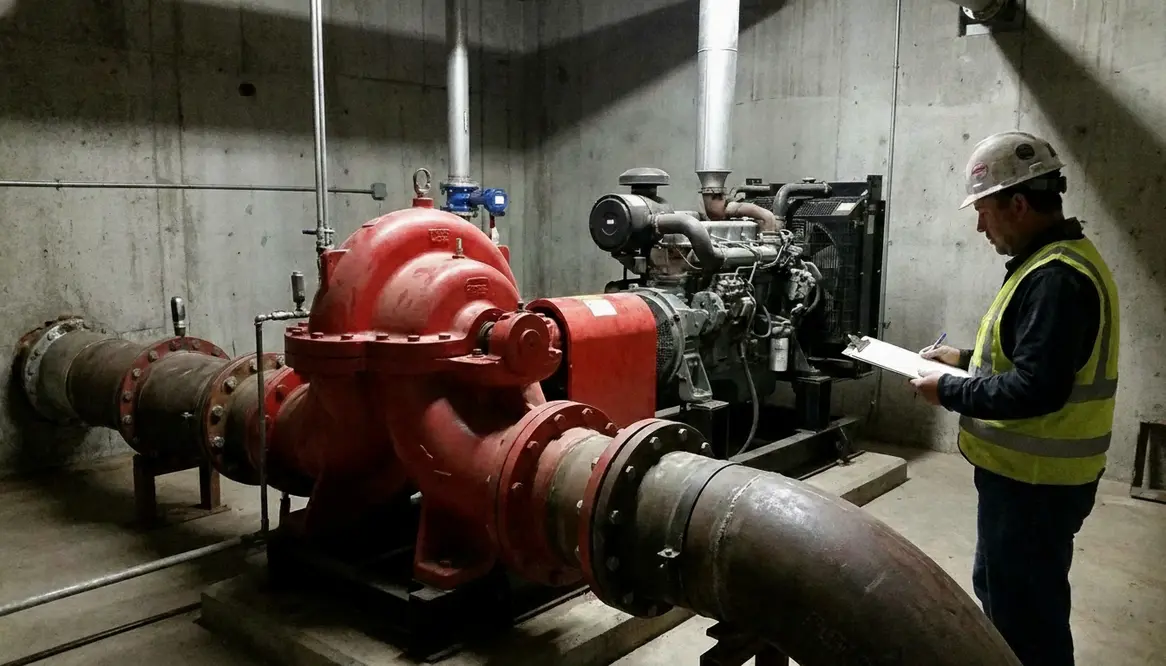
IS 12469 Fire Pump Selection for Buildings
IS 12469 Fire Pump Selection Guide: How I Choose the Right Pump for Commercial and Industrial Buildings
When I look at fire protection for a commercial tower, a warehouse, or a major industrial site, I start with one rule: the pump must do its job without drama. That is where IS 12469 fire pump selection matters. It gives me a practical path to choose a pump that can deliver the right flow, the right pressure, and the right reliability when seconds count. And yes, in fire protection, “good enough” is about as useful as a paper umbrella in a thunderstorm.
In this guide, I will walk through the key checks I use for large buildings and industrial facilities. I will keep it clear, useful, and focused on real world selection, because the wrong pump can turn a serious safety plan into a very expensive inconvenience.
Start with the building risk and water demand
I always begin with the building itself. First, I ask what kind of property I am protecting, because a high rise office, a shopping complex, and a manufacturing plant do not need the same fire pump setup. Next, I look at the hazard level, the floor area, the height, and the sprinkler and hydrant demand. These details shape the total water flow and pressure the pump must supply.
For larger commercial and industrial sites, I also check whether the system must support internal hydrants, sprinklers, or both. Then I compare the demand with the available water source. If the source cannot meet the need, the pump becomes the hero of the story. And unlike a movie hero, it cannot arrive late.
Match the pump type to the system need
Once I know the demand, I choose the pump type. In most commercial and industrial projects, I look at horizontal split case pumps, end suction pumps, or vertical turbine pumps. Each one fits a different condition. For example, horizontal split case pumps often work well where I need high flow and steady performance. Meanwhile, vertical turbine pumps help when the water source sits below ground level or comes from a tank or sump.
Quick comparison of common fire pump types
Horizontal split case
Best for high flow, stable systems, and sites where easier service access is important.
Vertical turbine
Best for low water source levels, deep suction conditions, and tank based or sump based supplies.
End suction
Best for smaller duty ranges within large buildings where space and budget matter.
I do not pick based on habit. I pick based on the system curve, the building need, and the site layout. That is the adult way to do it, which is refreshing in a world full of “close enough” decisions.
Check the pressure, flow, and power together
After that, I focus on the performance match. I need the pump to deliver enough flow at the required pressure, but I also need it to work well with the driver. So I look at electric motor driven or diesel engine driven sets based on site risk, power backup, and compliance needs.
If the site has strong and stable power, an electric fire pump may be the cleaner choice. However, if the building needs backup for power failure or if the risk profile calls for stronger independence, I may prefer a diesel unit. This is where IS 12469 fire pump selection becomes more than a checklist. It becomes a way to make sure the pump, driver, and controller all work as one system.
I also verify that the duty point sits near the best efficiency range. If it does not, energy use rises and wear increases. That means the pump may age faster, and nobody wants a fire pump that behaves like it has already retired.
Review the site conditions and installation space
Next, I study the site. I check the pump room size, ventilation, access for service, pipe routing, and suction conditions. These points matter because a strong pump in a poor room is still a poor solution. I also make sure the base, alignment, and vibration control support long term operation.
For industrial facilities, I pay close attention to dust, heat, humidity, and any corrosive exposure. For major properties, I also look at noise limits and access for maintenance teams. The goal is simple: keep the system easy to inspect, test, and repair. After all, a fire pump should not require a treasure map to service.
Ask these prompts when making the final choice
Practical decision prompts
What is the full fire demand for the building?
I calculate the required flow and pressure for all protected areas.
Which water source will feed the pump?
I confirm whether the source is a tank, reservoir, sump, or municipal supply.
Which driver fits the site best?
I compare electric and diesel based on risk and backup needs.
Can the pump room support safe operation?
I verify space, access, cooling, and maintenance room.
Does the pump match the standard and project data?
I confirm that the selection aligns with the applicable fire protection code and project requirements, including IS 12469 fire pump selection where relevant.
If I need a trusted technical reference for industrial and commercial fire pump planning, I also review commercial fire pump selection guidance from firepumps.org to align equipment choice with major property needs.
IS 12469 selection in practice
In real projects, IS 12469 selection gives a structured way to balance performance and reliability. It forces me to prove that the pump can meet the worst credible fire scenario, not just the average day. When I apply IS 12469 selection on a high rise or an industrial plant, I cross check pump curves, NPSH, driver sizing, and controller logic so the system behaves predictably under stress.
Used this way, IS 12469 selection is less about paperwork and more about building a fire water backbone that does not flinch when alarms sound. It keeps the focus on flow, pressure, endurance, and integration with the rest of the fire protection strategy.
FAQ
Conclusion
If you want a fire pump that does more than look good on paper, start with the building risk, match the pump type, and verify the full system against project needs. I recommend treating IS 12469 fire pump selection as a practical decision tool, not a box to tick and forget. If you are planning a commercial or industrial property, now is the time to review your fire pump strategy with care and move toward a safer, smarter setup.