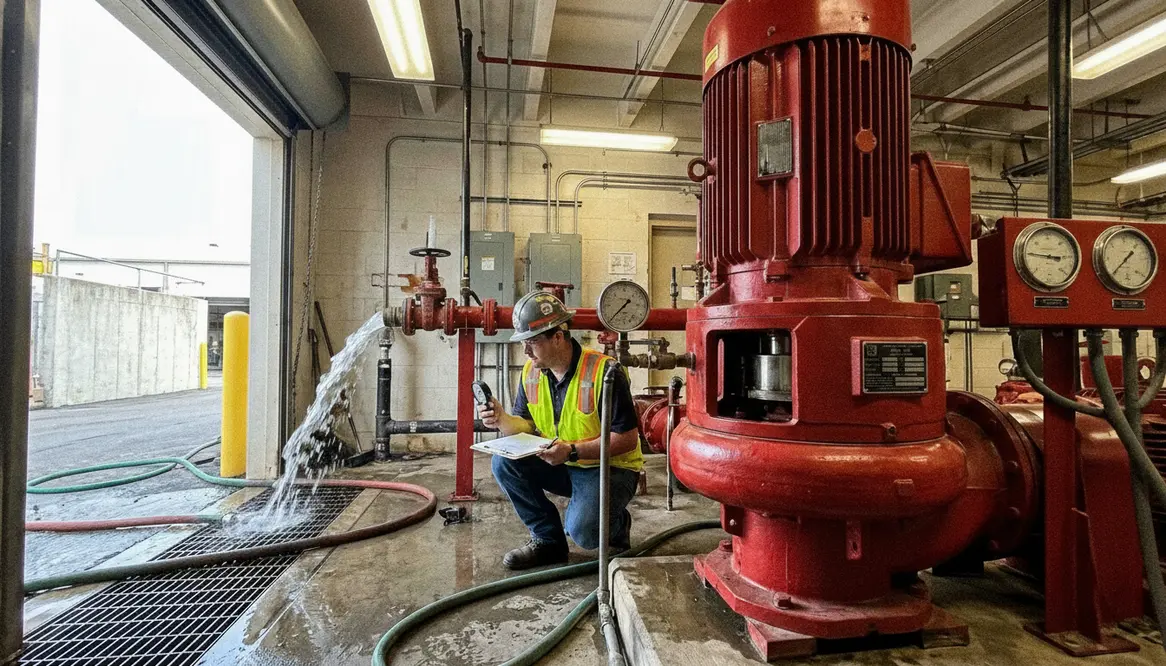

IS 12469 Fire Pump Testing Requirements Guide
IS 12469 Fire Pump Testing Requirements Overview
When I talk about fire protection for commercial and industrial facilities, I start with one truth: a fire pump is not decorative equipment. It exists for the bad day, the loud day, the day nobody wants to meet. That is why IS 12469 testing matters so much. It helps me confirm that the pump can deliver the right pressure and flow when the system needs it most. In a major property, a weak pump can turn a controlled incident into a costly mess fast. So, I treat testing like a non negotiable performance check, not a paper exercise.
Use this guide as a quick reference when planning or reviewing fire pump performance checks for large commercial and industrial properties. It focuses on practical testing steps, what the results actually mean, and how to react when the numbers are not as impressive as the paintwork.
What IS 12469 testing means in real life
IS 12469 testing is the process I use to verify that a fire pump performs as required under working conditions. In simple terms, I check whether the pump can move enough water, keep the needed pressure, and respond properly during demand. For commercial and industrial sites, that means warehouses, factories, high rise buildings, malls, plants, and other major properties that depend on a reliable water supply.
To be clear, this is not just about starting the pump and nodding like everything is fine. I look at discharge pressure, suction pressure, flow, speed, and overall operation. I also check whether the pump behaves consistently across the test. In other words, I want steady performance, not a dramatic cameo worthy of a superhero movie.
Where IS 12469 testing really matters
The sites that benefit most from IS 12469 testing are the ones that feel “too big to fail”: logistics hubs stacked to the ceiling, production plants with round-the-clock shifts, data-heavy office towers, and shopping centers that never seem to sleep. In these places, a fire pump is part of the life support system. If it turns out to be more decoration than muscle, everyone finds out at the exact wrong moment.
How I prepare for a fire pump test
Before I test anything, I prepare the site carefully. First, I review the system layout, pump details, and acceptance criteria. Then I confirm that the test equipment is ready and that the control panel, valves, gauges, and power source are in good shape. Because a test is only as good as the setup, I never rush this part.
Pre-test checklist
- Check the pump nameplate and design data
- Inspect suction and discharge lines for leaks or blockage
- Verify gauge condition and calibration status
- Confirm water supply availability
- Make sure the test outlet or flow path is safe and clear
- Inform facility staff so normal operations do not get surprised like a plot twist in a bad thriller
Safety and documentation
Next, I review safety steps. Since these systems protect critical assets, I keep the test controlled and documented. That way, I reduce risk for people, equipment, and production schedules. Clear records also make the next IS 12469 testing session easier, because I can see what was “normal” last time and spot the drift quickly.
What I check during IS 12469 testing
During IS 12469 testing, I focus on the pump’s real performance, not just its appearance. A clean pump room may look good, but it does not tell me much about actual fire readiness. So, I test the numbers and watch how the pump responds.
Key performance points
| Test point | What I look for |
|---|---|
| Start up behavior | The pump should start properly and quickly |
| Suction pressure | The pump should have stable water input |
| Discharge pressure | The pump should meet design pressure needs |
| Flow condition | The pump should deliver water at expected demand |
| Operating sound and vibration | The pump should run smoothly without unusual noise |
| Power source performance | The motor or engine should support steady operation |
| Automatic controls | The controller should respond correctly to demand |
After that, I record the results and compare them against the required standards for the installation. If the pump underperforms, I do not ignore it. I investigate the reason, because a small issue today can become a major failure tomorrow. And in fire protection, tomorrow has a habit of arriving at the worst possible time.
How I interpret results and fix problems
Once the test ends, I read the results with care. If the pump meets the required pressure and flow, I confirm the system is ready. However, if I see low pressure, unstable flow, delayed start, or overheating, I move into fault finding. This step matters because the test only helps when I act on what it reveals.
Common trouble spots
- Pump wear and impeller damage
- Valve problems or incorrect positions
- Clogged strainers or partially blocked lines
- Air leaks affecting suction
- Power supply trouble or voltage dips
- Poor maintenance history and missing records
Looking beyond the pump
Also, sometimes the issue is not the pump itself. Instead, the problem may sit in the controls, piping, or water source. That is why I avoid guesswork and follow the evidence. For commercial and industrial facilities, the goal is simple: reduce downtime and keep fire protection dependable. So, I document the issue, recommend the correction, and schedule retesting if needed. That keeps the site aligned with safety goals and helps the owner sleep a little easier. Not champagne sleep, just honest, uninterrupted sleep.
Why regular fire pump testing protects major properties
Regular testing does more than satisfy compliance. It protects operations, assets, and people. In a large building or industrial site, a fire pump supports sprinklers, hydrants, and other systems that depend on water delivery. If the pump fails during an emergency, the whole protection chain weakens. And that chain is only as strong as its weakest link, which is a fancy way of saying nobody wants a lazy pump.
That is why I recommend planned testing at proper intervals, along with maintenance records and trend tracking. Over time, test results show whether the pump is holding steady or drifting away from design performance. As a result, facility teams can act early, before a warning turns into a repair bill with teeth. Consistent IS 12469 testing becomes less about ticking boxes and more about catching problems while they are still inexpensive and boring.
Planning support and guidance
For those managing large sites, I also suggest using a trusted resource like fire pump testing guidance for commercial facilities from https://firepumps.org when reviewing service needs and system care. It helps keep expectations clear and supports better planning for long term reliability.
FAQ: IS 12469 fire pump testing requirements
Conclusion and CTA
When I look at fire pump care, I see one clear rule: test early, test properly, and act on the results. IS 12469 testing gives commercial and industrial facilities the proof they need that their fire pump can do its job when it counts. If you manage a major property, do not wait for a warning sign that arrives with smoke. Schedule a proper review, verify performance, and keep your protection system ready for the moment that matters.