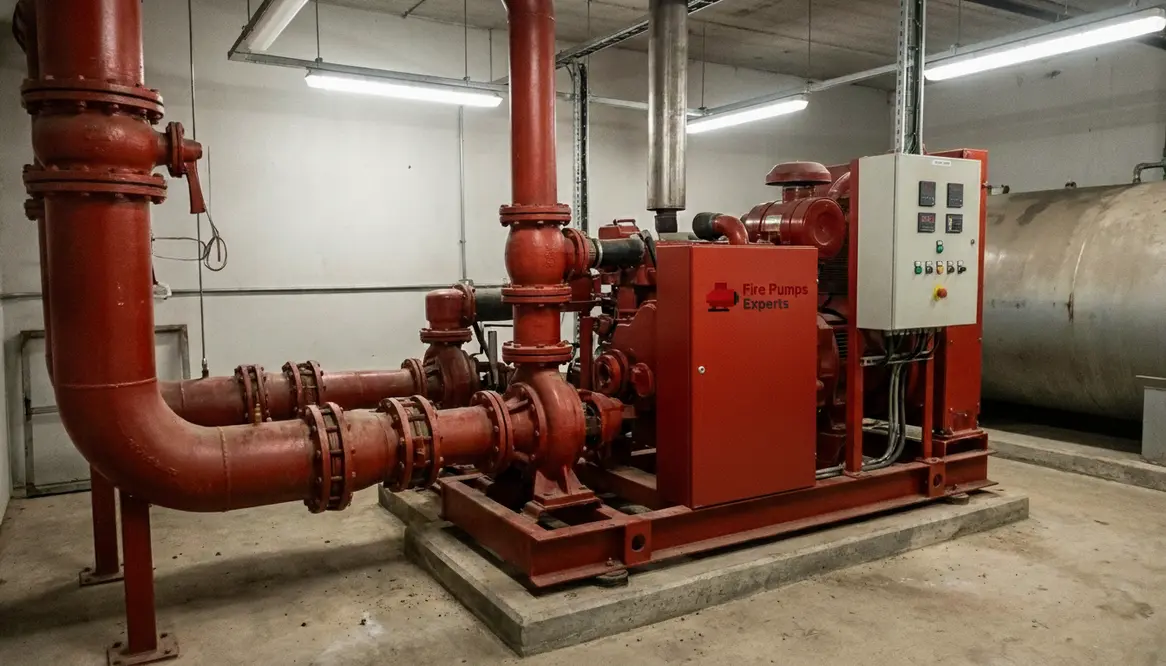
BS EN 12845 Diesel Pump Requirements for Sprinklers
Diesel fire pumps are the quiet muscle behind sprinkler protection in commercial and industrial buildings. When the lights flicker, the power fails, and alarms scream, the pump has one job: start fast, stay running, and push water like it means it.
When I talk about BS EN 12845 diesel pump requirements for sprinkler systems, I am talking about the backbone of fire protection in commercial and industrial buildings. In a real emergency, the pump must wake up, start fast, and keep the water moving while everything else may be going sideways. No drama, just performance. The standard sets clear expectations for diesel driven fire pumps, and that matters because a sprinkler system is only as reliable as the water supply behind it. For major properties, that is not theory. It is the difference between control and chaos.
In this article, I will walk through the key rules, the design points, and the practical checks I look for when a diesel pump supports a sprinkler system under BS EN 12845. I will keep it straight, useful, and free of shiny nonsense. After all, fire does not care about excuses.
What BS EN 12845 expects from a diesel fire pump
BS EN 12845 requires the diesel pump to deliver dependable water flow and pressure for the sprinkler system when the main supply cannot do the job. I always see three core goals here: fast start, stable running, and enough fuel and cooling support to keep the pump alive during the event. The pump must serve commercial and industrial sites where demand can be high and downtime can hurt more than a bad Monday morning.
In practice, that means the diesel engine must start automatically, respond without delay, and keep running even if the power fails. Since fire protection must not depend on one fragile point, the diesel pump acts like the backup singer who actually saves the show. Also, the installation must allow proper access for testing, inspection, and service, because a pump hidden like a secret in a spy film helps no one when the alarm sounds.
Diesel pump setup and site needs for sprinkler systems
The pump room or pump area must support safe operation, easy maintenance, and reliable performance. I always check the basics first because the basics are where systems fail when people get casual. A BS EN 12845 sprinkler installation with a diesel pump is only as strong as the room, the pipework, and the power behind it.
Key site needs I look for
- First, the pump must sit in a suitable location with enough space around it for inspection and repair.
- Second, the fuel supply must support the required run time under emergency conditions.
- Third, the battery system must stay ready for repeated start attempts.
- Fourth, the engine cooling and exhaust arrangement must prevent overheating and unsafe buildup.
- Finally, the system should protect the pump from flooding, freezing, and damage from daily building activity.
That may sound simple, but simple is where the work lives. A diesel pump can only protect a sprinkler system if the whole setup supports it. So, I always treat the room, pipework, controls, and fuel system as one team, not separate actors trying to improvise a scene from a Marvel movie.
How I check performance and reliability
I focus on start reliability, flow, pressure, and endurance. BS EN 12845 expects the pump to perform when needed, not after a long warmup speech. Therefore, regular testing matters. The diesel engine should start automatically on demand and within the required time. It should also reach stable running conditions quickly and hold the pressure and flow the sprinkler system needs.
Performance checkpoints for a BS EN 12845 sprinkler pump
Performance point
- Automatic start
- Fuel supply
- Battery readiness
- Engine running condition
- Flow and pressure
What I want to see
- Immediate response with no delay
- Enough diesel for the required duty
- Healthy charge and reliable cranking
- Stable speed and no harmful alarms
- Meets the sprinkler demand
Moreover, I pay attention to the test records. Good records show trends, and trends tell the truth faster than guesswork. If a pump starts slower each month, that is the system waving a red flag. Ignoring it would be about as wise as bringing a paper umbrella to a storm.
Maintenance steps that keep the system ready
Maintenance keeps a diesel pump useful, and useful is the whole point. I always recommend routine checks on fuel quality, battery condition, engine oil, cooling systems, belts, and controller functions. In addition, the pump should run under test conditions often enough to prove it can do the job, not just sit there looking important.
Ownership, responsibility, and parts
For commercial and industrial properties, maintenance also needs clear responsibility. Someone must know who checks what, when they check it, and how they record issues. Otherwise, problems drift into the background until they turn into expensive surprises. And surprises, in fire protection, are rarely the fun kind.
I also like to review whether spare parts and service support are easy to get. A strong maintenance plan reduces risk, cuts downtime, and gives owners a better chance of passing inspections without that awkward silence everyone knows too well. A well-maintained BS EN 12845 sprinkler pump quietly earns its keep, year after year.
Why BS EN 12845 matters for major buildings
BS EN 12845 gives a clear path for protecting large and busy sites where fire load and people risk can be serious. It helps me make sure the diesel pump does not act like a guest star that forgets its lines. Instead, it becomes a dependable part of the sprinkler system, ready to support the water supply when power or main supply issues appear.
For warehouses, factories, logistics centers, and major commercial buildings, this standard matters because these properties often need strong, steady fire protection over a long period. So, when I plan or review a system, I use the standard as a practical guide, not a box ticking exercise. That approach gives building owners more confidence and gives the system a better shot at doing what it was built to do.
Where diesel pumps earn their place
A BS EN 12845 sprinkler arrangement often leans on diesel pumps in sites with weak electrical supply, complex infrastructure, or critical business processes that cannot afford long outages. Logistics hubs, data-heavy operations, and high-rack warehousing all benefit when the diesel pump is treated as a strategic asset, not a reluctant purchase.
Putting BS EN 12845 into daily practice
Standards on a shelf do not move water. The value comes from turning pages into routines: weekly starts, monthly inspections, annual overhauls, and clear reporting lines. A well-run BS EN 12845 sprinkler installation weaves these checks into normal site life so they do not get forgotten every time production or sales shouts louder.
People, training, and simple tools
- Clear instructions pinned in the pump room, not buried in an email archive
- Basic hands-on familiarization for the people expected to attend alarms
- Simple checklists that match the standard and the site reality
- Contact details for service support where someone can actually pick up the phone
These sound like small details, but they decide whether a fault is caught on a quiet Tuesday or on the one night the building really needs full flow from its diesel driven, BS EN 12845 sprinkler pump.
If you want deeper technical notes and reference material, a good starting point is the guidance hosted at https://firepumps.org, alongside your local codes and insurer requirements.
FAQ
Conclusion
If you manage a commercial or industrial property, I urge you to treat your diesel fire pump as a serious life safety asset, not just another machine in the plant room. BS EN 12845 sets the bar, but good planning, testing, and maintenance keep that bar within reach. If you want your sprinkler system ready for the moment it matters most, review your diesel pump setup now, correct weak points, and keep your protection sharp. Fire waits for no one, so neither should you.