BS EN 12845 Fire Pump Inspection Checklist Guide
BS EN 12845 Fire Pump Inspection Checklist: What I Check and Why It Matters
When I walk into a commercial or industrial site, I do not treat the fire pump like background noise. I treat it like the quiet giant that stands ready when everything else goes sideways. A solid BS EN 12845 inspection keeps that giant awake, ready, and fully in line with the standard that protects sprinkler systems in major properties, factories, warehouses, and other serious buildings that cannot afford guesswork. And yes, the pump may sit there looking calm, but so does every hero before the alarm goes off. That is why I always check it with care, not hope.
What I check before the pump is even tested
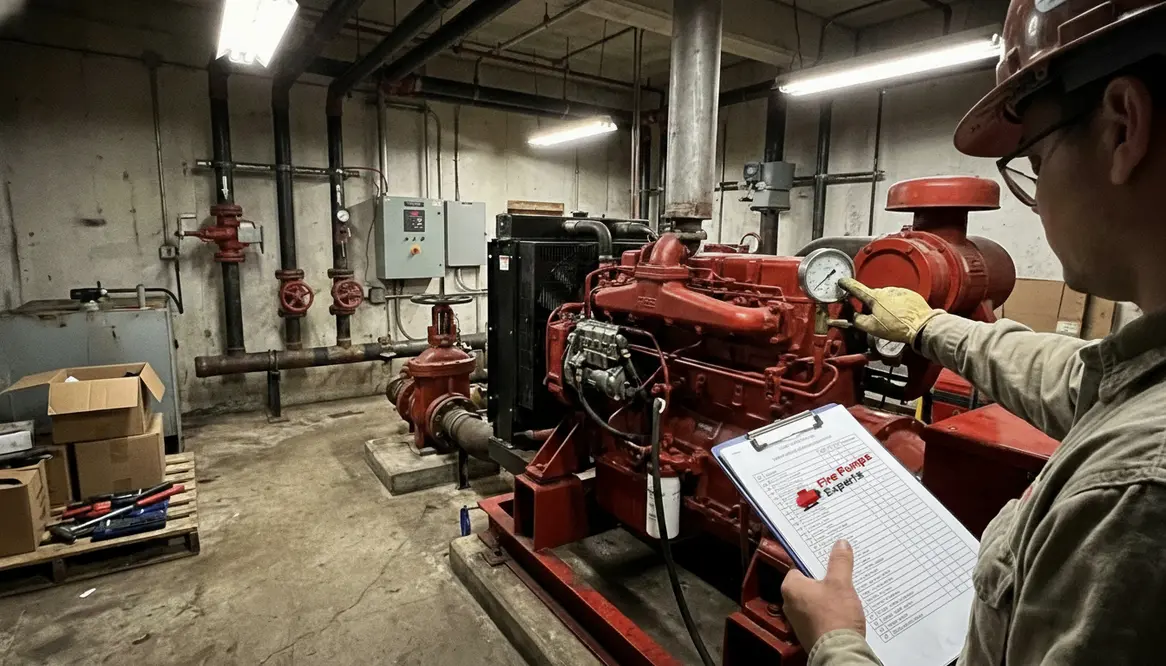
I start with the room, because a fire pump does not work well in a messy, cramped, or neglected space. First, I check access, lighting, ventilation, drainage, and general condition. Then I look at the pump body, driver, controller, valves, gauges, and fuel supply if the system uses a diesel unit. I also confirm that the area stays clear and locked down, because a fire pump room is not a storage closet for spare boxes, old chairs, or someone’s mystery pallet of “important stuff.”
I also look for leaks, corrosion, loose fittings, odd sounds, and signs of vibration. In my experience, small issues love to show up early if you know where to look. So, I do not rush this stage. A careful BS EN 12845 fire pump inspection checklist begins with the basics, because basics often save the day.
How I test the pump performance in a BS EN 12845 inspection
Next, I move to performance. I verify that the pump starts properly, reaches the correct pressure, and responds the way the system expects. If it is an electric pump, I check the controller status, power supply, alarms, and automatic start function. If it is diesel, I inspect battery condition, fuel level, exhaust, cooling, and starting sequence. Each part has a job, and each part needs to show up on time. Unlike some people in team meetings.
I also confirm pressure readings and flow conditions against the site design. This step matters because a pump can look fine and still fail under load. That is why I do not stop at “it runs.” I want proof that it performs. The standard expects reliable fire protection for commercial and industrial buildings, so I test with that goal in mind and treat each BS EN 12845 inspection as a chance to catch problems early.
Fire pump checklist in two columns
Below is the sort of check I use during a practical inspection. I keep it simple, direct, and focused on the parts that matter most.
Left column
- Pump room access is clear
- No visible leaks or corrosion
- Controller shows normal status
- Pressure gauges read correctly
- Valves are open and secured
- Fuel or power supply is stable
Right column
- Start test works on demand
- Alarms signal properly
- Battery condition is acceptable
- Suction and discharge lines are sound
- No abnormal noise or vibration
- Records match site maintenance logs
What I record during the inspection
Documentation matters just as much as the hardware. So, I log test results, faults, corrective actions, and any signs of wear that need follow up. I also compare today’s readings with past records, because patterns tell the truth faster than opinions do. A rising vibration level, slower start time, or weak pressure trend can point to trouble long before a failure hits.
For site teams, this record is more than paperwork. It gives them a clear story of system health. It also helps prove compliance during audits, insurer checks, and internal reviews. If a pump has been limping along for months, the paperwork usually knows before the drama begins, which is exactly why a BS EN 12845 inspection is only complete when the records are as solid as the equipment.
Why commercial and industrial facilities need steady checks
Large buildings face heavy risk. Warehouses, production sites, high rise properties, and busy commercial spaces depend on sprinkler systems that must work without hesitation. Fire pumps do not get to take a bad day off. Therefore, regular inspection protects people, stock, equipment, and operations.
It also reduces the chance of emergency repairs, which usually arrive with bad timing and a bigger bill. In a busy facility, downtime can hurt operations fast. That is why I treat fire pump maintenance as a business protection task, not just a technical one. The standard exists for a reason, and the reason is usually not glamorous. It is safety, reliability, and less chaos. Which, frankly, is the grown up version of victory and exactly what a steady BS EN 12845 inspection routine is there to support.
Helpful BS EN 12845 inspection guidance for site teams
If I had to give one simple rule, it would be this: do not wait for a fault to search for a fault. Set a routine, follow the checklist, and fix issues early. Also, keep the pump room clean, keep records current, and make sure trained people review the system often. If your site needs outside support, I would point you toward a trusted BS EN 12845 fire pump inspection service for commercial properties that understands large facilities and industrial demands.
As a final note, I always tell site managers to think in layers. The pump is one layer. The controller is another. The records, the room condition, the alarms, and the response checks all work together. Miss one layer, and the whole story gets weaker, especially when a BS EN 12845 inspection later shows that the gaps were visible all along.
FAQ
Conclusion
If you want your fire protection to stand ready when it counts, then I suggest you treat every BS EN 12845 inspection like it matters, because it does. Review the pump room, test the system, track the numbers, and fix the weak spots before they become real problems. For commercial and industrial sites, that habit protects people, property, and uptime. If you need a stronger process, bring in support and make the checklist part of your routine now.