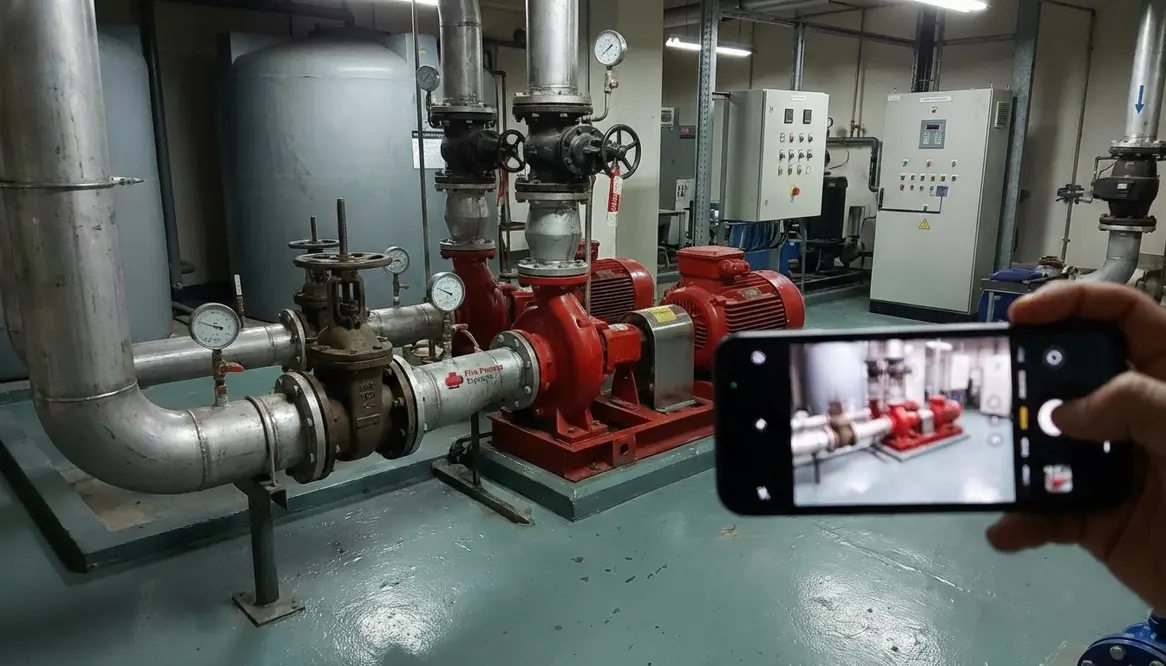
BS EN 12845 Water Supply for Fire Pumps Guide
A practical field guide to getting the fire pump’s water source right in commercial and industrial buildings.
BS EN 12845 Fire Pump Water Supply Requirements: What I Look For in Commercial and Industrial Buildings
When I review a fire protection design, I start with the BS EN 12845 water supply. Why? Because the pump can only do its job if the water source does its part. In commercial and industrial buildings, that supply must stay steady, sized correctly, and ready when the heat gets serious. Think of it like a movie hero with no fuel in the tank. Not ideal. So, in this guide, I’ll walk through the key rules, the real world checks, and the traps I try to avoid before a system ever goes live.
Why the water supply matters before the pump even starts
In BS EN 12845, the fire pump does not work alone. It depends on a water source that can deliver enough flow and pressure for the full fire demand. I always treat the supply as the heart of the system, because if it fails, the rest of the setup just stands there looking expensive.
For commercial and industrial sites, the supply must support the hazard level, the sprinkler design, and the required run time. That means I check whether the water comes from a town main, stored tanks, or a mixed setup. I also look at continuity. A supply that works fine on a calm Tuesday may fail during peak use, maintenance, or a nearby incident. Timing matters here. Water must be available when the pump asks for it, not whenever the utility feels generous.
What BS EN 12845 expects from a reliable source
First, the water supply must provide enough volume for the full design duration. In practice, that means the source must support sprinkler demand for the required period without running dry or dropping below the needed level. Also, the supply must keep pressure stable enough for the pump to operate correctly.
Here’s the simple version:
- Supply type must suit the risk.
- Water volume must cover the full demand time.
- Flow rate must meet system needs.
- Pressure must stay within working limits.
- Reliability must remain high under real site conditions.
Now, I know that sounds dry enough to put a cactus to sleep. However, these points decide whether the system protects the building or merely decorates the plant room.
How I check commercial water supply arrangements
In commercial and industrial properties, I look at the entire route from source to pump. That includes pipe size, valves, tank levels, refill rate, and any risk of interruption. I also check if the supply can handle the pump’s starting demand without a deep pressure dip.
To make this easier, I usually split the review into two parts:
Supply side checks
- Source capacity
- Tank storage volume
- Refill and replenishment rate
- Seasonal or peak use limits
Pump side checks
- Net positive suction conditions
- Suction pipe size and layout
- Valve position and access
- Any chance of air entry or blockage
And yes, I always want easy access. Fire safety should not feel like a puzzle from a spy film. If a technician needs a map, a torch, and a hopeful attitude just to inspect the suction line, I already see a problem.
BS EN 12845 water supply design details I never ignore
One detail I never skip is the storage arrangement. Where a site uses tanks, I confirm the usable water level, low level alarms, and any dead water that sits below the suction point. After that, I check the refill path. A tank that drains faster than it refills can still fail the standard even if it looks big on paper.
Furthermore, I watch for single points of failure. If one valve, one pipe run, or one control issue can cut the supply, the design needs another look. Commercial and industrial buildings often run complex services, so I always keep the fire pump supply separate from systems that may compete for water.
In many cases, I also compare the system with best practice guidance for fire pump layouts and plant room design. For extra reading, I would point to a trusted industry resource like fire pump system guidance for commercial facilities, especially when a project needs a clearer path from standard to site use.
When a BS EN 12845 water supply relies heavily on stored water, I pay extra attention to the combination of tank volume, pump duty, and hazard classification. The numbers on the drawings must match what the plant room can actually deliver when everything is running hot and loud.
Common mistakes I see on site
Some errors show up again and again. First, teams often assume mains pressure alone can carry the full fire demand. Sometimes it can. Often, it cannot. Second, they undersize storage because the tank “looked big enough.” That phrase has caused more headaches than a Monday morning alarm test.
Also, I often find poor maintenance planning. A good supply today does not guarantee a good supply next year. Sediment, corrosion, valve issues, and pump wear can all weaken performance. So, I always push for regular checks, recorded tests, and a clear service plan. This keeps the system honest, which is more than I can say for some sales brochures.
Another recurring problem is overconfidence in drawings that don’t reflect real pipework. I walk the route of the BS EN 12845 water supply on site, checking for random tees, half-shut valves, and helpful “temporary” connections that no one remembered to remove.
Finally, I often see a beautiful pump curve matched with a miserable suction arrangement. Long undersized suction lines, shared suctions with other services, or tanks with outlets placed in all the wrong places can quietly sabotage the best specified fire pump.
Putting BS EN 12845 water supply checks into practice
On real projects, I treat the BS EN 12845 water supply as a checklist that sits alongside drawings and calculations. I review how the tank levels line up with the pump’s eye, how the suction valves are arranged, and whether there is enough redundancy in case something unexpected fails.
I also encourage teams to think about construction sequencing. A beautiful final arrangement is not much use if the tanks are used as convenient storage during the build and end up contaminated or damaged before handover. Protecting the water supply is part design, part discipline.
Conclusion
If I want a fire pump system to perform, I start with the water supply and I keep my eyes on it from day one. BS EN 12845 sets the bar for a reason. It protects people, assets, and operations in serious buildings where failure is not an option. So, if your commercial or industrial site needs a proper review, I recommend acting early, checking the supply in detail, and making sure the whole system is ready before trouble arrives.