California Fire Pump Code Requirements Guide
I have spent a lot of time around mechanical rooms, concrete pump houses, and the quiet corners of large commercial buildings where serious life safety equipment lives. And when we talk about fire protection in this state, the California fire pump code requirements always enter the conversation early. Within the first planning meeting, usually right after someone asks where the coffee went.
California takes fire protection seriously. Earthquakes, dense cities, high value properties, and strict safety standards all play a role. As a result, the rules governing fire pumps for commercial and industrial buildings are detailed, deliberate, and designed to remove guesswork. I often explain it this way. A fire pump is the strong silent hero of a sprinkler system. Most days it sits quietly. However, when the pressure drops and water needs to move fast, that pump becomes the action movie star of the mechanical room.
In this guide I walk through how the codes work, why they exist, and how large facilities can stay compliant while keeping their fire protection systems reliable and efficient.
Understanding California Fire Pump Code Requirements for Commercial Buildings
When I review a project for a high rise office tower, manufacturing plant, distribution center, or hospital complex, the first place I look is the code framework. California primarily follows NFPA 20 for fire pump installation, along with the California Fire Code and California Building Code.
Together these standards define how a fire pump must be designed, installed, powered, and maintained.
However, the real goal is simple. The pump must deliver reliable water pressure to the fire sprinkler system when municipal supply alone cannot.
Why large commercial properties rely on code-driven design
Large commercial properties often face several challenges:
- High building elevations
- Extensive sprinkler networks
- Large water demand during a fire event
- Variable municipal pressure
Because of this, the code requires careful hydraulic calculations and equipment sizing. In practice, I often see electric motor driven pumps in urban facilities where electrical reliability is strong. Meanwhile diesel pumps are common in industrial campuses where redundancy is critical.
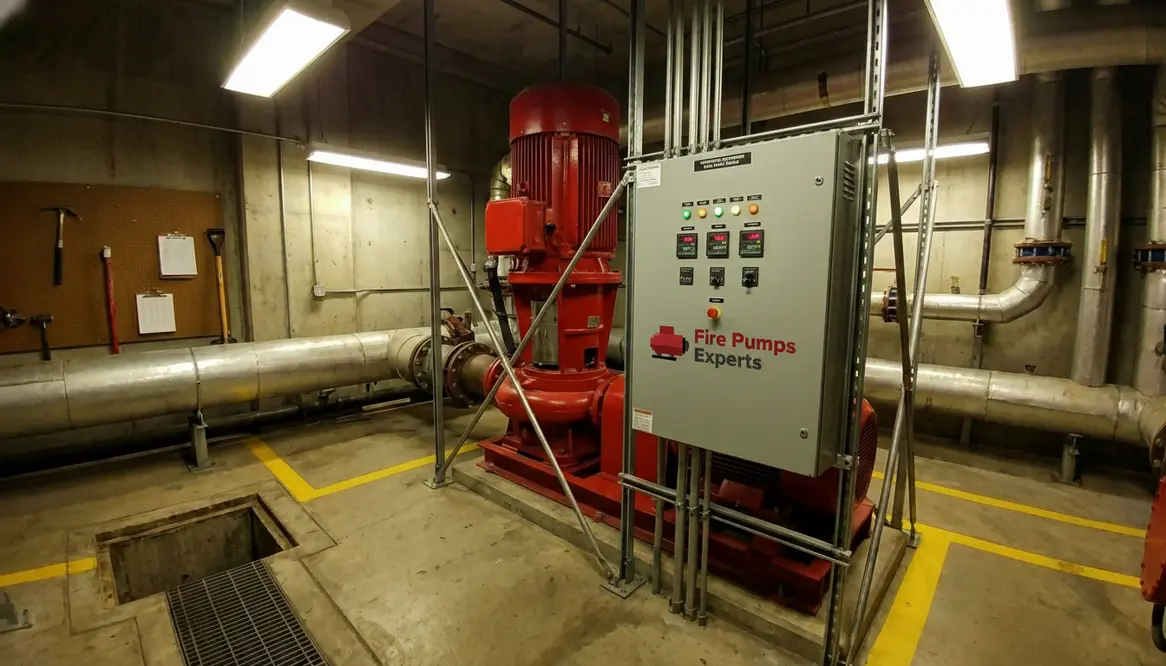
Additionally, California regulations require dedicated pump rooms, proper ventilation, seismic bracing, and reliable controller systems. The idea is simple but powerful. Even during chaos, the pump must still perform.
Think of it like the drummer in a band. You may not always notice them. But if they stop, the whole show falls apart.
Meeting California Fire Pump Code Requirements in Large Facilities
Once a project moves from design to construction, compliance becomes more than paperwork. It becomes physical equipment, precise installation, and careful inspection.
For major commercial properties, several core elements must align.
Infrastructure
- Dedicated fire pump room
- Proper drainage and floor slope
- Clear working space around equipment
- Seismic restraints and anchoring
- Ventilation for motor and controller heat
Operational systems
- Approved fire pump controller
- Reliable power supply
- Automatic start when pressure drops
- Test header for performance testing
- Monitoring tied to fire alarm system
Additionally, inspectors often pay close attention to suction piping design. Poor suction conditions can damage a pump quickly. Cavitation is not just a technical word engineers throw around to sound impressive. It is a real mechanical problem that can destroy impellers faster than a summer blockbuster destroys a city skyline.
Another important factor is accessibility. Large properties must allow safe maintenance and testing. If a technician needs to crawl through a maze of ductwork just to reach the controller, something went wrong in the design phase.
How Fire Pumps Support Large Sprinkler Systems in California
Sprinkler systems protect enormous square footage in commercial environments. Warehouses alone can exceed one million square feet. That is a lot of piping and a lot of sprinklers waiting for water pressure.
Municipal water systems do not always provide enough pressure to support that demand. This is where the fire pump steps in.
The pump activates when system pressure drops below a preset level. Once running, it boosts water flow through the sprinkler network so that sprinklers can control or suppress the fire.
Balancing horsepower, pressure, and code expectations
However, large properties require more than just horsepower. They require precision.
Engineers calculate:
- Total sprinkler demand
- Required pressure at the most remote sprinkler
- Pipe friction losses
- Elevation changes across the property
As a result, the pump curve must match the system demand exactly. Too small and the building loses protection. Too large and the system can experience damaging pressure surges.
I like to compare this process to tuning a guitar. Tighten the string too much and it snaps. Too loose and it sounds like a sad balloon. Somewhere in the middle is perfect tension. Fire pump design works the same way.
Why reliability and testing matter in critical facilities
Even the best designed pump means nothing if it fails during an emergency. Therefore California requires strict inspection, testing, and maintenance programs.
Weekly and monthly pump churn tests verify that the pump starts correctly and maintains pressure. Annual flow testing confirms the pump still meets its rated performance.
For large commercial and industrial properties, these tests are not optional checkboxes. They are essential safeguards for high value assets and human safety.
Monitoring the strong silent hero of your sprinkler system
Modern facilities often integrate pump monitoring into building management systems. This allows engineers to track:
- Pressure levels
- Controller alarms
- Power conditions
- Run times
Because of this, facility managers gain early warning before problems grow into expensive failures.
And trust me, discovering an issue during a scheduled test is far better than discovering it during a real fire. That is the mechanical room equivalent of finding out your parachute works after jumping out of the plane.
What do inspectors look for during a fire pump inspection?
When an authority having jurisdiction evaluates a commercial fire pump system, the inspection follows a clear set of priorities.
First, they confirm the installation follows approved plans and applicable standards. Second, they verify the pump performs at its rated capacity. Finally, they confirm monitoring and alarms operate correctly.
During inspections I often see officials focus on several practical details.
- Correct pump rotation and operation
- Controller functionality and alarm signals
- Flow test performance results
- Condition of suction and discharge piping
- Documentation of maintenance records
These inspections help ensure the system remains ready for years after installation. Codes may look strict on paper. In reality they simply enforce a basic promise. When the sprinklers open, water must arrive with force and reliability.
Practical FAQ: California fire pump code requirements in real buildings
In the field, questions about California fire pump code requirements usually show up the moment design drawings hit the conference table. Whether you are planning a new warehouse or upgrading a hospital, the same themes repeat: when pumps are required, how they are tested, and how to keep that strong silent hero ready for the next emergency.
Conclusion
If you manage a large commercial or industrial property, understanding the California fire pump code requirements is more than a regulatory exercise. It is a direct investment in safety, operational continuity, and asset protection. At Kord Fire Protection, teams work with major facilities to design, inspect, and maintain compliant fire pump systems that perform when it matters most. If your property needs expert guidance, testing, or system upgrades, the right partner can help keep your protection strong and dependable.