CSA Fire Pump Electrical Requirements Guide
When I look at CSA electric standards for fire pumps, I see more than wire, panels, and labels. I see the quiet machinery that stands between a building and a very bad day. For commercial and industrial facilities, the electrical side of a fire pump must work with calm, stubborn reliability. No drama. No “let me think about it.” Just action when the system calls. And yes, that matters a lot more than a blinking light on a dashboard that looks like it came from a sci fi movie.
In this guide, I will walk through the main electrical rules, the practical checks, and the design points that help a fire pump do its job in major properties. I will keep it clear, direct, and useful, because fire protection does not need fluff. It needs answers.
CSA fire pump electrical requirements at a glance
CSA rules focus on safe power delivery, proper control, and dependable operation during a fire event. In simple terms, the fire pump must get power without avoidable interruption. Also, the electrical setup must support the pump with the right conductors, disconnects, protection, and control equipment.
For a commercial tower, warehouse, plant, or large site, this means I must check more than just the pump motor. I must also review the feeder path, emergency power source if used, transfer equipment, control wiring, and the physical location of electrical parts. Because if one weak link fails, the whole chain gets moody.
What I check in the power supply
The first job is simple: keep the pump powered. CSA and related fire code practice expect a dedicated and reliable electrical supply. I look for a feed that supports the fire pump without sharing unnecessary loads. That matters because fire pumps should not compete with elevators, chillers, or other hungry equipment when the building is under stress.
Here is the kind of checklist I use:
- A dedicated source for the fire pump
- Proper conductor sizing for the full load and starting demand
- Clear labeling on all supply and control parts
- Secure routing that protects cables from heat, damage, and traffic
- Backup power or alternate source where the design requires it
Also, I pay close attention to voltage drop. A pump can look fine on paper and still stumble if the voltage sags too much at start up. That is not the kind of surprise any property manager wants. Think of it like a superhero trying to lift a car with a weak breakfast.
How I handle controllers, disconnects, and protection
The fire pump controller is the brain of the setup, so I want it to be simple, strong, and easy to reach for service. CSA fire pump electrical requirements push me to use equipment that can handle emergency duty and avoid accidental shutoff. That means I do not place a casual disconnect in a spot where someone could flip it during routine work and accidentally turn a life safety system into office decor.
I also check overload and short circuit protection with care. The goal is not to “protect” the pump out of service. The goal is to let it start and run when needed while still guarding the circuit from faults. So, the design has to balance safety with availability. That balance is the whole game.
Fire pump electrical layout for commercial and industrial sites
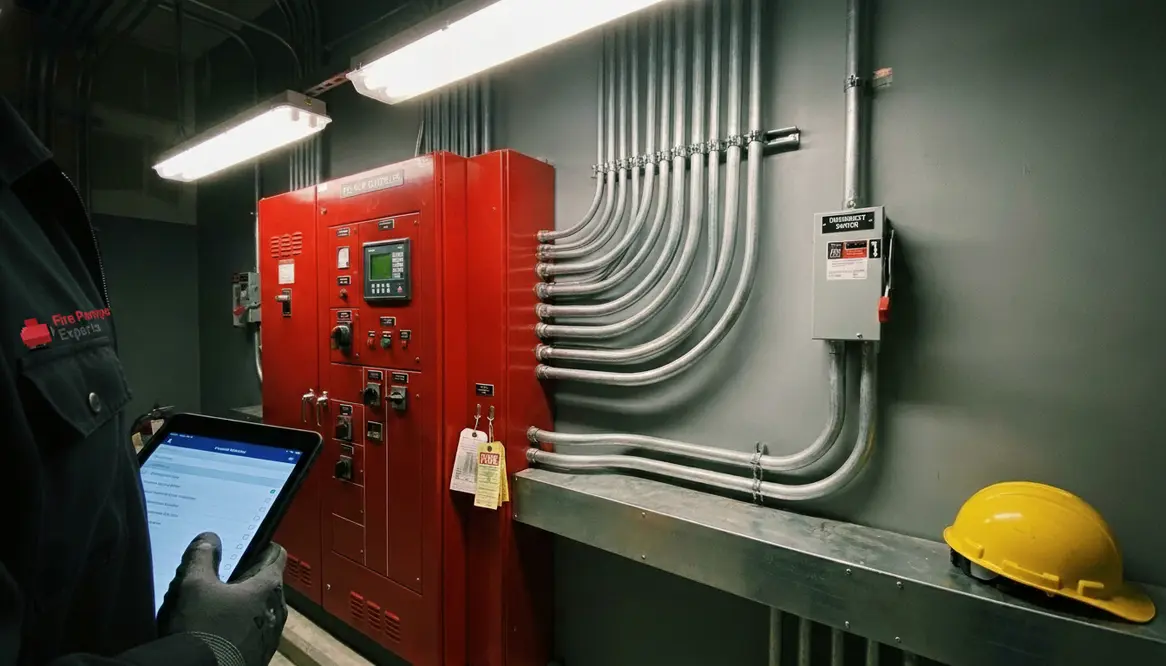
Now, let me make this practical. A large property needs a clean layout, because chaos loves a messy electrical room. I always think about access, heat, moisture, and service space. If the pump room feels like a storage closet for abandoned chairs and mystery boxes, I already know we have a problem.
Dual view: design points and field checks
Design points
- Keep the controller close enough for safe service
- Separate the fire pump supply from non essential loads
- Use equipment rated for the building’s conditions
- Plan for clear access during emergencies
Field checks
- Confirm the wiring path matches the approved design
- Inspect terminals for tight, clean connections
- Verify labeling and circuit identification
- Test that alarms, indicators, and transfers work as intended
As I review a site, I want the electrical room to tell a simple story. I want to see order, purpose, and enough space to work. If I see tangled conductors and vague labels, I do not call it “character.” I call it a future service call.
Testing and maintenance to keep CSA compliance steady
Electrical compliance does not stop after installation. In fact, that is where the plot thickens. I need regular testing to confirm the system still performs as designed. This includes controller checks, power source checks, alarm checks, and operational tests under the right conditions.
I also watch for signs of wear. Loose connections, heat marks, corrosion, and nuisance trips can all signal trouble. Moreover, maintenance logs matter because they show a pattern. A single issue may look small, but three small issues can become a very expensive headline.
For commercial and industrial buildings, I recommend a routine schedule that fits the size and risk of the property. The larger the site, the more I want a disciplined plan. Fire protection should never rely on good luck. That is not a strategy. That is a wish, and wishes do not pass inspections.
If you are coordinating with a fire protection team, an electrical contractor familiar with CSA electric standards, and a building operations crew, keep everyone aligned on testing intervals, reporting, and corrective work. Clear roles keep the system honest.
Where CSA electric fits into your wider fire protection plan
Electrical reliability is only one piece of a fire protection strategy, but it is the piece that quietly decides whether the rest of the system can show up to work. A well designed sprinkler layout, a compliant water supply, and a glossy inspection report do not mean much if the fire pump motor never gets the power it needs.
When I look at a commercial or industrial site, I want to see a straight line between codes, real world conditions, and the way people actually use the building. That means checking how maintenance staff reset alarms, how operations teams treat the electrical room, and how often anyone opens the pump controller door on purpose instead of by accident.
Good coordination between mechanical and electrical design teams helps keep CSA electric requirements from becoming an afterthought. Cable routing, controller placement, and emergency power decisions should be part of the early conversation, not a last minute scramble with a red pen on a set of drawings.
Practical tips for commercial and industrial properties
Stay organized in the pump and electrical rooms
If the fire pump room looks like the place where broken chairs go to retire, it is time for a reset. Keep clearance around the controller, motor, and main disconnects. Make sure labels are legible without a flashlight and a guess. The more effort it takes to read a label, the more likely someone will make up their own story about what a switch does.
Use documentation as a working tool
Keep single line diagrams, manufacturer data sheets, and test reports where people can actually find them. When something unusual happens during an inspection or a real event, that paperwork becomes the map. Without it, you are relying on memory, guesswork, and the theory that “someone once explained this in a meeting.”
Know when to bring in specialists
A general electrician can handle a lot, but a fire pump driven by CSA electric and life safety rules is not a place to experiment. When in doubt, use contractors and consultants who work with fire pumps regularly. The learning curve is much cheaper on paper than it is during an emergency.
Conclusion
If I want a CSA compliant fire pump electrical setup that truly supports a commercial or industrial property, I need more than a code check. I need a smart design, clean installation, and steady maintenance. If your site needs help reviewing fire pump electrical requirements or improving compliance, now is the time to act. Reach out, get the system reviewed, and make sure your fire protection is ready before trouble shows up uninvited.
Start with power quality, controller reliability, documentation, and clear responsibility between your operations team and any contractors working under CSA electric guidelines. When each of those pieces holds steady, the fire pump becomes what it is supposed to be: the quiet equipment that never argues, never panics, and simply goes to work when the alarm sounds.