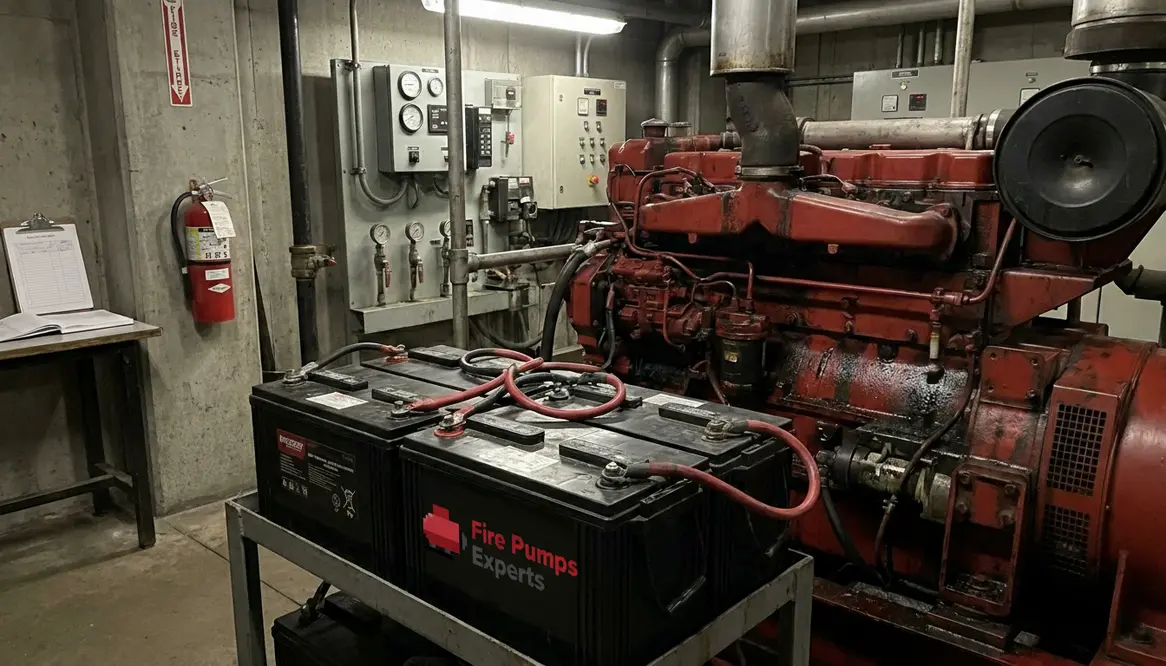
Diesel Fire Pump Battery Requirements Explained
I have spent enough time around pump rooms to know one truth. When the power drops, nobody wants a fire pump that hesitates like it just woke up from a nap. That is exactly why diesel fire pump battery requirements matter more than most people realize. These batteries are not just accessories. They are the starting line of your entire fire protection system. And if they fail, well, things can go from calm to action movie chaos faster than you can say “backup plan.”
Understanding Diesel Fire Pump Battery Requirements in Real Buildings
In commercial and industrial facilities, reliability is not optional. It is baked into every code, every inspection, and every late night worry from facility managers. Diesel driven fire pumps rely on battery systems because they cannot depend on utility power during an emergency. Therefore, standards require two independent battery systems. Not one. Two. Because redundancy is not paranoia. It is survival.
Each battery must be capable of starting the engine multiple times. In fact, most codes expect enough capacity for repeated cranking cycles without recharge. That means we are not talking about your average car battery from a weekend trip to the auto shop. These are heavy duty, purpose built units designed for high reliability.
Moreover, they must be maintained at full charge continuously. Chargers are not optional accessories either. They are part of the system. Without them, even the best batteries slowly turn into expensive paperweights.
What Batteries Do Diesel Fire Pumps Actually Need
I like to keep this simple because the stakes are already high enough. Most diesel fire pumps use lead acid batteries, either flooded or maintenance free. However, the key is not just the type. It is the performance under pressure.
Here is what I always look for when evaluating battery setups
- High cold cranking amps to ensure reliable engine starts
- Dual battery configuration for redundancy
- Dedicated chargers for each battery
- Durable construction built for vibration and heat
Additionally, placement matters. Batteries should sit in a clean, ventilated space near the engine but protected from excessive heat. Because while diesel engines love to run hot, batteries absolutely do not.
Why Redundancy Is Not Just a Buzzword
The quiet insurance policy in your pump room
I once heard someone say, “If one battery is good, two is just showing off.” That person has clearly never stood in a mechanical room during an emergency test. Redundancy is the quiet hero here.
With two batteries wired independently, the system can still start even if one fails. And yes, failures happen. Corrosion, aging, improper charging, all of it creeps in over time. Therefore, having a second battery is like having a stunt double. You hope you never need it, but you are very glad it is there.
Codes like NFPA 20 reinforce this requirement because real world conditions are not always ideal. Power surges, temperature swings, and human error all play their part. Redundancy steps in when everything else decides to take the day off.
How I Maintain Diesel Fire Pump Battery Systems Without Guesswork
What I check regularly
- Voltage levels and charge status
- Clean terminals free of corrosion
- Electrolyte levels in flooded batteries
- Charger operation and output
What I never ignore
- Slow engine cranking
- Visible battery swelling
- Loose cable connections
- Warning alarms on controllers
Furthermore, I schedule load testing. Because a battery that looks fine can still fail under real demand. It is a bit like actors who look great in auditions but forget their lines on opening night.
For facilities that want zero guesswork, working with experienced providers like commercial electrical service specialists ensures charging systems and wiring stay compliant and reliable. In large properties, that expertise is not a luxury. It is part of the safety net.
Diesel Fire Pump Battery Requirements and Code Compliance Made Simple
Turning dense standards into everyday practice
Now let us talk compliance without turning this into a legal drama. Standards such as NFPA 20 outline clear expectations for battery systems. And while the language can feel dense, the intent is straightforward.
Batteries must be
- Dedicated solely to the fire pump
- Continuously charged by reliable chargers
- Monitored for performance and faults
- Capable of multiple start attempts
Additionally, weekly and monthly testing is required. These tests confirm that the system responds instantly when called upon. Because in a real emergency, there is no time for troubleshooting. It either works or it does not.
What Happens If You Get It Wrong
I will keep this honest and direct. If battery systems fail, the diesel fire pump does not start. And if the pump does not start, water does not move. At that point, the entire fire protection strategy begins to unravel.
Beyond safety risks, there are compliance violations, potential fines, and serious liability concerns. For large commercial and industrial properties, that is not just a bad day. That is a headline you do not want.
On the lighter side, skipping proper battery care is a bit like ignoring your phone battery all day and expecting it to survive a cross country flight. Spoiler alert. It will not.
FAQ Quick Answers
These quick points keep diesel fire pump battery requirements easy to remember when you are standing in front of the controller wondering what really matters.
Keep Your System Ready Before It Is Needed
At the end of the day, batteries are quiet until they are everything. I always tell clients that meeting diesel fire pump battery requirements is not about checking a box. It is about ensuring that when the moment comes, your system responds without hesitation. If you want confidence instead of crossed fingers, invest in proper maintenance, expert support, and reliable components. Because when it comes to fire protection, ready is the only acceptable state.