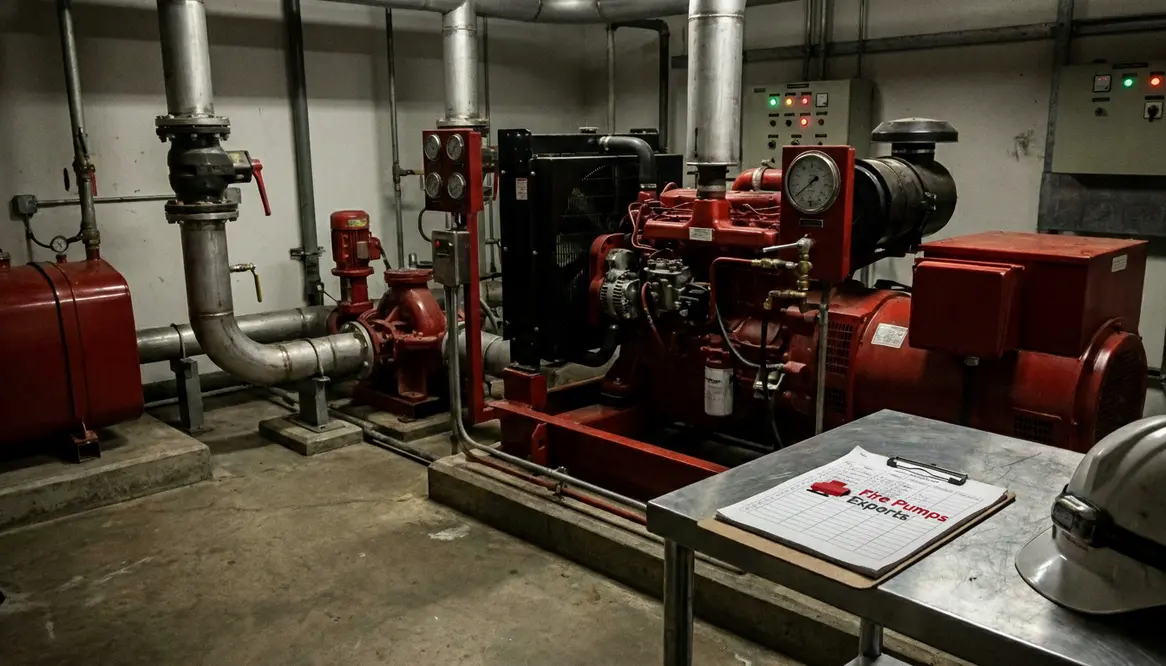
Diesel Fire Pump Testing Requirements Guide
I have spent enough time around pump rooms to know one thing for certain. When everything is quiet, that is when you should worry. A diesel fire pump is not a decoration. It is the last line of defense when everything else fails. That is why understanding diesel fire pump testing requirements is not just a box to check. It is the difference between a system that performs and one that politely refuses when called upon. And trust me, in a fire, polite refusal is not a personality trait you want in your equipment.
What Are Diesel Fire Pump Testing Requirements and Why Should I Care?
I like to think of testing as a rehearsal. You would not open a Broadway show without one, unless you enjoy chaos. Similarly, these requirements ensure your pump starts, runs, and delivers water when it matters most. They are built around standards like NFPA 25, which outlines how often and how thoroughly systems should be tested.
More importantly, testing verifies three things. First, the engine starts reliably. Second, the pump delivers the correct pressure and flow. Third, the entire system responds under real conditions. Without these checks, you are essentially crossing your fingers and hoping for the best. And hope, while charming, is not a strategy.
How Often Should a Diesel Fire Pump Be Tested?
I get this question a lot, and the answer is refreshingly straightforward. Weekly, monthly, and annually. However, each interval serves a different purpose.
Weekly tests are quick and focused. I run the pump for at least 30 minutes, ensuring it starts automatically and maintains stable operation. Meanwhile, monthly checks dive deeper into battery condition, fuel levels, and control panel functionality. Then comes the annual test, which is the full performance evaluation. This is where I confirm the pump meets its rated flow and pressure under load.
In other words, think of weekly tests as a heartbeat check, monthly as a physical, and annual as a full diagnostic. Skip any of them, and you are flying blind.
Breaking Down Diesel Fire Pump Testing Requirements in Practice
Now we get into the meat of it. When I conduct a proper test, I follow a sequence that leaves nothing to chance.
Key steps I always include
- Start sequence verification so the engine responds instantly
- Run duration monitoring to ensure stable operation over time
- Pressure and flow readings to confirm performance matches design
- Fuel system inspection to avoid unpleasant surprises
- Battery and charger checks because a dead battery is a silent failure
Additionally, I pay close attention to vibration and unusual noise. A diesel engine will talk to you if something is wrong. You just have to listen. If it suddenly sounds like a rock band warming up in a metal garage, that is your cue to investigate.
What Do Inspectors Actually Look For?
Inspectors are not there to ruin your day. They are there to confirm your system will not ruin someone else’s. From my experience, they focus on consistency, documentation, and compliance.
Operational focus
- Reliable automatic start
- Stable pressure output
- Proper cooling and exhaust
- No fuel leaks or blockages
Documentation focus
- Accurate weekly and annual logs
- Maintenance records
- Performance test results
- Compliance with NFPA standards
Furthermore, inspectors appreciate clarity. If your records look like they were written during a roller coaster ride, expect follow up questions. Clean documentation tells a story of reliability.
Common Mistakes I See in Commercial and Industrial Facilities
I have seen some things. Not all of them inspiring.
One common issue is skipping load testing. Running a pump without simulating real demand is like revving a sports car in neutral and calling it a race. Another mistake is neglecting fuel quality. Diesel degrades over time, and contaminated fuel can quietly sabotage your system.
Then there is the classic assumption that if it worked last year, it will work this year. That is not how mechanical systems behave. They age, they wear, and occasionally they decide to be dramatic.
For large commercial and industrial properties, these mistakes scale quickly. A small oversight can impact an entire facility. That is why many property managers turn to specialized providers like professional fire pump testing services for commercial systems to ensure nothing slips through the cracks.
How I Keep Testing Efficient Without Cutting Corners
Efficiency is not about rushing. It is about precision. I prepare before every test by reviewing past reports and checking system conditions. That way, I know what to expect and what might need extra attention.
During testing, I follow a structured process. However, I stay flexible enough to investigate anything unusual. Afterward, I document everything immediately. Waiting until later is a great way to forget important details. And memory, while impressive, is not a reliable record keeping system.
Ultimately, consistency is what keeps everything running smoothly. A well tested pump is a predictable pump, and predictability is exactly what you want in an emergency. Understanding and following diesel fire pump testing requirements gives that consistency structure instead of guesswork.
FAQ
The most common questions I hear usually circle back to the same theme: how strict are diesel fire pump testing requirements, and what happens if something is missed? The short answers are “very” and “nothing good.”
Final Thoughts and Next Steps
When I look at a diesel fire pump, I do not just see machinery. I see a responsibility. Testing is not optional, and it is not something to take lightly. If you manage a commercial or industrial facility, now is the time to review your process, tighten your routine, and bring in experts if needed. Because when the moment comes, your system should not hesitate. And neither should you.