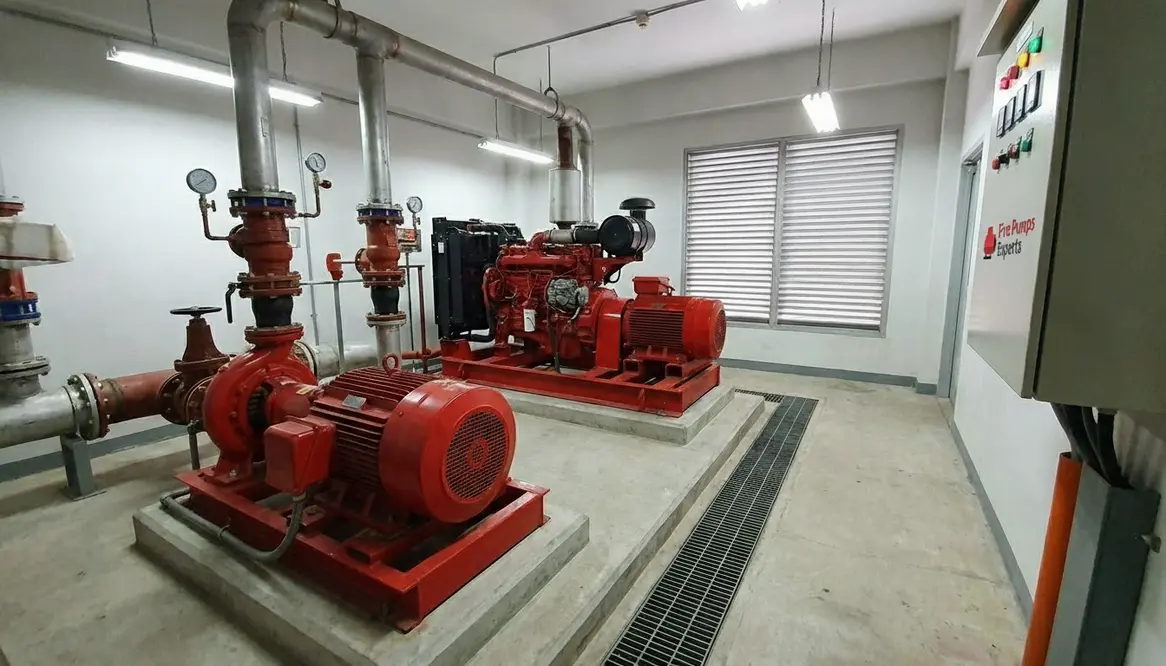
DIN Fire Pump Room Design Considerations for Commercial and Industrial Buildings
When I look at a DIN room for fire protection, I do not see a plain utility space. I see the quiet engine behind a building’s safety plan. In a commercial tower, a factory, or a major property complex, this room must work without drama, delay, or guesswork. And honestly, that is the whole point. Fire protection should never feel like a plot twist in a bad movie. It should be ready, steady, and built to perform when the pressure rises.
What I check first in a DIN fire pump room layout
I always start with access, space, and flow. A fire pump room must allow safe entry for staff, inspectors, and repair crews. At the same time, it needs enough clear space around every pump, controller, valve, and support item. If the room feels cramped, then maintenance becomes harder, response slows down, and small issues can grow teeth.
I also think about room placement inside the building. For commercial and industrial sites, I want the pump room in a protected area with low exposure to heat, flood risk, and impact damage. In larger properties, this room often sits close to the fire water supply and main system routes. That cuts loss in pressure and helps the equipment do its job without a fuss.
Key points I check in the layout:
- Clear access for service and emergency response
- Enough working space around all equipment
- Safe path for pipe runs and cable routes
- Dry, secure, and protected room location
- Simple movement for replacement parts and tools
So, before I even talk about pumps, I make sure the room itself does not fight the system. A smart layout saves time later. It also saves money, which tends to make every stakeholder suddenly very interested in “best practice.”
How I size equipment and support systems
Here is where the real planning begins. I size the fire pump room around the actual water demand, not wishful thinking. That means I review building risk, sprinkler needs, standpipe demand, and any special fire load from industrial processes. Then I match the room to the system, not the other way around.
I also think about the full support setup. A fire pump room usually needs the main pump, backup pump, jockey pump, controllers, suction and discharge fittings, test lines, drains, and power supply gear. In many commercial buildings, I design these parts as one clear system so the operator does not need a treasure map just to do a weekly check.
Quick reference planning matrix
| Area | Why it matters |
| Pump capacity | Matches the fire demand of the property |
| Power supply | Keeps the system alive during outages |
| Drainage | Prevents water buildup and damage |
| Ventilation | Controls heat and protects equipment life |
And yes, I always leave room for future checks and upgrades. Buildings grow, operations change, and fire systems should not live like they are stuck in season one of a show that got cancelled too soon. A well-sized DIN room can adapt without major demolition every time someone changes a process line or adds a new floor of tenants.
Why ventilation, drainage, and power matter so much
If the room gets too hot, too wet, or too dependent on one power source, the whole design starts to wobble. That is why I treat ventilation, drainage, and power as core design items, not side notes.
Ventilation keeps motor and controller heat under control. It also helps reduce wear on electrical parts. In large industrial sites, heat can build fast, especially when the room sits near other mechanical systems. So I want steady airflow that supports equipment life without creating new problems.
Drainage matters just as much. During testing or a system fault, water can collect fast. If the room has poor drainage, that water can damage equipment, weaken floors, and create unsafe conditions. I aim for a clean path to move water away before it turns the room into an indoor lake. Nobody wants that surprise.
Power is the final pillar. I plan for reliable electrical supply, control logic, and backup where needed. In many major properties, I also make sure the emergency power path supports the fire pump under outage conditions. That way, the system stays ready when the building needs it most.
Connecting the DIN room to the wider building
All three of these elements tie the DIN room to the rest of the property. Ventilation links to mechanical systems, drainage ties into plumbing, and power interacts with normal and emergency electrical networks. When they are coordinated, the fire pump room behaves like a stable core service instead of a fragile add-on.
How I keep the room easy to maintain and inspect
I never design a pump room as a “set it and forget it” space. Fire protection works because people inspect, test, and maintain it. So I build for real-world use.
I leave clear access to gauges, valves, filters, controllers, and test points. I label parts in a simple way. I also make sure staff can walk around the equipment without squeezing past pipes like they are in an action scene with a countdown timer. That kind of layout helps crews work faster and lowers the chance of mistakes.
I also favor strong lighting, durable finishes, and simple room organization. The goal is plain: let technicians see what they need, reach what they need, and fix what they need without wasting time. For commercial and industrial facilities, that matters because downtime can affect more than safety. It can hit operations, output, and revenue too.
If you want a deeper technical reference, I recommend reviewing https://firepumps.org/ to align the room plan with real project demands and keep your DIN room strategy grounded in tested practice.
Daily reality inside a working DIN room
In a live facility, people move in and out of the fire pump room constantly: operators doing weekly runs, inspectors checking test headers, contractors swapping components. When the room is laid out cleanly, those visits are routine and uneventful. When it is not, every visit feels like a puzzle. I design so that even the newest team member can understand the flow of the DIN room at a glance.
FAQs about DIN fire pump room design
My final take on building it right
When I design a DIN fire pump room, I focus on safety, access, reliability, and long term ease of use. A strong room layout supports the whole fire protection system, and that matters in commercial and industrial buildings where risk runs high. So if you are planning a new facility or upgrading an existing one, I suggest you treat this room like the backbone it is. Build it well, inspect it often, and let it do its job when it counts most.
In the end, the DIN room should feel predictable, almost boring in the best way. When alarms sound and systems start, you want calm, well-planned performance, not improvisation. That kind of quiet confidence only comes from thoughtful design, disciplined installation, and steady attention over the life of the building.