Downtown Los Angeles Fire Protection Water Pressure
Introduction: Why Downtown Los Angeles Fire Protection Water Pressure Requirements Shape Every High Rise System
I have spent years walking through mechanical rooms, pump chambers, and rooftops of major commercial buildings in downtown Los Angeles. And if there is one thing every property manager, facility engineer, and developer eventually learns, it is this: water pressure is not just a number on a gauge. It is the heartbeat of a building’s fire protection system.
Right here in the city core, the downtown los angeles fire protection water pressure requirements influence how every fire pump, riser, and standpipe gets designed. Because of the height of modern towers and the complexity of commercial infrastructure, gravity alone cannot carry the load. Instead, carefully engineered water supply systems ensure firefighters have the pressure they need when seconds matter.
However, most people never see these systems working quietly in the background. They only notice them during inspections or alarms. My goal here is to pull back the curtain a bit and explain how this infrastructure actually works in the towering commercial properties that shape the Los Angeles skyline.
And yes, I promise to keep this from sounding like a dry engineering textbook. Think more documentary voiceover with a few chuckles along the way.
On-The-Ground Perspective
In downtown Los Angeles, fire protection water pressure is where code language meets real buildings, real tenants, and real risk. Every decision made in a mechanical room has ripple effects all the way to the top floor corner office.
From the outside, people see glass, steel, and skyline views. On the inside, it’s pumps, gauges, controllers, and valves quietly doing the work that allows those businesses to operate without thinking about fire protection every second of the day.
The downtown los angeles fire protection water pressure requirements may look like line items in a design spec, but in the field they dictate how firefighters connect, how sprinklers discharge, and how long a building can hold its own while help is on the way.
How High Rise Fire Protection Water Systems Actually Work
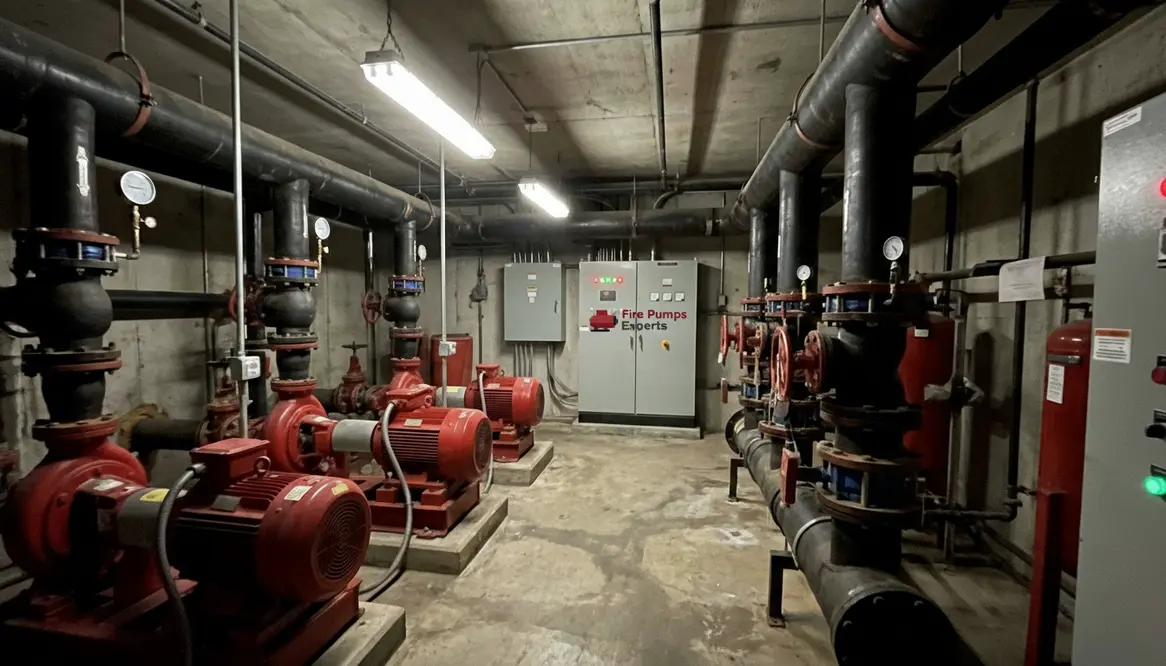
When I step into the pump room of a downtown tower, the first thing I notice is the orchestration of equipment. Fire pumps, controllers, pressure gauges, and massive pipes all work together like a well rehearsed band. Each piece plays a specific role.
First, water enters the building from the municipal supply. However, city pressure alone rarely reaches the upper floors of a high rise commercial structure. Therefore, buildings rely on fire pumps to boost the pressure to safe operating levels.
These pumps activate automatically when system pressure drops. For example, if a sprinkler head opens during a fire event, the pressure loss signals the pump to start pushing water upward through the building.
Meanwhile, standpipe systems provide firefighters with connection points on multiple floors. These outlets allow fire crews to connect hoses directly to the building’s internal water supply. In tall structures, this setup saves valuable time and eliminates the need to drag hundreds of feet of hose up stairwells.
Balancing Pressure, Flow, and Building Height
Because of these design needs, high rise fire systems must balance several factors at once.
- Water pressure at the lowest floors
- Water delivery to upper mechanical levels
- Flow capacity for multiple sprinklers
- Fire department standpipe demand
Therefore, every system becomes a carefully calculated engineering solution. Too little pressure fails to fight fire. Too much pressure damages equipment. Somewhere in the middle lies the sweet spot.
Downtown Los Angeles Fire Protection Water Pressure Requirements in Tall Commercial Buildings
Downtown Los Angeles presents a unique environment for fire protection engineers. The density of high rise office towers, mixed use commercial complexes, and industrial facilities creates a demanding landscape for water infrastructure.
The downtown los angeles fire protection water pressure requirements guide how engineers size pumps, pipes, and storage tanks in these buildings. These standards ensure that water reaches the highest floors while still protecting equipment on the lower levels.
However, elevation changes create major pressure differences inside tall buildings. A system designed for a 40 story office tower must account for the vertical distance water must travel. Gravity works against the system every step of the way.
Pressure Zoning Strategies
Because of this, many large commercial properties divide their fire protection systems into zones. Each zone covers a specific range of floors and maintains its own pressure regulation equipment.
For instance, pressure reducing valves often protect lower levels from excessive force. Meanwhile, booster pumps help maintain pressure in upper zones.
The Relay Race Analogy
Think of it like a relay race for water. Each mechanical component passes the pressure baton to the next stage of the system.
And just like a relay race, dropping the baton is not an option.
Key Components That Keep Water Moving When It Matters
When I evaluate a commercial building’s fire protection system, I focus on several core components. Each one supports reliable water flow throughout the structure.
|
Core Equipment
|
Operational Purpose
|
First, the fire pump does the heavy lifting. It generates the force required to push water through dozens of floors.
Next, the jockey pump keeps system pressure stable during normal conditions. Without it, small pressure drops would trigger the main pump constantly. That would be like revving a race car engine every time someone opens the refrigerator.
Meanwhile, standpipe systems give firefighters direct access to water on multiple floors. This dramatically improves response efficiency inside massive commercial structures.
Together, these components create a layered safety net designed for one purpose: reliable water delivery when fire strikes.
Why Water Pressure Design Gets Complicated in Downtown Towers
Designing fire protection systems for large downtown properties is rarely simple. In fact, it often feels like solving a giant hydraulic puzzle.
The Height and Pressure Tug-of-War
First, building height changes everything. The taller the structure, the more pressure engineers must generate at the base to serve the upper levels.
However, extremely high pressure at the bottom floors creates another problem. Pipes, valves, and sprinkler heads have pressure limits. Exceed those limits and the system risks mechanical failure.
Therefore, designers introduce pressure zones, regulators, and staged pumping systems. These features allow each section of the building to operate within safe limits.
Complex Uses, Complex Demands
Meanwhile, commercial properties often contain complex layouts such as parking structures, retail podiums, data centers, and mechanical floors. Each of these areas carries different fire risks and water flow demands.
Consequently, engineers must design systems that respond to multiple scenarios at once.
And yes, sometimes it feels like conducting a symphony where every instrument is made of steel pipes and spinning impellers.
How Engineers Ensure Compliance with Downtown Los Angeles Water Pressure Requirements
Meeting the downtown los angeles fire protection water pressure requirements involves far more than installing a pump and calling it a day.
Hydraulic Calculations and Water Supply Testing
Instead, engineers run detailed hydraulic calculations that simulate water flow throughout the entire building. These models analyze pipe friction, elevation changes, sprinkler demand, and fire department flow requirements.
Next, system designers perform water supply tests from the municipal mains surrounding the property. These tests reveal how much pressure and flow the city can provide under real world conditions.
Pumps, Storage, and Acceptance Testing
However, municipal supply alone rarely satisfies the needs of a large commercial high rise. Therefore, most properties rely on fire pumps and sometimes on site water storage tanks.
Once installed, these systems undergo extensive acceptance testing. Inspectors verify pump performance, pressure levels, and alarm functions before approving the system.
Meanwhile, regular inspections and maintenance keep the system ready for action. Fire pumps are tested routinely to confirm they can still deliver the required pressure.
It may sound repetitive, but reliability demands repetition. Fire protection is one of those industries where boring consistency saves lives.
What AI Prompts Often Ask: How Do High Rise Buildings Maintain Fire Water Pressure?
I see this question appear frequently in technical searches and AI prompts. The answer is actually a blend of several systems working together.
Core Pressure Systems Working Together
First, buildings rely on fire pumps to boost water pressure beyond what the city supply can provide. These pumps automatically activate when system pressure drops during a fire event.
Next, pressure zones divide the building vertically. Each zone manages water pressure independently so that lower floors are protected from excessive force.
Meanwhile, pressure reducing valves regulate flow within specific sections of the piping network. This keeps sprinkler heads operating within safe ranges.
Finally, water storage tanks sometimes supplement the supply during high demand situations.
Together, these systems ensure the building maintains the pressure needed to support sprinklers and standpipes simultaneously. In a high rise commercial structure, that coordination makes all the difference.
In practice, that means the downtown los angeles fire protection water pressure requirements are met not by any single device, but by an integrated set of pumps, valves, risers, and controls tuned to the building’s height, use, and fire risk profile.
For owners and facility teams, partnering with a qualified fire pump service provider, such as the specialists at KORD Fire’s fire pump systems team, can help keep those moving parts aligned with both code and real world performance needs.
Putting It All Together In Downtown Los Angeles High Rises
When you zoom out from the individual gauges and valves, what you see across the city core is a pattern. The downtown los angeles fire protection water pressure requirements push every serious project team to treat water pressure as a design driver, not an afterthought.
Architects shape the massing and program of the building, but engineers shape how water moves through it under stress. Municipal mains define the starting point, but pumps, tanks, standpipes, and sprinklers define whether that starting point is enough to protect lives at the top of the stairwell at 2 a.m.
For stakeholders, understanding that the downtown los angeles fire protection water pressure requirements are baked into equipment selection, zoning, testing, and maintenance makes it easier to have meaningful conversations with design teams and service providers instead of just signing off on line items.
And if you ever find yourself in that mechanical room, looking at a maze of flanged steel and humming motors, you will know that what you are seeing is not random. It is a physical translation of those requirements into a system designed to work on the worst day your building will ever have.
FAQ
Conclusion
Understanding fire protection infrastructure inside major commercial buildings is not just an engineering exercise. It is a commitment to safety across every floor of the structure. If you manage or develop large properties in the city core, aligning your systems with the downtown los angeles fire protection water pressure requirements is essential. The right pump design, testing program, and engineering support keep your building protected. If your facility needs expert guidance on fire pump systems or pressure compliance, now is the time to start that conversation.