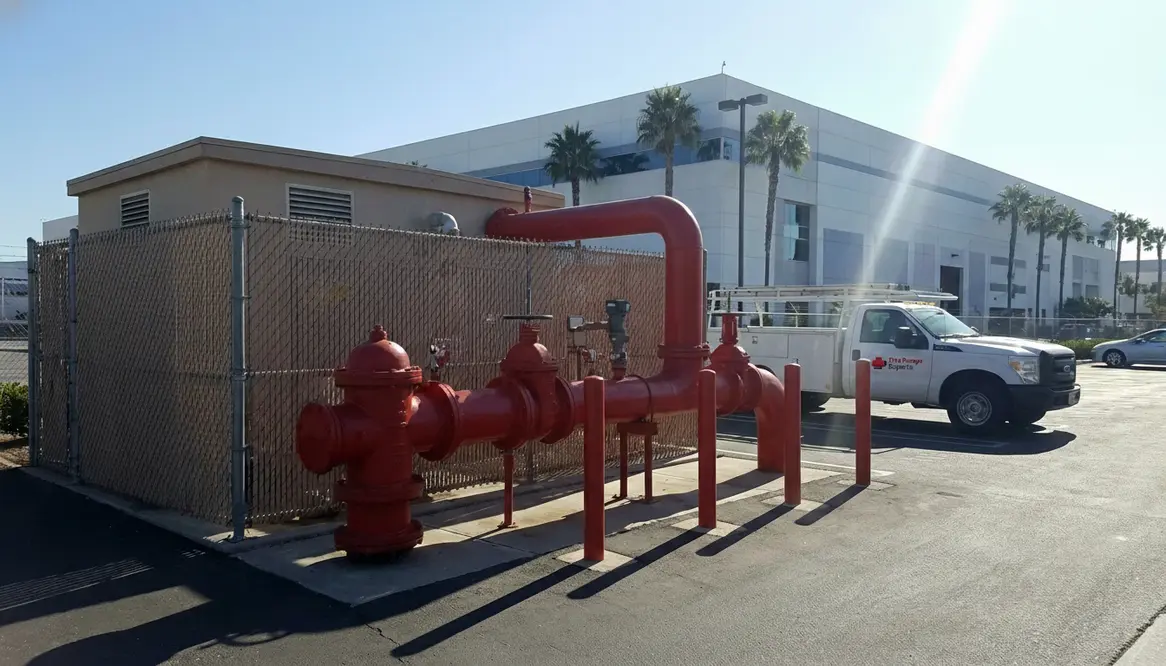
El Segundo Aerospace Fire Protection Water Supply Design
How to engineer a quiet, reliable hero behind high‑risk aerospace operations in El Segundo.
Fire Protection Water Supply Design for Aerospace Facilities in El Segundo
I have spent enough time around large industrial buildings to know one simple truth. When things go wrong, they go wrong fast. Aerospace facilities are no exception. In fact, with high value equipment, sensitive materials, and massive production floors, the stakes feel a bit like the final scene of an action movie. Only in real life there is no dramatic soundtrack. Just engineering, preparation, and a well designed el segundo aerospace fire protection water supply.
In El Segundo, aerospace campuses sit close to dense commercial infrastructure, active utilities, and a busy coastal climate. Because of that, designing a dependable fire protection water system takes more than plugging numbers into a calculator. I approach it like building the quiet hero of the facility. Nobody applauds it during normal operations. However, when the moment arrives, it performs with calm authority.
Why water supply design matters in El Segundo
Tight parcels, high‑value payloads, and 24/7 operations mean your el segundo aerospace fire protection water supply cannot be an afterthought. It has to be deliberate, hardened, and ready for the worst‑case test the moment the first alarm trips.
Done right, it quietly guards billion‑dollar hardware, flight hardware integration labs, test cells, and the people walking those production floors every day.
So let me walk you through how I think about fire protection water supply design for large aerospace properties, and why doing it right protects both lives and billion dollar hardware.
Understanding the risk profile of aerospace facilities
Before I even look at pipe sizes or pump curves, I start with risk. Aerospace manufacturing buildings are not typical warehouses. Inside these facilities I often find specialized materials, precision electronics, fuel systems, composite manufacturing, and sometimes high energy testing equipment.
Because of that, the fire demand profile can vary widely across a single property.
For example, a composite fabrication area may present different fire behavior compared to a satellite assembly cleanroom. Meanwhile, large machining bays contain oils, coolants, and heavy electrical loads. Each of those areas shapes the demand placed on the fire protection water supply.
Three questions that frame the hazard
Therefore I always begin with three questions.
- What hazards exist in each operational zone
- How quickly could fire spread through the structure
- What suppression systems will respond first
Only after I map those elements can I calculate realistic water demand. Otherwise the design becomes guesswork. And guesswork belongs in fantasy football drafts, not life safety engineering.
Additionally, aerospace campuses in El Segundo often consist of multiple buildings connected through shared infrastructure. Consequently, the fire protection system must account for simultaneous demand scenarios. If two facilities require water during an emergency, the supply must keep up without hesitation.
Designing the el segundo aerospace fire protection water supply for reliability
When I design an el segundo aerospace fire protection water supply, reliability becomes the main character in the story. Every pipe, tank, and pump must perform under pressure. Literally.
The first factor I evaluate is the municipal water grid. El Segundo has strong infrastructure, yet large aerospace facilities can demand water volumes that rival small neighborhoods. Because of that, municipal supply alone may not meet peak fire flow.
Building in layered redundancy
Therefore I typically integrate several layers of redundancy.
- Dedicated fire water storage tanks sized for extended operations
- High capacity fire pumps designed for industrial sprinkler demand
- Looped underground mains that maintain pressure stability
- Multiple supply connections to the municipal grid
In practice, this layered approach ensures the system continues operating even if one component fails. Think of it like the backup systems on a spacecraft. Engineers never trust a single line of defense.
Furthermore, aerospace campuses operate around the clock. That means maintenance shutdowns must not interrupt protection. For that reason I design sectional valves and bypass routes so technicians can service equipment without leaving an entire building exposed.
Quiet redundancy may not sound glamorous. Yet when alarms sound at 2 AM, reliability suddenly becomes the most popular engineer in the room.
How much water do aerospace fire systems actually need?
This is the question owners ask me more than any other. And honestly, it is a fair one. Nobody wants to oversize infrastructure that costs millions. On the other hand, undersizing a fire protection system is like bringing a garden hose to a rocket launch mishap.
I calculate required fire flow by evaluating several overlapping systems.
- Automatic sprinkler demand based on hazard classification
- Standpipe requirements for large industrial structures
- Exterior hydrant flow for fire department operations
- Special suppression systems protecting critical equipment
In many aerospace manufacturing buildings, sprinkler systems alone can require several thousand gallons per minute. When hydrants and hose streams join the equation, total demand climbs quickly.
However, water supply design is not only about volume. Pressure stability matters just as much. If pressure drops during simultaneous sprinkler activation, the system loses effectiveness.
Hydraulic performance across the campus
Therefore I carefully model hydraulic conditions across the entire property. Long underground mains, elevation changes, and friction losses all affect performance. The goal is simple. When valves open, water arrives immediately and with force.
Because fire does not wait politely for pumps to catch up.
Infrastructure planning for large aerospace campuses
Aerospace facilities in El Segundo often expand over time. New research buildings appear. Manufacturing lines grow. Test labs multiply. As a result, the fire protection water system must support both current demand and future expansion.
I treat campus infrastructure like a transportation network. If roads are too narrow, traffic jams appear. In fire protection design, those traffic jams show up as pressure losses.
Therefore I design underground fire mains with growth in mind. Larger pipe diameters and looped networks allow additional buildings to connect without starving existing systems. Planning the el segundo aerospace fire protection water supply this way keeps today’s projects covered while leaving headroom for tomorrow’s big ideas.
Primary design goals
- Stable fire flow across all buildings
- Minimal pressure loss in long pipe runs
- Hydrant coverage for large apparatus access
- Reliable pump room placement
Long term facility strategy
- Capacity for new hangars or labs
- Additional sprinkler zones
- Future storage tank connections
- Expandable pump infrastructure
Planning ahead saves property owners enormous costs later. Digging up pavement around active aerospace operations is about as popular as a software update during a live presentation.
Fire pumps and storage that keep operations protected
Now we arrive at the muscle of the system. Fire pumps and water storage tanks carry the heavy lifting in aerospace fire protection.
Most large industrial properties require dedicated fire pump assemblies. These pumps boost water pressure so sprinkler systems and hydrants operate effectively during peak demand.
Designing pump capacity and resilience
When I design pump systems for aerospace campuses, I focus on three factors.
- Capacity matched to calculated fire flow
- Redundant power supply for reliability
- Accessible pump rooms for maintenance teams
Electric pumps work well in many facilities. However, diesel driven pumps add resilience during power outages. Because of that, many aerospace properties install both configurations.
Water storage tanks play an equally important role. Municipal supply interruptions can happen. Construction nearby might reduce pressure. Therefore on site storage provides a dependable reserve.
I size tanks to support sustained fire operations until municipal flow stabilizes or fire crews control the incident. In large aerospace facilities, that reserve can mean hundreds of thousands of gallons.
Yes, that is a lot of water. Enough to make your average backyard pool feel a bit insecure.
If your facility relies on high‑capacity pumps, keeping them tested and compliant is just as important as the initial design. Partnering with a specialist that understands detailed fire pump testing, such as the Regulation 4 fire pump test services from Kord Fire, helps ensure that the hardware delivering your el segundo aerospace fire protection water supply actually performs when called upon.
Design coordination with fire authorities and facility engineers
No fire protection system exists in isolation. During design, I work closely with local fire authorities, facility engineers, and property management teams.
El Segundo fire officials review hydraulic calculations, hydrant placement, and emergency access routes. Their input ensures the system supports real world firefighting tactics.
Meanwhile, facility engineers provide insight into building operations. They know where sensitive equipment lives, where expansion may occur, and how infrastructure connects across the campus.
Turning coordination into performance
This collaboration produces smarter design decisions. For example, hydrant placement often aligns with aerial apparatus positioning. Similarly, pump rooms must remain accessible during emergencies while staying clear of sensitive production areas.
Ultimately, the goal is simple. Everyone involved should trust that the fire protection system will perform exactly as expected when seconds matter. When your el segundo aerospace fire protection water supply has been coordinated from day one with end users and first responders, you get fewer surprises and far better odds when the unexpected happens.
FAQ about aerospace fire protection water systems
Facility teams ask many of the same questions when they start rethinking their el segundo aerospace fire protection water supply. Below are a few of the most common concerns I hear, along with straightforward answers.
Conclusion
Designing a reliable fire protection system for aerospace properties takes careful planning, deep hydraulic knowledge, and infrastructure that refuses to fail when tested. If you manage or develop a large aerospace facility in El Segundo, investing in a properly engineered water supply system protects operations, equipment, and people.
Work with specialists who understand industrial fire protection, pump systems, and campus scale infrastructure. From master planning the el segundo aerospace fire protection water supply to detailed hydraulic modeling and long term testing, every decision either adds resilience or quietly erodes it.
When the unexpected happens, preparation becomes your strongest defense. The goal is not to create a system anyone notices on a tour. The goal is a system so robust that if the worst day in your facility’s history ever arrives, the fire protection water supply responds instantly, relentlessly, and exactly the way it was designed to.