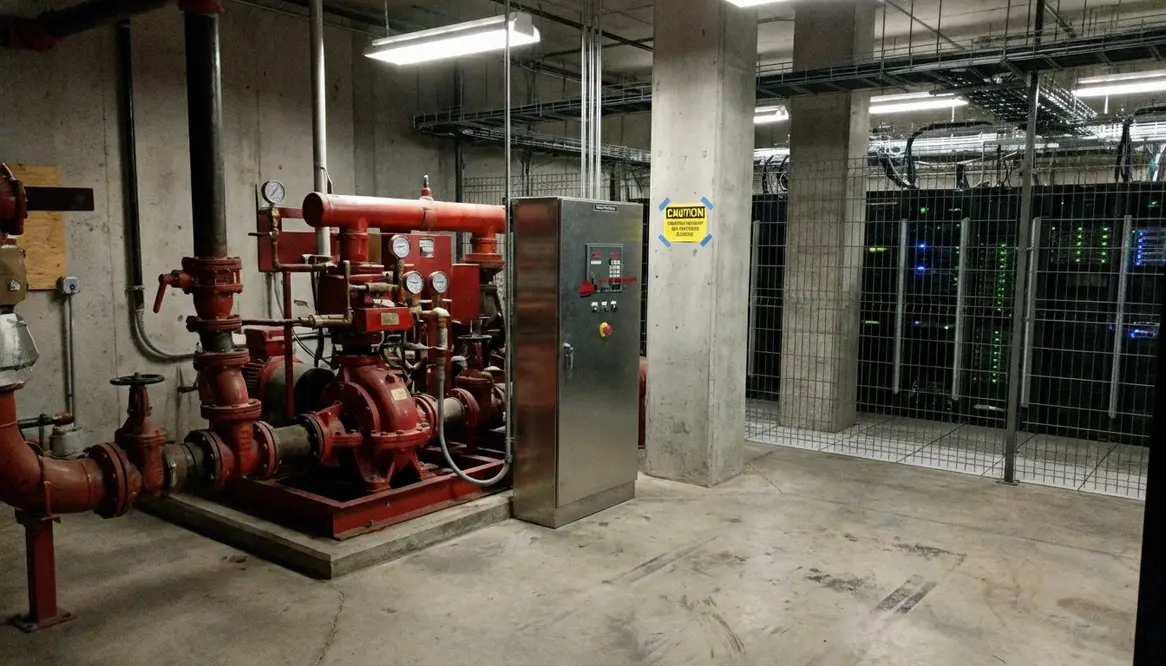
EN 12845 Data Centers Fire Pump Requirements Guide
EN 12845 Fire Pump Requirements for Data Centers: What I Focus on First
When I look at EN 12845 data centers, I start with one simple truth: fire protection must work every time, because downtime in a data center can feel like the whole planet has lost Wi Fi at once. EN 12845 sets the rules for sprinkler systems, and the fire pump often becomes the quiet hero behind the scenes. It keeps water pressure where it needs to be, so the system can respond fast and stay reliable. For commercial and industrial facilities, especially major data buildings, I treat the pump as a core part of business safety, not just a box to tick.
Why EN 12845 really matters in digital buildings
In EN 12845 data centers, the fire pump is not just insurance paperwork. It protects uptime, contracts, and the reputation of everyone who promised “five nines” of availability. When the pump is sized, powered, and maintained properly, it quietly turns a potential catastrophe into a controlled incident.
What EN 12845 expects from the fire pump
EN 12845 requires the fire pump to support the sprinkler system with the right flow and pressure. In practice, that means I check whether the pump can meet the demand of the most serious design case, not the easy one. The standard also pushes me to think about reliability, because a pump that works only on a good day is about as useful as a smoke alarm with stage fright.
I also pay close attention to the pump arrangement. In most serious facilities, the design needs a dependable main pump, a backup power source, and a clear way to start the pump automatically. If the building uses a diesel driven pump or an electric one, the system must still deliver water under fire conditions. In a data center, that matters even more because heat, cable density, and critical equipment all raise the stakes.
Core expectations from the pump
- Deliver the design flow at the required pressure for the worst credible fire scenario.
- Start automatically and keep running without relying on perfect site conditions.
- Stay independent from nonessential building systems that might fail first.
- Operate with backup power or an alternate drive arrangement when the main supply disappears.
EN 12845 data centers: how I plan pump capacity and supply
For EN 12845 data centers, I always begin with water supply. If the source cannot support the required demand, then the rest of the design starts to wobble. I look at tank size, refill time, pump performance, and the full sprinkler load. The goal is simple: make sure the system can keep flowing long enough to control the fire.
Here is how I break it down:
Water supply
Must support the full sprinkler demand with no weak link.
Pump duty point
Must match the design flow and pressure, not a rough guess.
Standby power
Must keep the pump alive if the normal supply fails.
Tank and refill
Must provide enough reserve for real fire conditions.
I also check whether the facility has a single risk area or multiple protected zones. That helps me size the pump properly. If the design team underestimates demand, the system may look fine on paper but fall apart under pressure. And pressure, as any engineer knows, has a habit of showing up uninvited.
Thinking ahead for expansion
EN 12845 data centers are rarely static. Capacity grows, racks multiply, and suddenly the “future proof” pump looks a bit small. I always ask how the building might change within the life of the fire pump and size, or at least plan, with that horizon in mind.
How I handle installation, testing, and upkeep
I treat installation as the moment where good design either becomes real protection or expensive decoration. The pump must sit in a suitable room, with access for testing, repair, and inspection. It also needs proper suction conditions, safe discharge routing, and controls that staff can understand without a treasure map.
Testing matters just as much. I want routine checks for start up, pressure, flow, alarms, and power changeover. Then I want records. In a commercial or industrial site, proof matters. If the pump never gets tested, nobody knows whether it will perform on the worst day of the year, which is not a fun surprise.
What I look for in ongoing maintenance
- Clean strainers and pipework that are actually free to flow.
- Valves in the right position, tagged, and easy to verify.
- Battery checks for control panels and diesel sets.
- Fuel quality, level, and runtime for diesel driven pumps.
- Pump house conditions that protect against heat, dust, and water ingress.
In EN 12845 data centers, I would rather fix a sticky test line on a quiet Tuesday than discover it during a full scale emergency with everyone watching.
Maintenance should stay simple, regular, and well documented. I look for clean strainers, healthy valves, battery checks where needed, fuel checks for diesel sets, and pump house conditions that keep equipment safe. Heat, dust, and poor access can slowly damage performance, so I stay ahead of those issues instead of waiting for a dramatic fire drill moment.
What I tell data center owners before approval
I tell owners that EN 12845 is not just about code compliance. It protects uptime, assets, and trust. A fire pump design for a data center must support the full sprinkler strategy, match the hazard level, and stay dependable under real use. If the facility expands later, I also make sure the fire protection plan can grow without breaking the pump system.
For fire safety teams, that means cooperation from day one. I recommend early review with the sprinkler designer, the electrical team, and the maintenance lead. That way, the pump selection fits the building, the power plan, and the long term operating needs. In short, the right pump helps the whole site sleep better at night. Even the server racks would probably relax, if they had shoulders.
A quick reality check for EN 12845 data centers
Before sign off, I usually ask three blunt questions:
- Can this pump and water supply really handle the worst zone at full demand?
- What fails if we lose normal power, and how long until the pump notices?
- Who owns the test routine, and do they actually have time to run it?
If those answers sound vague, it is time to revisit the design and the operating plan before signing any completion documents.
FAQ: EN 12845 fire pumps in data centers
Ready to tighten your fire protection plan?
Ready to tighten your fire protection plan? If you manage a commercial or industrial data center, I can help you build an EN 12845 compliant fire pump strategy that supports real world reliability. Let’s review your water supply, pump selection, and testing plan before problems find you first. In this business, prevention is cheaper than panic, and a solid design always beats a heroic repair after the fact.
If you want to explore reference material and typical fire pump setups further, resources like https://firepumps.org can provide helpful context while you shape your own site strategy.