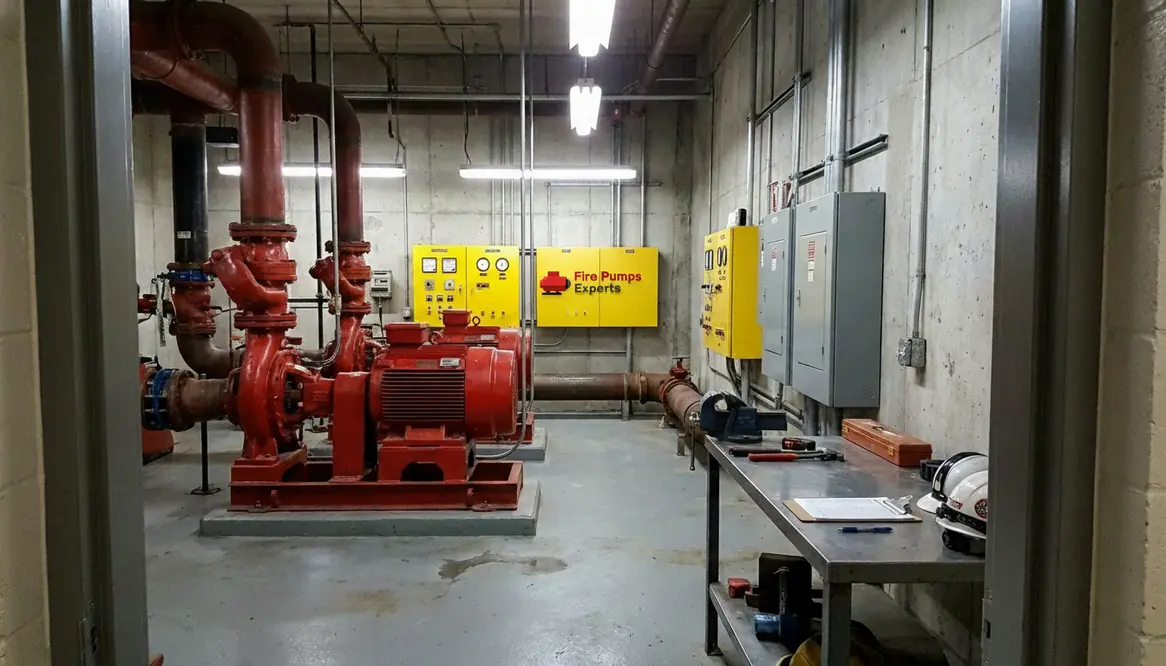
EN 12845 Sprinkler Pump Room Requirements Guide
A practical, no-drama walkthrough of how a compliant pump room should be designed, built, and maintained so it can do its job when it matters most.
EN 12845 sprinkler pump room requirements overview
When I talk about fire protection in commercial and industrial buildings, I always start with the EN 12845 sprinkler standard because it sets the tone for how serious the pump room must be. This is not a place for loose wires, mystery leaks, or “we’ll deal with it later” thinking. A sprinkler pump room supports the whole fire system, so if it fails, the building loses its first line of defense. For major properties, the room must be safe, easy to reach, and built to keep the pump ready at all times. That sounds simple, and yet, as with most things in life, the devil wears a hard hat.
In this overview, I will walk through the main requirements in a way that makes sense for property owners, facility managers, and specifiers. I will keep it practical, clear, and focused on commercial and industrial sites only, because that is where these systems do their heavy lifting. After all, a pump room in a warehouse, plant, or large office block has no interest in drama. It just wants to work.
What the pump room must do
The pump room must protect the sprinkler supply and support reliable fire water flow during an emergency. In simple terms, it houses the fire pumps, control gear, valves, and often the power supply or diesel equipment. Therefore, the room must stay dry, secure, and always ready for use. I look at it as the engine room of the fire system. If the room gets too hot, floods, or becomes hard to access, the whole design starts to wobble like a bad sequel nobody asked for.
The room also needs enough space for safe operation and maintenance. Technicians must reach every pump, valve, and panel without squeezing through tight gaps. This matters because regular testing and repairs keep the system alive. In addition, the room should sit in a location that protects it from fire, impact, and outside damage. A strong room today can save a very expensive headache tomorrow.
EN 12845 sprinkler pump room layout and access
The layout must support fast access, safe movement, and clear control. I always check for the following:
- Access route: The route must stay open, direct, and easy to use for staff and emergency teams.
- Room size: There must be enough space around equipment for inspection, testing, and repair.
- Floor condition: The floor should be level, strong, and able to handle pump loads and vibration.
- Drainage: Water must not collect inside the room, because pumps do not enjoy swimming lessons.
Next, I look at door size and opening direction. The room must allow equipment removal and replacement without a struggle. In many projects, I recommend planning for future service work, not just day one installation. That way, no one has to perform an awkward dance with a pump skid later on.
Side by side view of key room needs
Room feature
- Clear access
- Good drainage
- Strong structure
- Ventilation
- Security
Why it matters
- Helps staff reach equipment fast
- Stops water damage and slip risk
- Supports heavy pump loads
- Keeps heat under control
- Protects critical fire protection assets
How I check power, water, and ventilation
Power supply matters because fire pumps must start when the building needs them most. I check that the electrical supply or diesel setup follows the design intent and sits in a protected position. Also, backup arrangements must support reliable operation during a fault. No one wants a heroic pump with no fuel, no power, and no plan. That is not resilience; that is a plot twist.
Water supply must also remain dependable. The pump room should connect to the approved water source, with the right valves and controls in place. In addition, the pump area should protect the supply from freezing, overheating, or accidental damage. Ventilation matters too. Pumps and engines create heat, so the room needs proper air movement to keep equipment within safe working limits. If the room runs too hot, performance can drop, and that is exactly the kind of drama a fire system does not need.
Why testing and maintenance need space
Testing is not a nice extra. It is part of keeping the fire system honest. I always advise owners to build the room with regular test runs in mind, because technicians need room to check pressure, start systems, and inspect fittings. The design should make routine work simple, not complicated. When maintenance becomes easy, it gets done more often. That, in turn, improves reliability and reduces surprise failures.
For commercial and industrial properties, this is especially important because operations often run around the clock. So, the room must support planned checks without causing disruption to the wider site. I always say that a good pump room should feel boring. In fire safety, boring is beautiful. It means the system is quietly ready, like a supporting actor who knows the script better than anyone else.
If you want additional technical detail about EN 12845 sprinkler design, pump selection, and related fire water supplies, a useful starting point is https://firepumps.org, which focuses on pump performance and standards-driven configurations for modern fire protection systems.
EN 12845 sprinkler context for commercial and industrial sites
The EN 12845 sprinkler framework is written with serious property risks in mind: warehouses full of stock, production lines that cannot easily stop, and tall office buildings where evacuation takes time. In all these settings, the pump room stops being “plant in the basement” and becomes a core risk control measure.
A compliant EN 12845 sprinkler installation expects the pump room to be physically robust, logically laid out, and supported by realistic maintenance planning. The paper standard can look dry, but behind every line there is a simple idea: when a fire starts, the system has to behave in a predictable, almost boring way. No plot twists, no experimental engineering, just dependable water where and when it is needed.
FAQ
Final thoughts and next step
If you manage a commercial or industrial property, I urge you to treat the pump room as a core safety asset, not a box to tick. The EN 12845 sprinkler standard gives you a clear path, but the details matter just as much as the design itself. So, review access, space, drainage, power, ventilation, and maintenance now. If you want a more reliable fire protection setup for your site, speak with a specialist and make sure your pump room is built to perform when it counts.