EN 12845 Fire Pump Testing Guide for Facilities
EN 12845 Fire Pump Testing Requirements Explained
If you manage a commercial site, an industrial plant, or a major property building, you already know fire safety is not the place to wing it. I look at EN 12845 testing as one of those quiet, serious routines that keeps the whole protection system ready for the worst day nobody wants to imagine. And yes, it can feel a bit like checking Batman’s utility belt before the city gets dark. But that is the point. Fire pumps must work on demand, so testing is not just a nice habit. It is part of keeping the building, the people, and the business protected.
In this guide, I will walk through what the standard expects, how the tests work, and why consistent checks matter for large facilities. I will keep it practical, clear, and focused on real site needs.
What EN 12845 fire pump testing means for your site
When I talk about EN 12845 testing, I mean the regular checks that confirm a fire pump can deliver the right pressure and flow when a sprinkler system needs it. For commercial and industrial buildings, that matters because demand can be high, systems can be complex, and failure can bring serious damage fast. Nobody wants a pump that only looks impressive in the plant room like a sports car that cannot leave first gear.
The standard calls for routine testing of the pump set, its driver, controls, fuel supply where needed, and the water source. The goal is simple. I want proof that the pump starts, runs, and performs under the right conditions. That means I do not just listen for noise and call it a day. I check function, stability, and output.
How I approach EN 12845 testing step by step
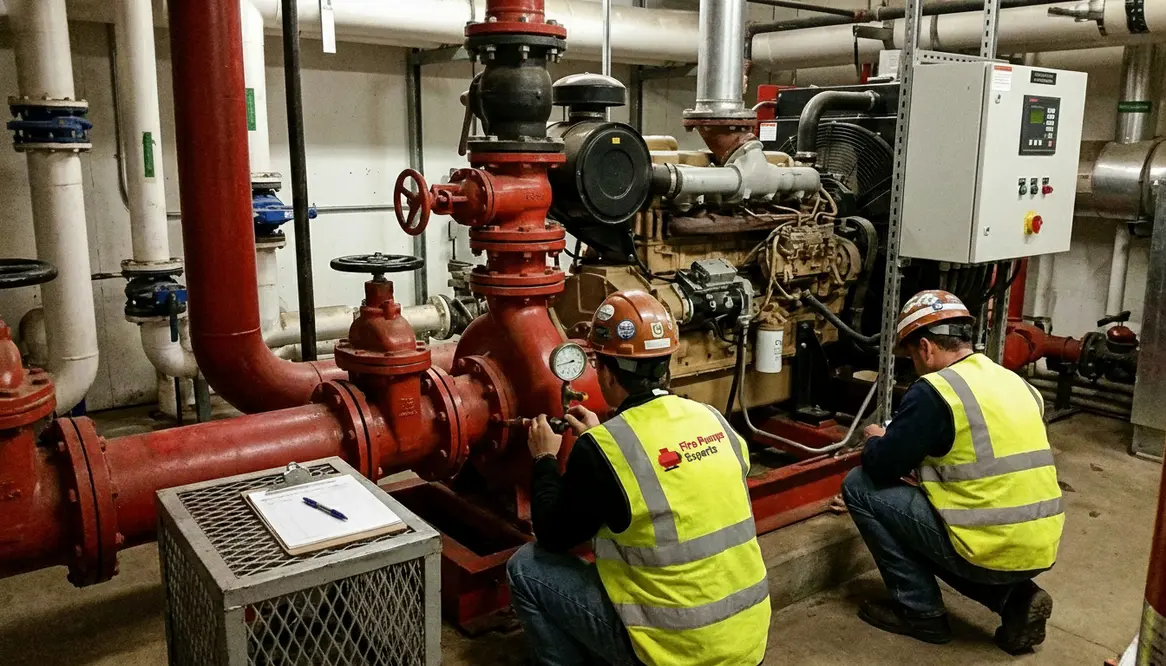
I always begin with a visual check. First, I look at the pump house, the valves, the controls, and the pipework for leaks, damage, or anything that looks off. Then I confirm that the pump is in a normal ready state. After that, I move into the test itself.
The usual process includes:
What I check
- Pump start and stop response
- Pressure readings
- Flow performance
- Driver condition
- Fuel or power supply status
Why it matters
- Confirms the pump can start when needed
- Shows whether the system meets design needs
- Reveals weak output before an emergency
- Helps catch wear early
- Reduces the chance of a failure during an actual fire event
Because the pump must protect real assets, I always record the results carefully. That record becomes proof of compliance and a useful history for future maintenance. And honestly, good records are the adult version of “I told you so,” only with less drama and more value.
How often EN 12845 fire pump tests should happen
Timing matters. A fire pump that sits untouched for too long can develop issues quietly. So, regular testing keeps the system awake. I follow the site schedule and the standard’s guidance so the pump gets checked often enough to catch problems early. Daily visual checks, weekly running tests, and longer performance checks all play a role depending on the system type and site setup.
For major properties and industrial facilities, I find that the bigger the risk, the more important the routine becomes. A busy plant or tall building does not get a pass because it is “too busy.” In fact, that is exactly why the schedule matters. Consistency keeps the system dependable, and dependability keeps everyone calmer when alarms start talking.
What I look for during a performance test
During performance testing, I focus on whether the pump delivers the right output. I want pressure where it should be, flow where it should be, and stable running through the test period. If the pump hesitates, loses pressure, overheats, or shakes like it has seen a ghost, I treat that as a warning sign.
I also pay attention to the driver. A diesel pump needs enough fuel, a healthy battery, and a clean start routine. An electric pump needs sound controls and reliable power. In both cases, I want the whole set to act like a team, not a group project where everyone forgot the deadline.
Why EN 12845 testing protects large commercial and industrial buildings
Fire pumps serve one mission: keep water moving when the sprinkler system needs it most. In large commercial and industrial sites, that mission supports life safety, asset protection, and business continuity. A failed test can reveal low pressure, poor suction, blocked lines, control faults, or worn parts before those faults become a real problem.
That is why I treat testing as more than compliance. It supports insurance confidence, helps reduce downtime, and gives facilities teams a clear picture of system health. If you want a useful reference for service planning and specialist support, I suggest reviewing fire pump testing for commercial and industrial facilities as part of your wider maintenance approach.
In practice, EN 12845 testing pulls a lot of these needs together. It keeps the conversation focused on measured performance instead of assumptions, and it gives you a clear track record to show where the system stands, how it is changing over time, and when intervention is needed.
Where EN 12845 testing fits in your wider fire strategy
For most facilities, EN 12845 testing sits alongside sprinkler inspections, valve checks, alarm tests, and broader risk reviews. It is the part of the routine that keeps the pump, the heart of the water supply, honest. When testing is done consistently and properly, it is much easier to justify upgrade budgets, plan shutdowns, and prove that the building is being managed responsibly.
Frequently asked questions about EN 12845 fire pump testing
Below are some of the common questions facilities teams ask when setting up or improving their EN 12845 testing routine.
Conclusion
Reliable fire protection starts with proof, not hope. If your facility depends on sprinkler performance, I recommend treating EN 12845 testing as a core part of your maintenance plan. It helps you catch faults early, stay ready for inspection, and protect people and property with confidence. If you manage a commercial, industrial, or major building site, now is the right time to review your testing routine and strengthen it today.