EN 12845 vs LPC Rules Fire Pump Requirements Guide
EN 12845 vs LPC Rules Fire Pump Requirements often sounds like a dry code debate, but for me it is the kind of topic that decides whether a commercial building, industrial plant, or major property stands ready when fire shows up uninvited. I look at these rules as two serious road maps for fire pump design, testing, and reliability. One leans on the EN 12845 system used across many European projects, while the other follows LPC guidance tied to insurer expectations and high protection standards. If you manage a large facility, you need the difference to be clear, because the wrong choice can waste money, delay approval, or invite a very bad day.
What I compare first in fire pump rules
When I compare EN 12845 vs LPC Rules, I start with the purpose. Both aim to keep sprinkler systems supplied with enough water, at the right pressure, and for the right duration. However, they do not always ask for the same setup. EN 12845 gives a structured European framework for sprinkler systems in commercial and industrial buildings. LPC Rules, on the other hand, often go further in some areas because they reflect insurer driven protection practice.
So, I first ask three simple questions. What hazard does the site have? How much water does the system need? And how long must the pump run without drama? It sounds like the start of a superhero movie, but the hero here is usually a dependable pump room.
How EN 12845 fire pump requirements work
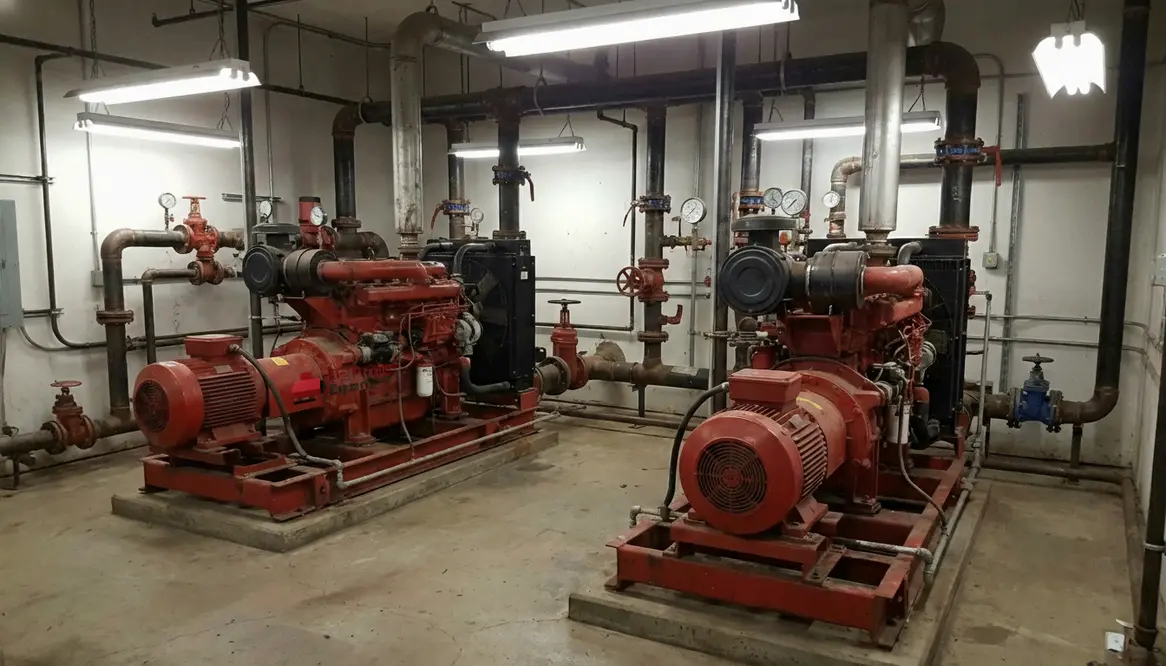
Under EN 12845, I look for a pump arrangement that can support sprinkler demand with strong reliability. The code usually expects a duty pump, a standby pump in many cases, and a stable water source. It also cares about pump starting, power supply, and the ability to keep the system alive during a fire event.
In real terms, I treat EN 12845 as a rule set that asks for solid engineering and practical proof. The system must meet the hazard class, the water supply must match the demand, and the pump room must stay accessible and protected. If the building is a warehouse, factory, logistics hub, or large commercial site, I pay close attention to the water duration and the pump selection. After all, a fire pump should not behave like a streaming service during peak hours and suddenly buffer.
Also, EN 12845 pushes me to think about maintenance from day one. A pump that looks fine on paper but fails a routine test does not help anyone. So, I always advise checking test records, suction conditions, and alarm links early in the design process.
EN 12845 vs LPC Rules fire pump requirements in practice
Here is where the real difference shows up. EN 12845 vs LPC Rules fire pump requirements can diverge in water supply expectations, redundancy, and the level of protection needed for certain sites. LPC Rules often lean harder on risk control and insurer confidence. That means the pump room, tanks, drivers, and controls may need a more cautious setup depending on the property.
| EN 12845 | LPC Rules |
| European sprinkler standard for many commercial and industrial sites | Insurer led guidance with strong focus on loss prevention |
| Defines pump and water supply needs by hazard and system design | May call for tighter protection, stronger backup, or added resilience |
| Works well for code driven design and compliance | Often used when insurance approval and higher protection standards matter |
| Focuses on reliable sprinkler performance | Focuses on reliable sprinkler performance plus loss reduction |
Because of this, I never treat the two as simple twins. They share the same family, yes, but one may expect a tougher workout than the other. For a large industrial site, that can change pump sizing, tank volume, and even the way I plan power backup. So, I always read the project brief, insurer notes, and local approval needs together.
What I check before choosing a pump package
Before I choose a pump package, I check the site like a careful detective, not a movie detective with a trench coat and a jazz soundtrack. First, I confirm the hazard level and the sprinkler demand. Then I review water supply, pump type, drive source, and space for testing and maintenance. I also look at whether the building needs one pump or a full duty and standby arrangement.
For commercial and industrial facilities, I pay special attention to these points:
- Water source capacity and refill speed
- Correct pump duty for the calculated demand
- Reliable power supply and backup options
- Pump room access, ventilation, and fire protection
- Testing setup for regular inspection
These checks matter because a pump is not just a box on a plan. It is a live part of the fire strategy. If the site has high stock value, critical processes, or long shutdown risk, I push for a design that supports both compliance and business continuity.
How I handle compliance, testing, and approval
In the field, approval often depends on more than the drawing. I need the system to match the chosen standard and also satisfy the people who sign off on it. Therefore, I build the case with clear calculations, pump curves, test records, and water supply evidence. For EN 12845, that means I show how the system meets the sprinkler demand. For LPC Rules, I add stronger proof of resilience where needed.
I also make sure the inspection plan is simple enough to survive real life. If a team cannot test the pump without turning the whole site upside down, trouble will follow. And trouble, as we know, has a habit of arriving right after lunch.
For deeper technical guidance, I recommend reviewing the commercial fire pump compliance resource for large properties and industrial applications. It helps tie standards to practical pump room decisions.
FAQ: quick answers for EN 12845 and LPC Rules
EN 12845 vs LPC Rules can still feel confusing even after a full design meeting, so I keep a short set of answers ready for the questions that keep returning on commercial and industrial projects.
My final view on choosing the right rule
If you want the safest path, I suggest treating EN 12845 vs LPC Rules fire pump requirements as a design decision, not a paperwork detail. The right answer depends on your building type, risk level, and approval route. So, I always start with the site, then match the pump to the standard, and finally test the full setup like real fire conditions might. If you manage a commercial or industrial property, now is the time to review your pump compliance and tighten the plan before problems grow teeth.