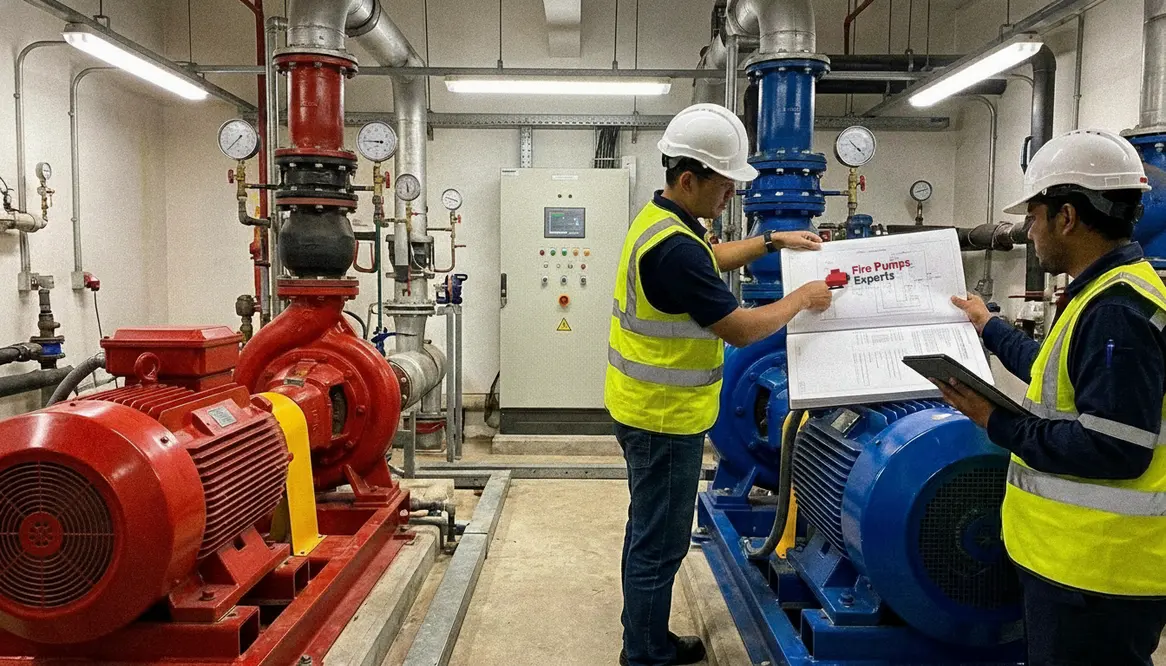
AS 2941 vs BS EN 12845 Fire Pump Requirements
AS 2941 vs BS EN 12845 Fire Pump Requirements can feel like two rule books written for the same fire but in different accents. I have seen many commercial and industrial teams, plus major property owners, get stuck between the two. One standard speaks with an Australian voice, the other comes from Europe, yet both care about the same thing: making sure the fire pump starts, runs, and keeps the system alive when the pressure drops and the heat rises. That is the whole game. In this article, I will break down the main differences, what they mean in real projects, and how I would choose the right path without turning the job into a committee meeting from a disaster movie.
This comparison of AS 2941 vs BS EN 12845 matters most when real money, real uptime, and real assets are on the line. The choice of standard quietly shapes pump sizing, redundancy, testing regimes, and even how your facilities team handles alarms at 3am.
Handled well, the standard backs you up when something goes wrong. Handled badly, it becomes fine print you only read after the incident report lands on your desk.
What I check first in AS 2941 vs BS EN 12845
When I compare AS 2941 vs BS EN 12845, I start with the role of the pump in the full fire system. AS 2941 focuses on fire pump sets used in Australia and New Zealand style installations, while BS EN 12845 sets out sprinkler system rules used across many regions. So, the first question I ask is simple: what system am I protecting, and what local code governs the site?
Then I look at the building type. For commercial towers, warehouses, factories, and large mixed use properties, the pump must match the risk, the water demand, and the level of redundancy required. A pump that looks fine on paper can still fail the real world test if it does not suit the hazard class. That is where many projects slip. The drawings look neat, the spreadsheet smiles politely, and then the site asks for more water than the pump can give.
Also, I check the duty and standby setup early. Both standards expect reliable supply, but they handle design detail in different ways. Therefore, I never treat them like twins. They may share family traits, yet they do not dress the same way.
That is why early in the job I pin down whether the project is heading toward AS 2941 vs BS EN as the primary reference, instead of waiting until commissioning and discovering the pump room has been built to the wrong accent.
Fire pump requirements I compare step by step
Here is how I compare the key requirements in practice when weighing AS 2941 vs BS EN 12845 for a commercial or industrial project:
- Pump performance: I check flow, pressure, and how the pump holds the required demand over time.
- Power supply: I review whether the installation uses electric, diesel, or both, and I confirm backup options.
- Starting method: I test whether the pump starts fast and reliably under low pressure conditions.
- Controller and alarms: I make sure the controls signal faults, starts, and loss of supply clearly.
- Testing access: I confirm the site can support regular test runs without drama, because fire pumps hate being ignored like an old sitcom reboot.
AS 2941 tends to place strong focus on local installation practice and equipment set up. Meanwhile, BS EN 12845 ties pump needs tightly to sprinkler system demand and system classification. As a result, I look at the full design package, not just the pump curve. A great pump with the wrong controls is still a bad day waiting to happen.
AS 2941 vs BS EN 12845 explained for commercial sites
For commercial and industrial buildings, the main split usually comes down to compliance path, risk profile, and the way the sprinkler or hydrant system integrates with the pump. AS 2941 often fits projects that follow Australian local rules and fire authority expectations. BS EN 12845 suits projects using the European sprinkler framework, especially where a client group, insurer, or global standard pushes that direction.
However, I do not treat this as a pure paperwork exercise. I ask how the building operates day to day. If the site has high occupancy, critical stock, or hard to replace plant, then pump reliability matters even more. In those cases, I want clear maintenance access, strong controller logic, and a water supply that does not depend on hope and good vibes.
Moreover, many major property owners run multi site portfolios. That means one location may follow one standard, while another site follows a different one. So I always check consistency across the estate. It saves money, reduces confusion, and stops the facilities team from needing a translator for every pump room.
When comparing AS 2941 vs BS EN in a portfolio, I try to avoid bespoke snowflake solutions. The closer the standards are aligned in practice, the easier it is to train teams, hold spares, and respond under pressure.
How I choose the right standard for a project
I choose the standard by following the approval path, the insurer view, and the engineering brief. First, I confirm the local authority requirements. Next, I look at the sprinkler or fire system design. Then I verify whether the building owner wants a local compliance solution or a wider international standard.
If the project sits in Australia or New Zealand, AS 2941 often becomes the natural path. If the design comes from a global spec with sprinkler rules based on European practice, BS EN 12845 may lead. Still, I always check the site specifics. A tall commercial building, a logistics hub, or a large plant room can change the pump selection fast.
For a deeper technical reference, I often point teams to the commercial fire pump compliance guide because it helps connect the standard to real site work. That kind of support matters when the clock is ticking and the sprinkler system is not in the mood for ambiguity.
The real trick is not winning an argument about AS 2941 vs BS EN 12845 in theory. The real trick is getting a configuration that the fire authority, the insurer, and the maintenance contractor are all happy to sign off in writing.
What this means for testing, maintenance, and uptime
Testing is where the truth comes out. A fire pump may meet the drawing, yet fail to hold pressure during a live test if the suction line, controller, or power feed has issues. Therefore, I treat maintenance as part of compliance, not as an afterthought. Both standards expect reliable operation, and both punish lazy upkeep. Fair enough.
I also pay close attention to planned shutdowns. In commercial and industrial facilities, downtime costs real money. So I build the pump plan around maintenance windows, spare parts access, and service records. That way, the system stays ready without turning the building into a full time repair set.
From an uptime point of view, AS 2941 vs BS EN is less a contest and more a reminder that both standards assume you will actually test the thing. Skipping weekly or monthly runs because “the pump is new” is how surprises appear during the first real fire event.
I want test headers that are easy to reach, valves that do not need acrobatics to operate, and control panels that show clear fault codes instead of mysterious blinking lights that only make sense to the person who wired them.
Quick comparison: AS 2941 vs BS EN 12845 in practice
When AS 2941 tends to win
- Projects in Australia or New Zealand under local fire authority oversight
- Sites with hydrant-heavy installations alongside sprinklers
- Clients who want alignment with regional practice and local contractors
- Upgrades to existing pump rooms already built around AS 2941 logic
When BS EN 12845 tends to win
- Global portfolios applying a common European-based sprinkler standard
- Insurers insisting on BS EN 12845 as part of their risk criteria
- Design teams already using BS EN hazard classifications and density rules
- New builds aimed at international tenants who recognise BS EN documentation
FAQ
Conclusion
If I had to sum it up, I would say this: the right fire pump standard is not the one that sounds more impressive, it is the one that fits the building, the risk, and the compliance path. So, if your commercial or industrial site needs clarity on AS 2941 vs BS EN 12845, do not guess. Review the system, check the local rules, and get expert guidance before the first alarm ever sounds. That small move can protect uptime, assets, and lives.
Whether the decision lands on AS 2941 vs BS EN 12845, the goal never changes: a pump that starts when it should, runs as long as it must, and gives firefighters and sprinklers the water they need while everyone else gets safely out of the way.