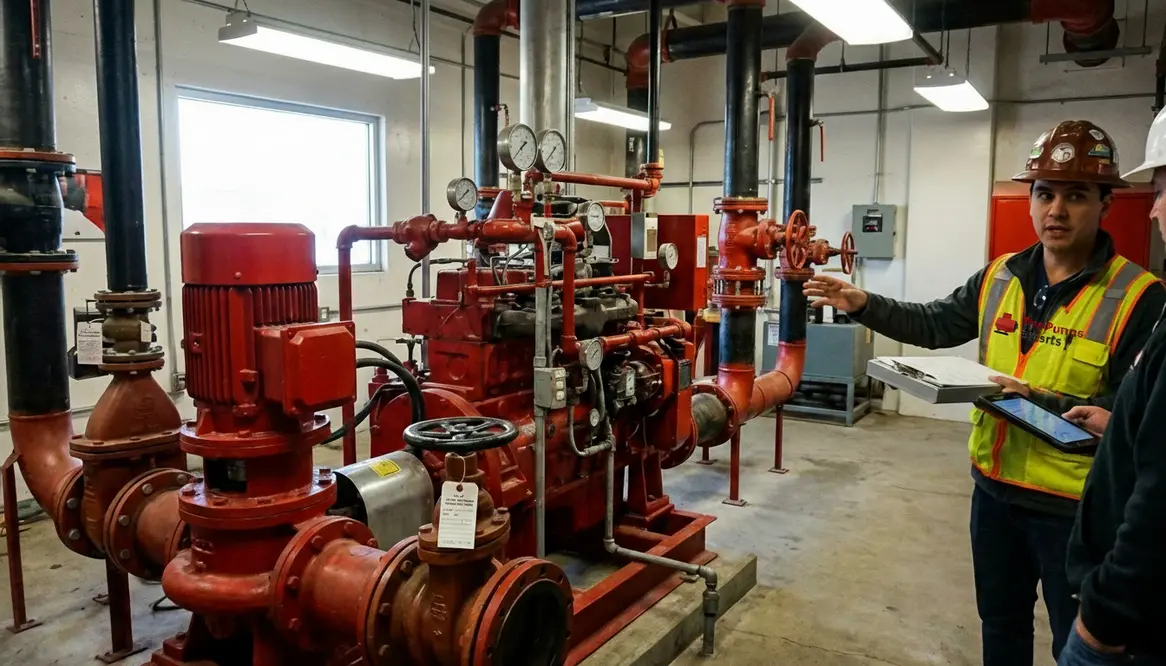
Fire Pump Acceptance Test Field Checklist Los Angeles
A practical, field-ready guide to turning that tense inspection moment into a smooth, predictable win for your next commercial or industrial project.
There is a moment on every large project when the room gets quiet. The gauges are set. The water supply is ready. The inspectors are watching. And somewhere in the back of your mind you hear a little voice whisper, “Please let this pass on the first try.”
That moment is the fire pump acceptance test.
Working with commercial and industrial facilities across Los Angeles, I have seen how one well prepared team can make this process smooth, fast, and almost boring. And believe me, boring is beautiful when inspectors are involved. That is exactly why I rely on a fire pump acceptance test field checklist los angeles professionals can trust. It turns a nerve wracking inspection into a clear sequence of steps that keeps engineers, contractors, and facility managers aligned.
In a city filled with high rise offices, hospitals, distribution centers, and sprawling industrial campuses, fire pumps are not optional. They are mission critical. So let me walk you through the field checklist I use to help major facilities pass their acceptance test the first time. Think of it as a calm voice in the room before the pump starts roaring.
Why Fire Pump Acceptance Tests Matter for Major Los Angeles Facilities
Los Angeles does not play around with life safety systems. Nor should it. When you are protecting a hospital tower, manufacturing plant, logistics warehouse, or corporate campus, the fire pump becomes the beating heart of the entire suppression system.
During an acceptance test, inspectors verify that the installed pump performs exactly as designed. Flow, pressure, alarms, controllers, and backup power must all operate together. If one part fails, the system fails.
However, the real challenge is not the test itself. The challenge is coordination.
Mechanical contractors, electrical teams, fire protection engineers, building management, and inspectors must all show up ready. Moreover, the equipment must already be installed correctly, calibrated, and documented. Otherwise, the test turns into a long day of awkward silence and rescheduling emails.
Fortunately, a strong field checklist keeps everyone focused on what matters before the inspector even arrives.
Fire Pump Acceptance Test Field Checklist Los Angeles Inspectors Expect to See
Whenever I prepare a site team for an inspection, I remind them of something simple. Inspectors are not there to fail you. They are there to verify the system works. If you present a clean, organized test with proper documentation, the entire process becomes much smoother.
The checklist below reflects what Los Angeles authorities and fire protection engineers consistently expect on large commercial properties.
Documentation ready before testing begins
- Approved shop drawings and hydraulic calculations on site
- Pump performance curve documentation
- Controller manuals and wiring diagrams
- Inspection test certificates ready for completion
- Contractor and engineer of record present if required
Mechanical system readiness
- Proper pump alignment and secure mounting
- Correct suction and discharge piping configuration
- Pressure relief valves installed and adjusted
- Flow test header properly installed
- All valves clearly labeled and open where required
Electrical and controller verification
- Controller programmed correctly
- Power supply verified
- Phase rotation confirmed
- Emergency power transfer working if generator supplied
- Alarm signals communicating with fire alarm system
Once these items check out, the actual pump performance test becomes straightforward. The system simply needs to prove that it delivers the required flow and pressure.
And yes, I have seen teams skip steps here. That usually ends with someone sprinting across the pump room holding a wrench while an inspector watches like a disappointed high school coach.
Field Preparation Steps That Make the Test Smooth
Preparation always beats improvisation. Always.
When I walk into a facility before an acceptance test, I focus on three key areas that commonly create problems. Address them early and the test day feels surprisingly calm.
Hydraulic readiness
- Verify water supply capacity
- Confirm suction pressure readings
- Check discharge gauges for calibration
- Ensure flow meters or pitot gauges are available
Operational readiness
- Run the pump briefly before the official test
- Confirm automatic start sequence
- Verify churn pressure levels
- Test supervisory signals
Meanwhile, coordination matters just as much as equipment. I like to hold a short pre test walkthrough with everyone involved. Five minutes of alignment can prevent an hour of confusion later.
And honestly, the pump room should look clean and organized. It may sound simple, yet first impressions count. If a pump room looks like a movie scene from a disaster film, inspectors start asking extra questions.
What Happens During the Pump Performance Test
This is where things finally get exciting. Well, exciting if you enjoy large machines moving serious water.
The acceptance test measures three performance points.
- Churn condition with no flow
- One hundred percent rated flow
- One hundred fifty percent rated flow
First, the pump runs at churn while inspectors record baseline pressure readings. Next, the test team opens valves to simulate system demand and measure output at rated flow.
Finally, the system pushes toward the one hundred fifty percent flow level. At that point, the pump proves it can exceed its design demand without losing pressure performance.
During each stage, technicians record pressure readings, RPM levels, voltage, and amperage. These readings must align with the pump performance curve approved during design.
If everything lines up, the inspector nods, signs the documentation, and the project moves one step closer to completion.
If not, well… let us just say the coffee budget for the project team suddenly increases.
What Do Inspectors Look For During a Fire Pump Acceptance Test?
Inspectors in Los Angeles focus on reliability. They want proof that the system will work during the worst possible moment.
First, they verify automatic activation. When pressure drops, the pump must start immediately without hesitation.
Next, they confirm electrical stability. Voltage fluctuations or controller errors raise instant concerns.
They also examine alarm integration. Signals must report correctly to the building fire alarm system and monitoring service.
Finally, they study pump performance data. Numbers must match the manufacturer curve and hydraulic design.
This is exactly why experienced teams rely on a structured fire pump acceptance test field checklist los angeles projects require. It prevents surprises and keeps every component aligned with local standards.
Common Issues That Cause Failed Acceptance Tests
Even experienced contractors occasionally miss details. However, the same issues appear again and again across large properties.
- Improperly calibrated pressure gauges
- Controller programming errors
- Closed or partially closed valves
- Air trapped in sensing lines
- Communication failures with fire alarm systems
Interestingly, many failures have nothing to do with the pump itself. Instead, they come from small oversights around the system.
Therefore, using a reliable fire pump acceptance test field checklist los angeles contractors follow during pre testing dramatically reduces risk.
Think of it like rehearsing before opening night. Broadway actors do not just walk on stage and hope for the best. Neither should a fire protection team responsible for safeguarding a million square foot facility.
If you are building out a long term maintenance and testing strategy beyond the initial acceptance, it can help to partner with a service provider that already lives in this world every day. For example, teams that handle ongoing fire pump inspections, testing, and repair for California properties tend to spot the small details that cause test day headaches before an inspector ever steps on site.
Quick Reference: Fire Pump Acceptance Test Field Checklist Los Angeles Teams Can Use
To keep everyone aligned, I like to summarize the essentials into a one page reference. It is not a replacement for your full procedure, but it keeps the moving parts in view when the room gets quiet.
People and coordination
- Confirm test date and scope with the authority having jurisdiction
- Ensure the contractor, fire protection engineer, and facility rep are confirmed and on site early
- Hold a brief pre test huddle to review roles, communication, and safety
System and documentation
- Have all drawings, calculations, and pump curves available at the pump room
- Verify test equipment is on site and functioning (pitot gauges, tachometer, multimeter, forms)
- Confirm that the controller and transfer switch settings match design and code requirements
Safety and housekeeping
- Check that test headers, hoses, and drains route water safely away from buildings and walkways
- Clear trip hazards, tools, and debris from the pump room and access paths
- Confirm hearing protection and any required PPE are available for the team
When all of this lives inside a consistent fire pump acceptance test field checklist los angeles facilities adopt across multiple projects, every new build or retrofit starts to feel far more predictable.
FAQ
Final Thoughts
Passing a pump inspection should not feel like gambling in Las Vegas. With preparation, coordination, and a proven fire pump acceptance test field checklist los angeles facility teams can approach test day with confidence. When everyone knows the sequence, the expectations, and the standards, that quiet moment before the pump starts becomes a lot less stressful.
Use your checklist to align people, paperwork, power, and water long before the inspector arrives. Treat each acceptance as a full rehearsal for the day the system will truly be needed. The goal is simple: one clean test, one clear pass, and a building that is genuinely ready for whatever comes next.