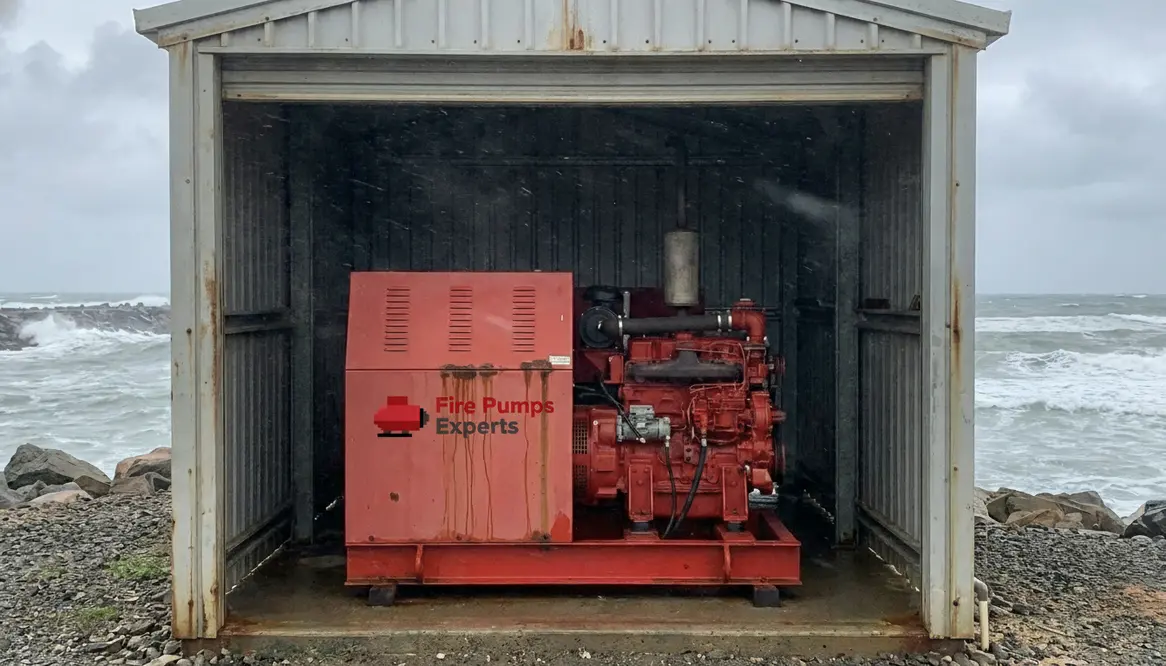
Fire Pump Coastal Wind Australia Selection Guide
I have spent enough time around coastal facilities to know one thing for sure. The wind does not knock politely. It kicks the door in, rearranges the furniture, and dares your systems to keep up. When I talk about fire pump coastal wind Australia conditions, I am talking about a unique blend of salt air, pressure swings, and storm intensity that can turn a standard setup into a liability. So today, I will walk you through how I approach fire pump selection when the wind howls like it just lost an argument with the ocean.
Why coastal wind changes everything
First, I look at the environment like a character in a movie. In coastal regions, the wind is not just background noise. It drives salt deeper into mechanical systems, accelerates corrosion, and pushes water spray into places it was never invited.
Because of that, I never treat a coastal facility like an inland one. Instead, I factor in wind driven debris, pressure fluctuations, and the risk of power interruptions. Moreover, I plan for long term exposure, not just day one performance. A pump that performs beautifully in a showroom can struggle after a few seasons near the sea.
And let us be honest, salt has a personality. It clings, it corrodes, and it refuses to leave. So I choose materials and coatings that can handle that attitude without constant babysitting.
How do I size a fire pump for high wind zones?
I start with demand, but I do not stop there. In high wind environments, fire events can spread faster due to increased oxygen flow. Therefore, I often build in a margin that accounts for that added intensity.
I also consider pressure stability. Strong winds can influence water supply conditions, especially in elevated or exposed facilities. As a result, I prefer pumps that maintain consistent pressure even when supply fluctuates.
Then, I look at redundancy. Because outages are more likely during storms, I often recommend backup systems. Diesel driven pumps, for example, bring a certain independence that electric systems cannot always guarantee. Think of it as having a backup singer who can carry the show when the lead loses their voice.
Material selection that survives salt and speed
Now we get into the bones of the system. Materials matter more than people think. In fire pump coastal wind Australia environments, I lean toward corrosion resistant alloys and protective coatings that can withstand constant exposure.
Additionally, I specify sealed enclosures and protected components wherever possible. Wind driven moisture has a way of sneaking into electrical systems, and once it does, it behaves like an uninvited guest who eats all your snacks and breaks your furniture.
Furthermore, I ensure that all external components can handle impact from debris. High winds do not just move air. They move everything.
Smart placement and structural protection
Placement is where engineering meets common sense. I position fire pumps in areas shielded from direct wind exposure whenever possible. If that is not an option, I design protective housings that reduce wind impact and prevent debris intrusion.
Moreover, I secure every component with the assumption that it will face sustained force. Anchoring systems, reinforced enclosures, and vibration control all play a role. A pump that shifts even slightly under stress can lose efficiency or fail entirely.
And yes, I have seen installations that looked like they were held together by optimism alone. That approach does not survive coastal storms.
What features should I prioritize for coastal facilities?
Core performance features
- Consistent pressure control under variable conditions
- High efficiency impellers designed for sustained demand
- Reliable startup systems during power instability
- Compatibility with backup power sources
Environmental resilience
- Corrosion resistant materials and coatings
- Sealed electrical components
- Wind and debris resistant housing
- Enhanced cooling systems for harsh climates
When I combine these features, I create a system that does not just survive but performs. And that is the goal. Survival is good. Performance is better.
Maintenance strategies that actually hold up
I treat maintenance like a routine, not a reaction. In coastal environments, I increase inspection frequency because conditions change quickly. Salt buildup, minor corrosion, and seal wear can escalate faster than expected.
So I schedule regular cleaning, detailed inspections, and performance testing. Additionally, I keep spare parts ready because waiting for replacements during a storm season is like ordering an umbrella after you are already soaked.
Furthermore, I train on site teams to recognize early warning signs. A small vibration or slight pressure drop can signal bigger issues ahead. Catching those early keeps the system reliable when it matters most.
Connecting fire pump coastal wind Australia realities to real projects
Whenever I am reviewing a design for a facility that sits anywhere near wild coastal weather, I bring the phrase fire pump coastal wind Australia into the conversation early. It reminds everyone in the room that we are not designing for textbook conditions. We are designing for salt, speed, and storms that arrive sideways. That mindset shapes decisions on sizing, materials, placement, and maintenance in a way that keeps systems doing their job long after the shine of commissioning day fades.
It also keeps focus where it belongs: life safety. A well selected, well protected pump is not just a line item on a budget. It is the difference between a controlled incident and a headline. By treating every coastal project as a test of resilience, I make sure that when the forecast looks ugly, the system is ready to answer without hesitation.
Learning from coastal installations across Australia
Over time, I have seen patterns repeat themselves across ports, refineries, terminals, and coastal industrial sites. The projects that aged well shared a common thread: they treated the phrase fire pump coastal wind Australia as a design brief, not a line in a report. They used corrosion resistant hardware across the board, protected every cable entry point, and avoided the temptation to “just tuck the pump in the corner” without shielding it from wind and debris.
I have also seen the opposite. Barely protected installations where metal fittings bloomed with rust in a single season, or where wind driven rain worked its way into control panels that were never meant to see that much moisture. Those sites ended up paying for rushed retrofits and unplanned outages. When you respect how brutal a coastal storm can be, you stop assuming and start specifying. That is where reliable performance comes from.
Plenty of owners across Australia now set internal standards that reflect this reality. They demand documented provisions for fire pump coastal wind Australia conditions in every design package, from anchoring details to coating systems. That kind of discipline is what turns a vulnerable installation into a long term asset, even when the forecast keeps trying to tear it apart.
Conclusion
Choosing the right fire pump for coastal, high wind facilities is not about guessing. It is about planning, precision, and respect for the environment you are working in. If you are managing a commercial or industrial property facing these conditions, I can help you build a system that stands firm when the wind rises. Reach out today and let us design a solution that performs with confidence, no matter what the coast throws your way.
If you want a deeper technical starting point, you can review standards and guidance from specialist resources such as https://firepumps.org and then tailor those principles to the specific mix of wind, salt, and structural exposure on your site.