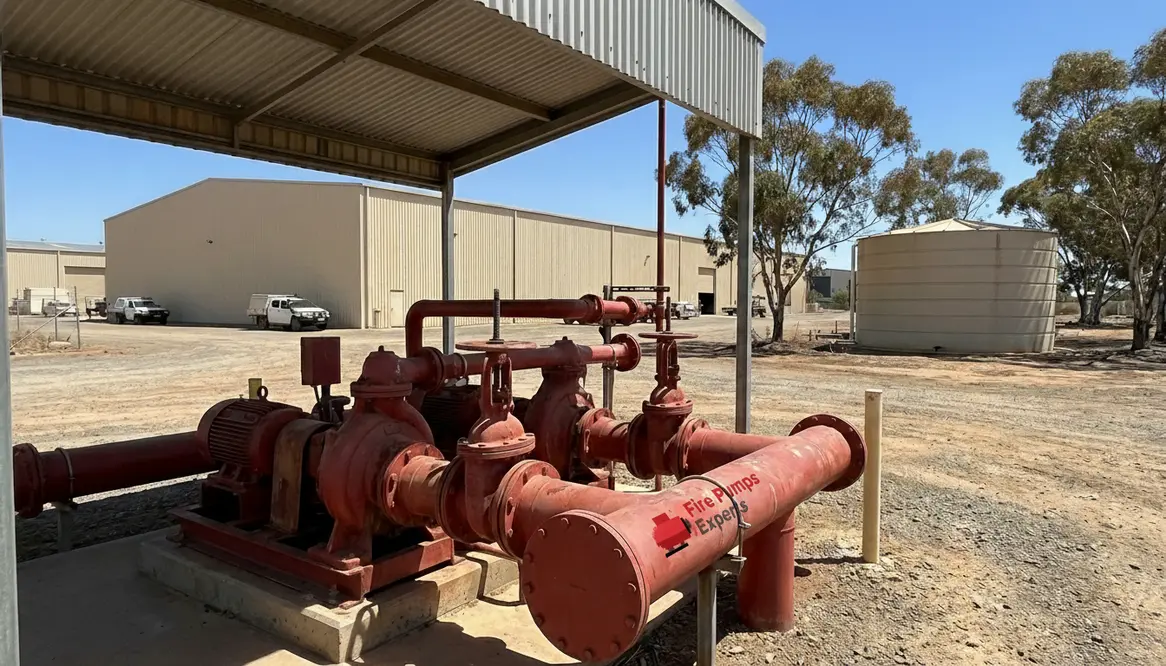
Fire Pump Industrial Park Australia Design Guide
I have spent years around large scale safety systems, and I can tell you this with calm certainty. When it comes to a fire pump industrial park Australia project, the margin for error is not small. It is razor thin. These are not quiet little buildings. They are vast, humming ecosystems of machinery, logistics, and risk. And while fire protection may not sound glamorous, it is the quiet hero standing in the wings, ready to perform when everything else goes wrong. Think of it as the Batman of infrastructure. It does not seek attention, but when it shows up, things get handled.
Understanding Fire Pump Design for Industrial Parks
Designing fire pump systems for large industrial parks in Australia requires more than picking a pump and calling it a day. I approach it as a layered system, where each component supports the next. First, I evaluate hazard classifications across the site. Warehouses, chemical storage, and manufacturing lines all demand different flow rates and pressures.
Then, I consider water supply reliability. Because in Australia, conditions can shift quickly. One moment everything flows smoothly, and the next, supply pressure dips like a dramatic plot twist. Therefore, redundancy becomes essential. I often specify dual pump setups with backup power to ensure continuity.
Additionally, compliance with Australian standards is non negotiable. Codes like AS 2941 guide the design, but I never treat them as a ceiling. They are the baseline. Real resilience goes beyond that.
How do I size a fire pump for a large industrial park?
I start with demand calculations. That means identifying the highest risk area and determining the required flow and pressure. Then, I factor in simultaneous system demands. Sprinklers, hydrants, and hose reels may all operate at once.
Next, I map out friction losses across the network. Long pipe runs are common in industrial parks, and they quietly steal pressure if ignored. After that, I select a pump that not only meets current demand but also allows for future expansion.
Finally, I test assumptions against real world scenarios. Because on paper, everything behaves nicely. In reality, systems can act like a rebellious teenager.
Fire Pump Industrial Park Australia Design Priorities
When I design systems for large industrial facilities, I focus on reliability, scalability, and accessibility. These are not buzzwords. They are survival traits.
Reliability comes from robust equipment and backup systems. Diesel driven pumps often serve as a dependable fallback when electrical supply fails.
Scalability ensures the system grows with the site. Industrial parks evolve, and I design with that in mind.
Accessibility means maintenance teams can reach and service components without a treasure map.
Key Design Focus
- Consistent pressure delivery
- Backup power integration
- Future expansion capacity
- Clear maintenance access
Common Pitfalls I Avoid
- Undersized pumps
- Ignoring pipe friction loss
- Poor zoning of fire systems
- Limited access for servicing
Water Supply Challenges in Australian Industrial Zones
Australia brings its own personality to fire protection design. Water availability can vary widely depending on location. Therefore, I often incorporate on site storage tanks sized for extended operation.
Moreover, I plan for extreme temperatures. Heat can impact both equipment performance and water demand. So, I ensure materials and pump housings can handle harsh conditions without flinching.
And then there is the issue of distance. Industrial parks can stretch far and wide. Because of this, I divide systems into zones to maintain effective pressure across all areas. It is a bit like managing a large cast in a movie. Everyone needs their moment, but timing and coordination are everything.
When I plan a fire pump industrial park Australia layout in more remote zones, I give even more attention to storage capacity, redundancy, and distribution, so the outer edges of the site get the same level of protection as the core.
Control Systems and Automation in Modern Fire Pump Setups
I have seen the shift from manual controls to smart systems, and it is a welcome evolution. Modern fire pump installations now include automated controllers that monitor pressure, flow, and system health in real time.
As a result, response times improve dramatically. The system reacts faster than any human operator could. And let us be honest, in an emergency, seconds matter more than dramatic speeches.
Additionally, remote monitoring allows facility managers to track performance without being physically present. This is especially useful in large industrial parks where walking from one end to the other can feel like a fitness challenge.
On a fire pump industrial park Australia project, I like to integrate alarm signals, test logs, and performance trends into dashboards that operations teams actually want to use, instead of ignoring until the annual inspection.
Fire Pump Industrial Park Australia Compliance and Testing
Compliance is not a one time event. I treat it as an ongoing process. Regular testing ensures the system performs as expected under real conditions.
I schedule routine flow tests, inspect components, and verify backup systems. Because even the best design means little if it is not maintained.
Furthermore, I work closely with local authorities to ensure every installation meets regulatory expectations. This collaboration helps avoid costly surprises later on. And trust me, surprises are great for birthdays, not for fire systems.
For any substantial fire pump industrial park Australia installation, this means building a testing schedule, documenting every result, and treating maintenance findings as action items, not suggestions.
FAQ
Conclusion
If you are planning or upgrading a fire protection system, I encourage you to think beyond minimum requirements. A well designed system protects assets, people, and operations without hesitation. At firepumps.org, we focus on commercial and industrial facilities that demand reliability at scale. Reach out and let us help you build a system that performs when it matters most. Because in this line of work, quiet confidence beats loud regret every time.
Whether it is a standalone facility or a complex fire pump industrial park Australia development, the same principle holds: the moment you need the system is not the moment to discover what was overlooked.