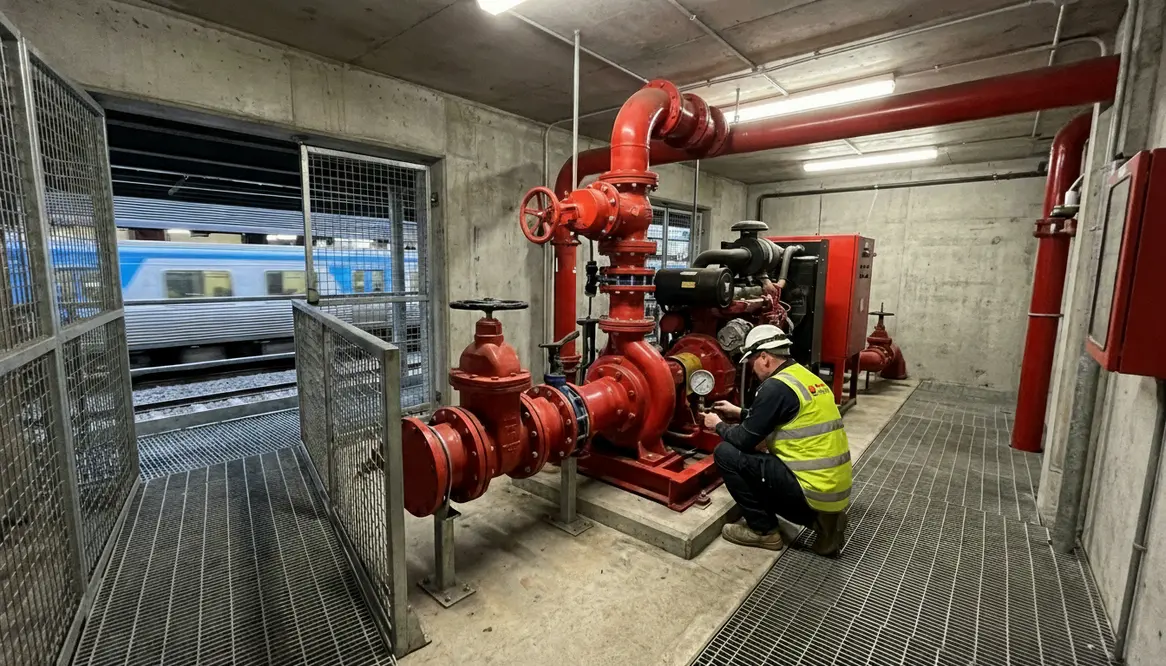
Fire Pump Transport Infrastructure Melbourne Guide
I have spent years around infrastructure projects where everything looks calm on the surface, yet underneath sits a quiet system ready to act when things go wrong. That is exactly where fire pump transport infrastructure Melbourne comes into play. In a city known for dense tunnels, rail corridors, and high traffic hubs, fire protection is not just a box to tick. It is a lifeline. And while fire pumps may not get the same spotlight as a shiny new station or bridge, they are the ones doing the heavy lifting when it matters most. Think of them as the Batman of infrastructure. Quiet, reliable, and always ready.
Why These Hidden Systems Matter
In Melbourne’s busiest transport environments, no one stares at the pump room door, but everyone relies on what sits behind it. A well designed system means passengers never notice a thing, even when the system is working at full tilt to keep them safe.
How I Approach Fire Pump Transport Infrastructure Melbourne Projects
When I evaluate a project in Melbourne, I start with context. Every transport asset has its own personality. A rail tunnel behaves very differently from an airport terminal or a freight hub. Therefore, I always match the pump system to the risk profile, not just the blueprint.
First, I look at flow and pressure demands. These systems must handle worst case scenarios, not average days. Then, I consider redundancy. Because if one pump fails, there must be another ready to step in without hesitation. After that, I factor in compliance with Australian standards and local authority expectations.
From Compliance To Resilience
However, I never stop at compliance. Meeting the minimum is like bringing a spoon to a bushfire. It technically counts, but it will not save you. Instead, I design for resilience, ensuring systems can handle extended operation during emergencies and still have something left in the tank.
That mindset is critical for any serious fire pump transport infrastructure Melbourne project. On paper, two designs can both be compliant. In reality, only one of them will still be performing after hours of continuous load under real fire conditions.
What Makes a Fire Pump System Reliable in Transport Facilities?
Engineering Reliability, Not Hoping For It
Reliability is not an accident. It is engineered step by step. In transport environments, the stakes are higher because evacuation paths are complex and occupancy loads can spike within minutes.
I focus on three core elements:
Power supply consistency
I always ensure backup power integration. Because during a fire, losing power is not a plot twist. It is expected.
Durability of components
Transport infrastructure exposes systems to vibration, dust, and temperature swings. Therefore, I select pumps and materials that can handle this daily punishment.
System response time
Speed matters. A delayed response can escalate a contained fire into a full scale emergency. So I prioritize systems that activate instantly and maintain steady output.
And yes, I test everything. Because hope is not a strategy, even if it works in movies.
Choosing the Right Pump Type for Large Scale Transport Assets
Not all pumps are created equal, and choosing the wrong one can quietly undermine the entire system. I usually compare options based on the facility’s layout and risk exposure.
Electric Fire Pumps
These are efficient and ideal for facilities with stable power infrastructure. I often use them in controlled environments like underground stations where grid reliability is strong and space is at a premium.
Horizontal Split Case Pumps
Great for high flow applications. I rely on them for large transport hubs where water demand is significant and the pipework resembles a small city of its own.
Diesel Fire Pumps
These shine when independence is critical. For example, in remote transport depots or areas where power failure risk is higher, they keep delivering water even when the rest of the site is in the dark.
Vertical Turbine Pumps
Perfect when water sources are below ground level. Think of deep reservoirs or underground systems beneath major corridors where suction lift limits rule out other configurations.
Each choice ties back to performance under pressure. Literally. In serious fire pump transport infrastructure Melbourne work, the right pump selection is the difference between a system that looks impressive on drawings and one that quietly saves lives at 3am.
Fire Pump Transport Infrastructure Melbourne Compliance and Beyond
Melbourne has strict regulatory frameworks, and rightly so. I always align designs with Australian Standards such as AS 2419 and relevant building codes. However, I treat compliance as the starting line, not the finish.
In addition, I coordinate closely with fire authorities and project engineers. This collaboration ensures the system integrates seamlessly with detection, alarms, and suppression systems, so nothing fights against anything else when timing matters most.
Moreover, I account for future expansion. Transport infrastructure evolves, and a system that cannot scale becomes obsolete faster than last year’s smartphone. Therefore, I design with adaptability in mind, allowing new platforms, extra tunnels, or expanded depots to plug into a strong central backbone.
Designing for Maintenance Without Disrupting Operations
Here is a truth many overlook. A fire pump system is only as good as its maintenance plan. In busy transport environments, shutting down systems for servicing can disrupt operations. So I design with accessibility and serviceability built in.
I include isolation valves, clear access paths, and monitoring systems that allow for predictive maintenance. As a result, teams can service components without taking the entire system offline.
Keeping Trains Moving While Systems Stay Ready
Also, I recommend routine testing schedules that fit around operational hours. Because while safety never sleeps, commuters still expect their trains on time. With the right layout, you can test, inspect, and repair without anyone on the platform realizing how much work just went into their quiet, uneventful trip.
FAQ Quick Answers for Fire Pump Systems
Certain questions come up again and again whenever a new transport asset is being planned or upgraded. Getting these foundations clear makes every later decision on fire pump transport infrastructure Melbourne more grounded and more defensible.
Bringing It All Together
When I step back and look at a completed system, I see more than pipes and pumps. I see a network designed to protect lives, assets, and continuity. Transport infrastructure never truly pauses, and neither should its safety systems. That is why thoughtful selection and design matter so much.
If you are planning or upgrading a commercial or industrial transport facility, now is the time to get your fire pump strategy right. Reach out, and let us build a system that performs when it counts, not just when it is inspected. Because in this line of work, second chances are not part of the design. For more technical context and reference material on system components, you can start with resources such as https://firepumps.org/ and then adapt the principles to the realities of your specific Melbourne asset.