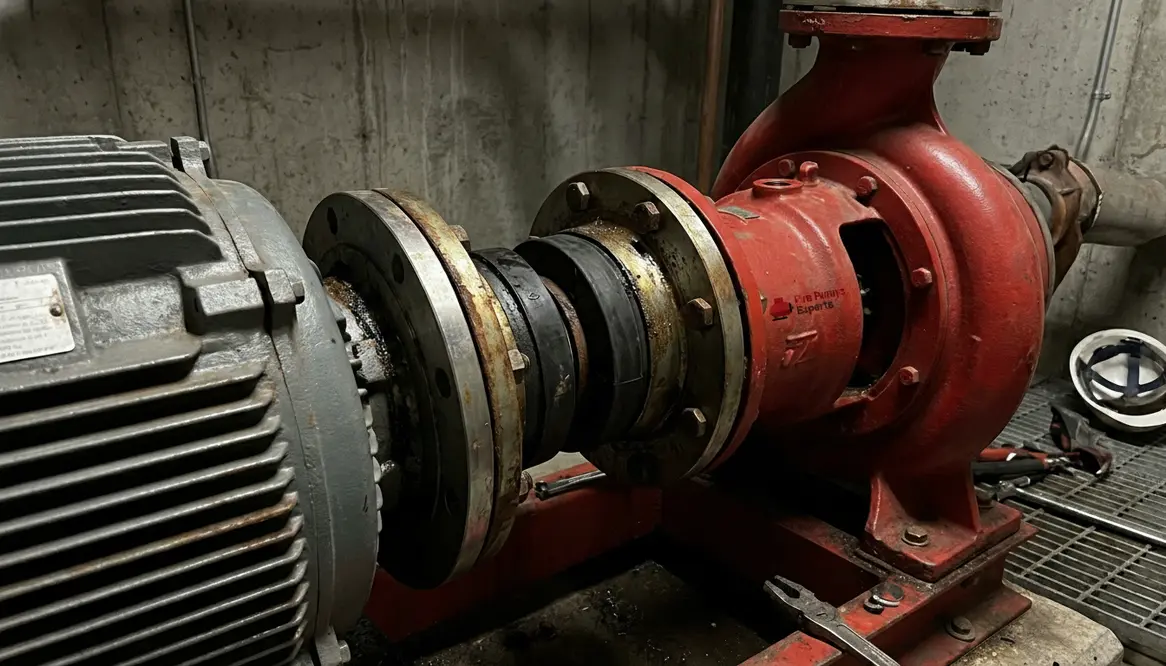
Fire Pump Coupling Failure Pomona Prevention Guide
I have walked through enough pump rooms in Pomona to know one thing for certain. When a system fails, it never picks a convenient time. And when we talk about fire pump coupling failure Pomona, we are not discussing a minor hiccup. We are talking about a quiet, overlooked component that can bring an entire fire protection system to its knees. In large industrial facilities, where every second matters, a failed coupling can turn a controlled situation into something far more serious. So let me take you inside what really happens, why it happens, and how I keep it from happening again.
What causes fire pump coupling failure Pomona in large facilities
I like to think of the coupling as the handshake between the motor and the pump. When that handshake weakens, things get awkward fast. More importantly, they get dangerous.
Most failures I see come down to a handful of root issues. First, misalignment creeps in over time. Even a slight shift in alignment creates vibration, and vibration is the silent troublemaker. Then there is wear. Rubber elements fatigue, metal components loosen, and before long the coupling starts to lose its grip.
Additionally, poor installation plays a bigger role than most want to admit. I have seen couplings installed like someone was racing the clock in an action movie. It might look fine at startup, yet months later, the system tells a different story.
And yes, sometimes it is just age. Nothing lasts forever, not even in facilities that run like clockwork.
How do I spot early warning signs before a failure?
I rely on a mix of observation and instinct, sharpened by years in the field. Fortunately, the signs are there if you know where to look.
First, I listen. A healthy system hums. A failing coupling rattles, clicks, or vibrates like it is auditioning for a drum solo. Then I check for heat. Excess friction raises temperatures, and that is never a good sign.
Moreover, I look for uneven wear patterns. If one side of the coupling looks like it has been doing all the work, something is off. Finally, I monitor performance drops. If the pump struggles to maintain pressure, the coupling might already be on its way out.
Think of it like your car. If it starts making noises you have never heard before, you do not turn up the radio and hope for the best. At least, you should not.
Inside the mechanics of industrial pump coupling stress
In large commercial and industrial buildings, fire pumps operate under serious demand. These are not casual systems. They are built to deliver high pressure, consistently, without hesitation.
Because of that, the coupling absorbs constant torque and rotational force. Over time, even minor imbalances create compounding stress. Furthermore, environmental factors in Pomona facilities play their part. Heat, dust, and operational vibration all contribute to gradual degradation.
Mechanical stress factors
- Continuous high torque loads
- Shaft misalignment over time
- Improper installation tolerances
- Material fatigue under repetition
Environmental stress factors
- Ambient heat in pump rooms
- Dust and airborne particles
- Moisture exposure
- Operational vibration from nearby equipment
When these forces combine, they create a slow burn effect. Nothing dramatic at first. Then suddenly, everything at once.
Preventing fire pump coupling failure Pomona with proactive maintenance
I prefer prevention over reaction every single time. It saves money, avoids downtime, and keeps systems ready when they matter most.
To start, I schedule routine alignment checks. Even the best installations shift over time. Next, I inspect couplings during every major service interval. I am not just glancing. I am measuring, testing, and verifying.
Additionally, I replace components before they fail, not after. Waiting for failure is like waiting for your phone battery to hit one percent during an important call. It is avoidable, and frankly, unnecessary.
Lubrication also plays a role, depending on the coupling type. Proper lubrication reduces friction and extends life. However, too much or too little can cause its own problems, so balance matters.
Finally, I document everything. Patterns emerge when you track performance over time. And those patterns help me stop problems before they start.
Why industrial properties in Pomona face unique risks
Pomona facilities operate in a demanding environment. Many buildings run heavy equipment daily, which adds constant vibration to the structure. Over time, that vibration transfers into pump systems.
Also, temperature swings in mechanical rooms can be more intense than people expect. Heat accelerates wear, especially in flexible coupling elements. Combine that with long operational hours, and you have a recipe for faster degradation.
Moreover, many properties expand or upgrade equipment without fully reassessing pump alignment. It is like adding a new engine to a car without checking the drivetrain. Something eventually gives.
And when it does, it rarely gives politely.
FAQ about fire pump coupling issues
What is a fire pump coupling?
It connects the motor to the pump and transfers rotational power.
How often should couplings be inspected?
At least annually, though high demand facilities may need more frequent checks.
What is the most common cause of failure?
Misalignment combined with long term wear.
Can a coupling fail without warning?
Yes, but most systems show subtle signs before failure.
Is replacement expensive?
Not compared to the cost of system failure during an emergency.
Conclusion
If you manage a commercial or industrial facility, do not wait for a failure to make your next move. I take a hands on approach to keeping systems reliable, efficient, and ready when it counts. Let us evaluate your fire pump setup, correct hidden issues, and protect what matters most. Reach out today, and together we will make sure your system does not just run, but performs when it is needed most.