Fire Pump Flow Test San Jose: Minimize Tenant Noise Without Sacrificing Safety
Commercial properties in San Jose can verify life safety, stay code compliant, and still keep tenants focused and comfortable. Here is how to approach a fire pump flow test san jose minimize tenant impact noise while preserving everyone’s sanity.
I have spent a good part of my career around commercial buildings that hum, thump, and occasionally roar to life like a spaceship preparing for launch. One of the loudest moments happens during a required fire pump flow test. And if you manage a large property, you already know the delicate dance involved. You must keep life safety systems verified while keeping tenants calm and productive. That is exactly why the topic of fire pump flow test san jose minimize tenant impact noise matters so much.
In San Jose, dense office towers, manufacturing campuses, and large commercial complexes rely on fire pumps to protect thousands of people and millions in assets. However, when testing day arrives, that powerful pump can sound like a jet engine waking up from a nap. Fortunately, with the right planning, timing, and communication, the process can stay smooth, safe, and surprisingly quiet. Well… quiet enough that nobody calls the front desk asking if the building is about to take off.
Why Fire Pump Testing Matters for Large Commercial Buildings
I like to think of a fire pump as the bodyguard of a building. Most of the time it stands quietly in the corner. However, when things go wrong, it must perform instantly.
Fire pumps boost water pressure so sprinkler systems can control or extinguish fires in high rise buildings, warehouses, hospitals, and industrial plants. Because of this role, codes require regular performance testing to confirm the pump can deliver the correct flow and pressure.
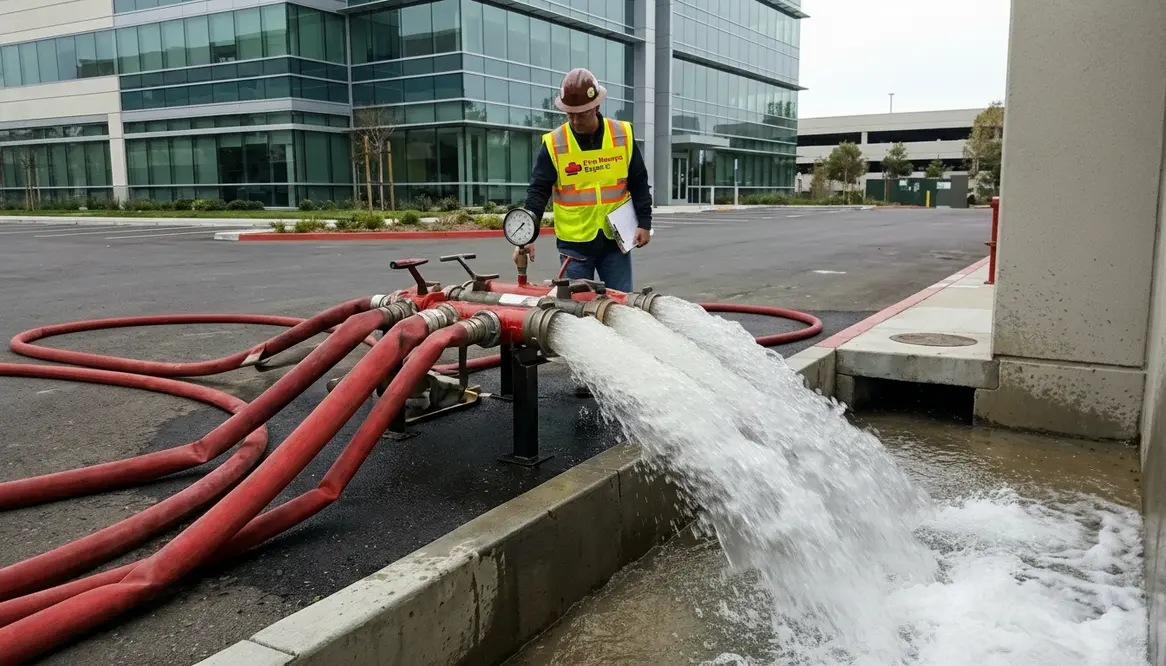
During a flow test, technicians run the pump at various demand levels. Water moves through test headers and discharge lines at high velocity while instruments measure pressure and flow rates. For commercial and industrial properties in San Jose, this process verifies that the system can protect large floor areas, specialized equipment, and dense occupancy loads.
However, the same power that makes the pump effective can also create strong vibration and noise. In other words, the building briefly sounds like a Marvel movie power generator. Therefore, planning becomes essential.
Fire Pump Flow Test San Jose Minimize Tenant Impact Noise Through Smart Scheduling
When I plan a test for a busy property, the first step is always timing. A well chosen schedule can eliminate most tenant complaints before the pump even starts. If your goal is a fire pump flow test san jose minimize tenant impact noise, start by looking at the way your building actually lives and breathes through a normal week.
Large office campuses, data facilities, and industrial complexes operate on predictable rhythms. Therefore, aligning the test window with low activity periods makes a huge difference.
For example, many San Jose commercial properties schedule fire pump flow tests during:
- Early morning maintenance windows
- Weekend operational downtime
- Prearranged facility service periods
Additionally, I always coordinate with building management and security teams. They know the pulse of the property better than anyone. Because of that, they can identify times when tenant activity drops and equipment noise blends into the background.
And yes, if a building houses a recording studio or a sensitive manufacturing process, the planning becomes even more precise. Nobody wants a guitar solo ruined by what sounds like a submarine engine.
Linking Testing Windows To Real-World Operations
If your tenants run call centers, software development teams, medical labs, or precision manufacturing, each use case has different quiet times. A thoughtful fire pump flow test san jose minimize tenant impact noise strategy respects those patterns instead of fighting them.
Practical Ways I Reduce Noise During a Fire Pump Flow Test
Even with perfect timing, the pump itself still produces sound and vibration. Fortunately, experienced technicians apply several methods to control the impact.
Mechanical preparation
- Inspect pump mounts and couplings before testing
- Confirm vibration isolators are secure
- Check discharge valves for smooth operation
- Verify piping supports reduce rattling
Operational strategies
- Gradually ramp up pump demand
- Position discharge flow away from occupied zones
- Use controlled valve adjustments during testing
- Monitor pressure to avoid sudden surges
Because of these steps, the testing process becomes far more controlled. Instead of an explosive start, the pump transitions smoothly through performance stages. As a result, the building experiences a short mechanical hum rather than a dramatic sonic event.
Think of it like starting a classic muscle car. If you floor the accelerator, everyone hears it three blocks away. But if you ease into the throttle, the engine behaves like a gentleman.
Tying Mechanical Control To Noise Reduction
A well planned fire pump flow test san jose minimize tenant impact noise approach treats the pump room like a performance space. The better tuned the equipment, the less likely it is to rattle the entire building during the show.
Clear Tenant Communication Prevents Complaints Before They Start
Now here is a secret that building managers love. Most complaints happen when people are surprised.
When tenants hear loud mechanical noise with no explanation, the imagination runs wild. Some assume construction has started. Others wonder if something broke. A few might even assume aliens landed on the roof. San Jose is innovative, but we are not quite there yet.
That is why communication matters just as much as engineering.
Before any test, I recommend that property management distribute a clear notification that includes:
- The exact date and time window
- A brief explanation of fire pump testing
- Expected noise duration
- Contact information for building management
Additionally, signage in elevators and lobby areas reinforces the message. When tenants know the purpose of the test, they usually accept the temporary inconvenience without frustration.
After all, most people appreciate knowing the building safety systems actually work. Especially in large commercial properties where hundreds or even thousands of occupants depend on them every day.
Fire Pump Flow Test San Jose Minimize Tenant Impact Noise with Experienced Technicians
Experience changes everything during a flow test. A trained technician understands how commercial and industrial systems behave under pressure.
For instance, large San Jose office towers often use electric fire pumps connected to extensive vertical piping networks. Industrial facilities may operate diesel pumps designed for high output conditions. Each configuration produces different sound patterns and hydraulic responses.
An experienced team watches gauges closely, adjusts valves carefully, and controls each phase of the test with steady precision. Consequently, the process moves efficiently and avoids unnecessary stress on the system.
Furthermore, seasoned professionals document performance results clearly for compliance records. This documentation helps facility managers maintain inspection readiness for fire authorities, insurance providers, and internal safety audits.
And let us be honest. When inspectors review a system, confidence in the testing process matters almost as much as the results themselves.
If you want more background on how design and testing standards shape fire pump performance, resources like this overview of NFPA 20 fire pump requirements can give helpful context for your building team.
What Is the Best Way to Prepare a San Jose Property for a Flow Test?
If I had to summarize the preparation process in plain language, it comes down to three coordinated steps.
- Plan ahead. Coordinate with building operations, security teams, and tenant schedules.
- Prepare equipment. Inspect pumps, valves, and piping before the test begins.
- Communicate clearly. Inform occupants so the event feels planned rather than disruptive.
When these steps align, the entire operation runs smoothly. The pump proves its performance. The building stays compliant. Tenants continue their work with minimal interruption.
And the facility manager looks like the calm captain of the ship. Which, in the world of large property management, is always a good place to be.
FAQ About Fire Pump Testing in San Jose
Facility teams often ask similar questions as they plan a fire pump flow test san jose minimize tenant impact noise strategy. Here are some of the most common concerns.
Keeping Safety Strong While Keeping Tenants Happy
When done right, a fire pump flow test should feel like a well rehearsed orchestra rather than a surprise rock concert. Careful scheduling, skilled technicians, and clear communication all work together to keep buildings safe without disrupting daily operations. If you manage a commercial or industrial property in San Jose and want a smooth testing process that respects your tenants and your schedule, now is the time to plan ahead and work with specialists who understand the balance.