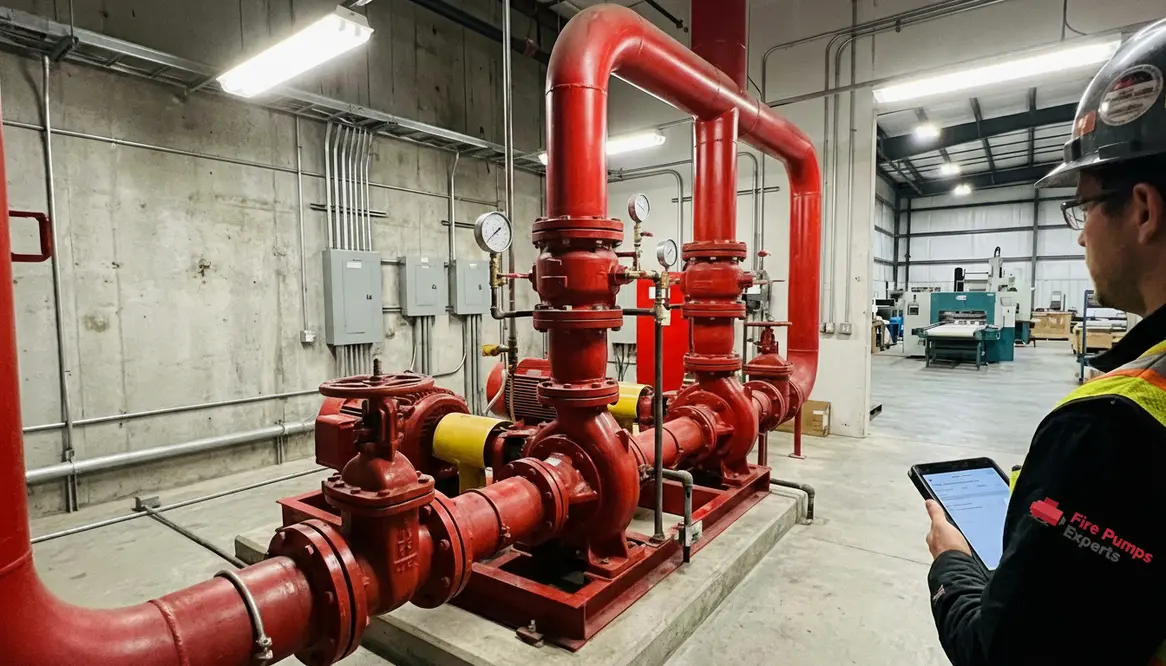
Fire Pump Planning for Industrial Production Spaces
I have spent enough time around industrial buildings to know one thing for certain. Fire does not care about production schedules, deadlines, or that big shipment going out tomorrow morning. That is exactly why Fire pump planning for industrial production spaces deserves real attention from day one. When I walk into a manufacturing facility, I am not just looking at machines. I am thinking about pressure, water flow, risk zones, and how fast a system can respond when things go sideways. Because in this world, seconds matter. And frankly, hoping the sprinklers “figure it out” is about as reliable as trusting a Wi Fi signal in a concrete bunker.
What makes fire pumps essential in manufacturing facilities?
I will say it plainly. Manufacturing sites create unique fire risks. You have heat sources, moving equipment, combustible materials, and sometimes chemicals that behave like they have a personal grudge against safety. Because of this, a standard water supply often falls short. That is where fire pumps step in.
A fire pump boosts water pressure so sprinkler and standpipe systems perform exactly as designed. Without it, even the best system becomes a polite suggestion rather than a reliable defense. Moreover, insurance carriers and fire codes expect these systems to meet strict performance levels.
So when I approach industrial fire protection system design, I treat the pump as the heartbeat. If it fails, everything else struggles to keep up. And no one wants to explain that failure while standing next to a very unhappy fire marshal.
Why pressure and flow matter so much
In production environments, ceiling heights, storage racks, and complex layouts stretch sprinkler systems to their limits. Without the right pump, water shows up late, at the wrong pressure, or not at all. Fire pump planning for industrial production spaces turns that fragile setup into something that can actually keep up with the hazards.
You are not just moving water; you are delivering targeted protection to the very spots most likely to ignite. That difference shows up clearly in the first critical minutes of an incident.
Core components I evaluate in fire pump system design
When planning fire pump systems for large scale production buildings, I focus on how each part supports the whole. Every component has a job, and cutting corners here is like removing brakes from a truck because you trust the driver.
Water supply reliability
I confirm the source can sustain demand. Municipal lines alone rarely cut it for large facilities.
Pump type selection
Electric or diesel driven pumps depend on site conditions and backup needs.
Controller systems
These act as the brain. They must start the pump instantly when pressure drops.
Flow and pressure ratings
I match system demand with precise calculations, not guesswork.
Redundancy planning
Backup pumps or power sources keep protection active during failures.
Testing access
I always ensure the system can be tested without disrupting operations.
Each of these elements plays a role in keeping the system reliable under stress. And in my experience, stress is when systems reveal their true character.
Fire pump planning for industrial production spaces that actually works
I have seen plans that look great on paper but fall apart in real conditions. So I focus on practical performance. First, I map out hazard classifications across the facility. Not all areas carry the same risk, and treating them equally wastes resources.
Next, I calculate demand based on worst case scenarios, not average days. Because fires do not schedule appointments. Then I coordinate closely with sprinkler system layouts, ensuring the pump supports peak flow requirements without hesitation.
Additionally, I consider future expansion. Manufacturing facilities grow. Equipment changes. Production lines evolve. A well planned system adapts without requiring a complete overhaul. Think of it like building a stage that can handle both a solo act and a full orchestra.
Done right, Fire pump planning for industrial production spaces gives you room to expand production without rebuilding protection from scratch.
How do codes and standards shape system requirements?
Short answer. They shape everything. I rely heavily on NFPA standards, local fire codes, and insurance requirements to guide decisions. These are not suggestions. They are the rulebook.
Beyond minimum compliance
However, I do not treat compliance as the finish line. I treat it as the baseline. Because meeting minimum requirements does not always mean optimal protection. I often go a step further to account for real world conditions like pressure fluctuations, system wear, and operational demands.
Inspection and proof
And yes, inspectors will check everything. They will look at installation, testing records, and performance data. So I make sure the system not only works but proves it consistently.
That proof becomes especially important when Fire pump planning for industrial production spaces intersects with insurance reviews, permitting, and business continuity planning.
Common mistakes I avoid in industrial fire protection planning
Let me save you some trouble. I have seen these mistakes more times than I care to count.
Undersized pumps
This happens when calculations ignore peak demand. The result is a system that struggles under pressure.
Poor maintenance access
If technicians cannot reach components easily, maintenance gets delayed. And delayed maintenance invites failure.
Ignoring backup power
An electric pump without reliable backup is a gamble. Power outages and emergencies often arrive together.
Overlooking system testing
If you cannot test it regularly, you cannot trust it when it matters.
I approach each project with a mindset of prevention. Because fixing a design flaw after installation is far more painful than getting it right the first time.
FAQ about fire pump requirements in manufacturing facilities
These are the questions I hear most often from plant managers, safety leaders, and maintenance teams when we talk about Fire pump planning for industrial production spaces.
Final thoughts and next steps
If you are serious about protecting your facility, then Fire pump planning for industrial production spaces cannot be an afterthought. I encourage you to assess your current system, identify gaps, and bring in experts who understand industrial risks. A well designed fire pump system protects more than equipment. It protects people, operations, and your bottom line. Reach out, take action, and make sure your facility stands ready when it matters most.
If you want a deeper technical reference, you can start with resources from https://firepumps.org and then tailor your approach to the specific hazards, production layout, and growth plans of your own site.
In the end, Fire pump planning for industrial production spaces is not just about satisfying a code book. It is about making sure that when everything else goes wrong, one system does exactly what it is supposed to do, at the exact second you need it.