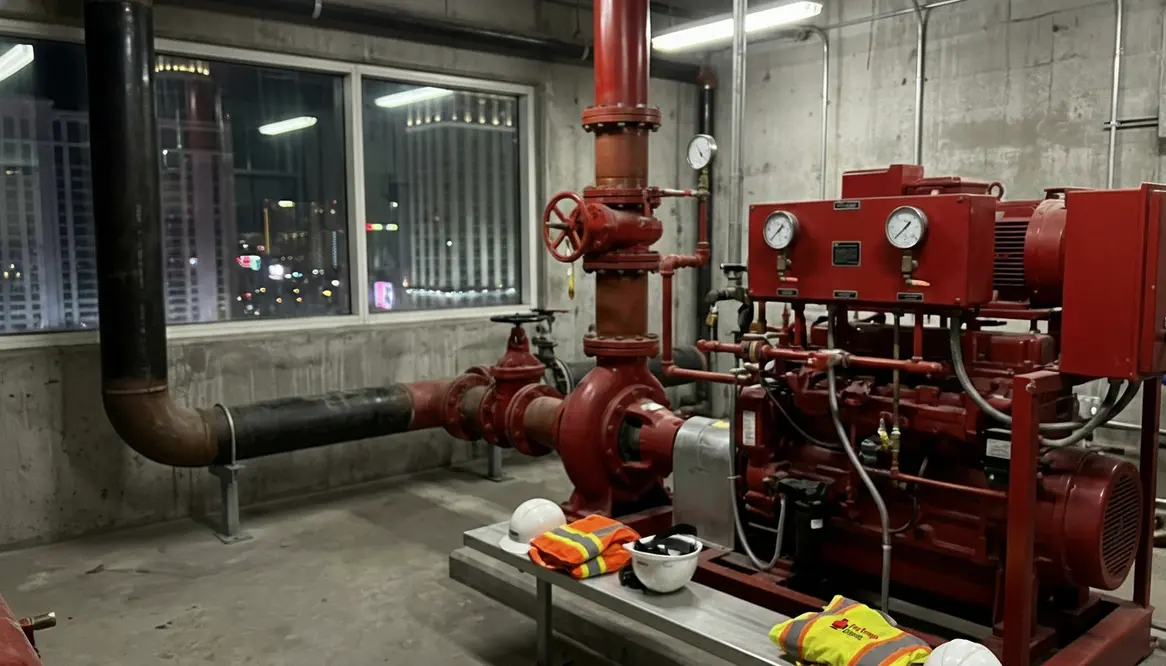
Fire Pump Projects in Major US Cities Guide
From 2 a.m. tests to high-rise headaches, here is what actually matters before you put a fire pump in charge of other people’s lives.
I have spent enough time around fire protection systems to know one thing for certain. Nothing exposes shortcuts faster than a real emergency. And if you have ever sat through Las Vegas fire pump testing in a high rise at 2 a.m., you understand the difference between a system that merely exists and one that performs. That distinction matters even more in major U.S. cities, where regulations are tighter, stakes are higher, and the margin for error is about as thin as a hotel minibar towel.
So, before you break ground or upgrade an existing system, let me walk you through what actually matters. Not the brochure version. The real version.
Why major-city fire pump projects feel different
When you stack tight sites, impatient stakeholders, and inspectors who have seen every possible mistake, mediocrity does not last long. The goal is not just passing inspection once. It is surviving the moment when alarms blare, pumps start, and everyone else is running the other way.
What should I know before starting a fire pump project in a major U.S. city?
First, you need to respect the complexity. Urban environments demand more than basic compliance. They require coordination across agencies, engineers, and inspectors who all speak slightly different dialects of the same rulebook. Therefore, I always start with local codes and Authority Having Jurisdiction requirements. These are not suggestions. They are the script.
Next, understand your building classification. A commercial high rise, a manufacturing facility, and a mixed use property each bring unique flow and pressure demands. Consequently, your fire pump system must align with those demands from day one.
Urban fire pump checklist
- Local code and AHJ requirements documented
- Building classification and hazard profile confirmed
- Water supply path and reliability verified
- Space, access, and ventilation for the fire pump room planned
- Testing expectations (including any Las Vegas fire pump testing style acceptance runs) built into the schedule
Finally, budget for time, not just equipment. Permits, inspections, and approvals move at their own pace. And no, you cannot charm your way past them, no matter how confident you feel after your third espresso.
Planning for compliance and inspections in dense urban environments
City projects come with layers. In addition, those layers rarely communicate as smoothly as you would hope. That is why I build compliance into the design phase instead of treating it as a final checkbox.
For example, in cities like New York, Chicago, or Los Angeles, fire departments often require detailed hydraulic calculations, redundancy planning, and documented acceptance testing. Similarly, lessons learned from Las Vegas fire pump testing show how critical it is to validate performance under real load conditions, not just theoretical ones.
Moreover, inspection schedules can disrupt operations in commercial buildings. So I coordinate early with facility managers to avoid downtime that could cost tenants serious money. Because nothing says “bad day” like shutting down a data center for an unplanned test.
Smart ways to stay ahead of inspectors
- Align design documents with NFPA 20 and local amendments from the start, not after submittal comments arrive.
- Schedule preliminary walkthroughs when possible, especially for tricky pump room layouts and suction piping paths.
- Document every design decision that deviates from the “textbook” approach, with justification ready.
- Plan the acceptance test window early to coordinate with building operations, traffic, and security.
If your project touches on NFPA 20 design or installation questions, resources like the NFPA 20 overview at Kord Fire’s fire pump systems guide are worth bookmarking for your team.
Choosing the right fire pump system for large scale facilities
Not all pumps are created equal. And more importantly, not all pumps are right for your building.
I look at three things immediately. Required flow rate, pressure demands, and reliability expectations. Then I match those to pump types such as electric, diesel, or vertical turbine systems. Each has its place, depending on infrastructure and risk tolerance.
Meanwhile, power supply plays a huge role. In dense cities, electrical redundancy can be both a blessing and a bureaucratic puzzle. Therefore, I often evaluate backup power options early to avoid redesign later.
And yes, I have seen projects where someone chose equipment based on price alone. That usually ends the same way a low budget action movie does. Lots of noise, questionable decisions, and a messy ending.
Matching pump type to your reality
- Electric fire pumps when power is reliable and backed by generators.
- Diesel fire pumps when utility reliability is questionable or code demands independence.
- Vertical turbine pumps when drawing from wells or tanks with limited suction head.
- Inline or end suction pumps for tighter spaces, as long as hydraulics allow it.
The more complex the facility, the more your design process should start to resemble those heavy-duty Las Vegas fire pump testing scenarios: realistic, unforgiving, and focused on what happens when every single component is under stress.
Coordinating stakeholders without losing your sanity
Here is where things get interesting. A fire pump project involves engineers, contractors, inspectors, property managers, and sometimes insurance representatives. All of them have opinions. Strong ones.
So I treat communication like part of the system itself. I schedule regular updates, document decisions clearly, and make sure everyone understands how their role connects to performance and safety.
Additionally, I align timelines early. Because when one delay hits, it tends to ripple across the entire project. And suddenly, what should have been a smooth install starts to feel like a group project where no one read the assignment.
What I prioritize
- Clear documentation
- Defined responsibilities
- Early inspection scheduling
- Equipment lead times
What I avoid
- Last minute design changes
- Unverified assumptions
- Vague communication
- Rushed testing phases
Testing, commissioning, and long term reliability
This is where everything proves itself. Or doesn’t.
I approach testing as more than a requirement. It is a performance rehearsal. During commissioning, I verify flow rates, pressure stability, and automatic activation under simulated conditions. In addition, I document everything thoroughly, because inspectors and insurers will ask for proof.
Insights from fire pump performance checks in Las Vegas highlight how environmental factors and system load can impact results. Therefore, I never assume consistency across locations. Each system deserves its own validation, and any serious Las Vegas fire pump testing routine will make that painfully obvious the first time you see pressure dip where it should not.
After commissioning, maintenance planning becomes the next priority. Because even the best system will fail if ignored. And unlike a forgotten gym membership, this one actually matters.
From day-one tests to decades of service
- Plan acceptance tests to mirror realistic worst-case scenarios, not just checkbox flows.
- Lock in a routine that includes weekly churn tests and annual full-flow tests for critical facilities.
- Track performance trends over time; subtle drops can signal suction issues, valve problems, or controller trouble.
- Treat every major test, whether local or full-scale Las Vegas fire pump testing, as data collection, not just paperwork.
FAQ: Fire Pump Projects in Major U.S. Cities
These are the questions that come up on almost every major-city project, usually right after the first serious budget meeting or the first late-night Las Vegas fire pump testing recap.
Bringing it all together
Starting a fire pump project in a major U.S. city is not just a technical task. It is a coordinated effort that blends engineering, compliance, and foresight. If you want a system that performs when it matters most, you need more than equipment. You need strategy, discipline, and the right partners.
Whether you are working in a coastal high rise, a downtown medical campus, or a resort complex where late-night Las Vegas fire pump testing feels like part of the local culture, the pattern is the same. Respect the codes, respect the physics, and respect the fact that real emergencies never arrive on a convenient schedule.
So if you are planning a project, now is the time to do it right. Reach out, ask the hard questions, and make sure your system is ready long before it is ever needed.