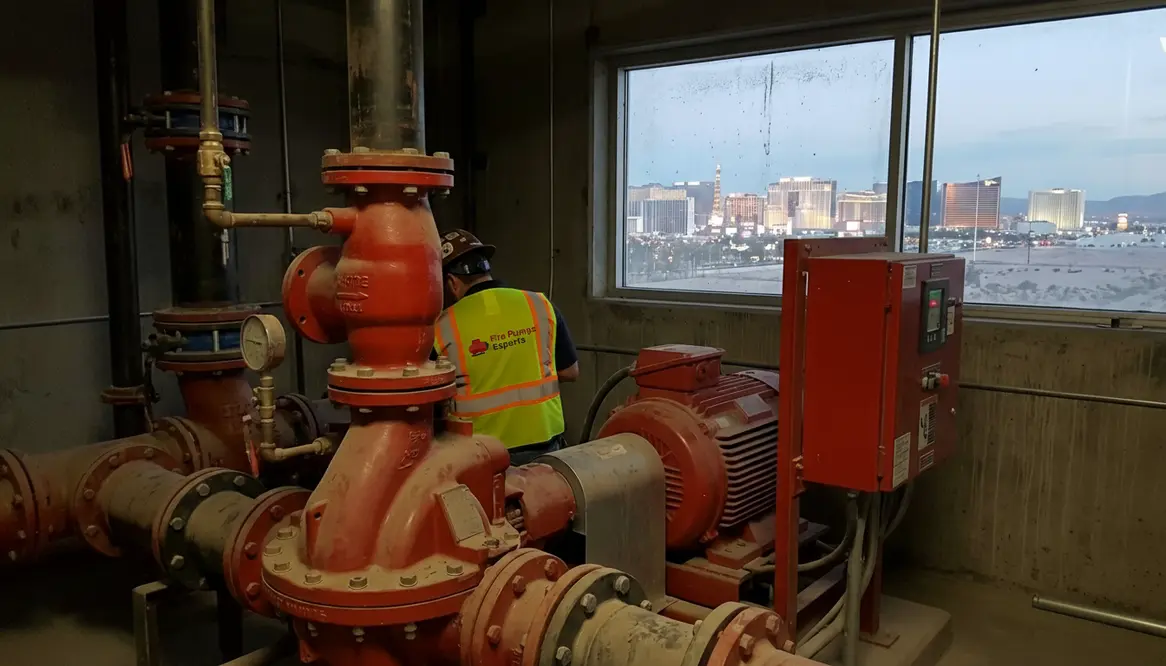
Las Vegas Fire Pump Compliance Guide for Properties
In Las Vegas, the lights never dim, and neither should your fire protection system. I have seen it time and again in large commercial buildings. A pump that refuses to start. Pressure that drops at the worst moment. Controllers that act like they have stage fright. These common fire pump problems may sound small, yet they carry serious consequences. And in a city built on high stakes, that is a gamble no property owner wants to take. So let us walk through what fire pump compliance really means here, and why it matters more than most people realize.
What Fire Pump Compliance Means for Las Vegas Commercial Properties
When I talk about compliance, I am not just referring to passing an inspection and calling it a day. In Las Vegas, fire pump compliance ties directly into Clark County codes, NFPA standards, and local fire authority expectations. These rules exist for one reason. To ensure that when a fire breaks out, your system responds without hesitation.
Now, I know what you might be thinking. Regulations can feel like that overly strict teacher from back in school. However, these standards create consistency across high rise buildings, resorts, warehouses, and industrial sites. Without them, every property would play by its own rules, and that is a recipe for chaos.
Therefore, staying compliant means your fire pump system is tested, maintained, and ready to perform under pressure. Literally. And when you understand the common fire pump problems that derail performance, staying ahead of them becomes far less intimidating.
Why Compliance Deserves Center Stage
In a city where events, shows, and conventions run nonstop, downtime is expensive. Noncompliant fire pumps do not just risk fines and failed inspections; they threaten business continuity when it matters most. Treat compliance as part of your everyday operations, not a once-a-year performance review.
That is why many owners lean on specialized partners like Kord Fire’s fire pump services to support inspection, maintenance, and documentation that stand up to scrutiny.
Why Fire Pump Failures Happen More Than You Think
Silent issues that build over time
Here is the truth. Most fire pump failures do not come out of nowhere. Instead, they build quietly over time. A neglected valve here. A worn component there. Eventually, those small issues stack up and become common fire pump problems lurking in the background.
I often see problems tied to power supply interruptions, improper installation, or lack of routine testing. Meanwhile, environmental factors in Las Vegas, like heat and dust, do not exactly help. They push systems harder than in milder climates.
Shiny buildings, invisible vulnerabilities
And yes, even high end properties on the Strip are not immune. A shiny lobby does not guarantee a reliable pump room. As they say in show business, it is what happens behind the curtain that counts. The trouble is, those spaces behind the curtain are exactly where common fire pump problems like corrosion, loose wiring, or neglected jockey pumps tend to hide.
How I Approach Fire Pump Compliance Step by Step
1. Documentation review
When I evaluate a system, I follow a process that leaves little room for surprises. It is not glamorous work, but it is essential.
First, I review documentation. Inspection records, maintenance logs, and previous test results tell a story. If pages are missing, that story gets suspicious real fast.
2. Performance testing
Next, I conduct performance testing. I want to see how the pump behaves under real conditions. Not theory. Not assumptions. Real flow and pressure data.
3. Component inspection
Then, I inspect components. Controllers, valves, piping, and power sources all need to function as a team. One weak link can compromise the whole system, and those weak links usually trace back to familiar, common fire pump problems that should have been caught sooner.
4. Code verification
Finally, I verify compliance with local codes. Las Vegas has specific expectations, and meeting them is not optional.
By following this process, I can catch issues early and keep systems aligned with both safety standards and operational demands.
Common Fire Pump Problems That Put Properties at Risk
Let us shine a light on the usual suspects. These issues appear often, and they rarely travel alone.
Mechanical issues
- Worn bearings or seals
- Misaligned shafts
- Corrosion in key components
Electrical failures
- Controller malfunctions
- Power supply inconsistencies
- Faulty wiring connections
Operational errors
- Improper testing procedures
- Delayed maintenance schedules
- Human oversight during inspections
System design flaws
- Incorrect pump sizing
- Poor integration with building systems
- Outdated equipment
Each of these problems can compromise performance. Together, they create a situation where your system might fail when it matters most. Not exactly the kind of suspense anyone enjoys, especially when so many of these are preventable, common fire pump problems.
How Often Should Fire Pumps Be Tested in Las Vegas?
Testing frequency that keeps systems ready
This is one question I hear all the time, and the answer is refreshingly clear. Weekly churn tests, annual flow tests, and regular inspections are the standard. However, in Las Vegas, I recommend staying extra vigilant due to environmental stressors.
Additionally, high occupancy buildings and industrial facilities should treat testing as a priority, not a checkbox. Because when systems run frequently, they reveal issues sooner. And catching a problem early is always cheaper than dealing with failure later.
Think of it like going to the gym. Skip too many sessions, and things start breaking down. Stay consistent, and everything runs smoother. In the fire pump world, consistency is what keeps common fire pump problems from ever impacting occupants, operations, or your reputation.
Choosing the Right Fire Pump Partner for Large Facilities
Why expertise with scale matters
Not all service providers are built the same. In fact, working with commercial and industrial systems requires a level of expertise that goes beyond basic maintenance.
I always recommend choosing a partner who understands large scale operations. Someone who can navigate complex pump rooms, coordinate with facility teams, and stay current with Las Vegas regulations.
Communication, transparency, and follow through
Moreover, communication matters. You want clear reporting, honest assessments, and proactive recommendations. Not vague summaries that leave you guessing.
Because at the end of the day, your fire pump provider should feel less like a vendor and more like a trusted advisor. Preferably one who does not disappear when things get complicated.
FAQ: Fire Pump Compliance in Las Vegas
Stay Ready, Stay Compliant
Fire pump compliance is not just about meeting codes. It is about protecting people, property, and operations without compromise. In Las Vegas, where scale and complexity define many buildings, the margin for error is slim.
So if your system has not been evaluated recently, now is the time. Partner with experts who understand large facilities and demand performance. Addressing common fire pump problems today is always easier than explaining system failure tomorrow.
Because when the moment comes, your fire pump should not hesitate, and neither should you.