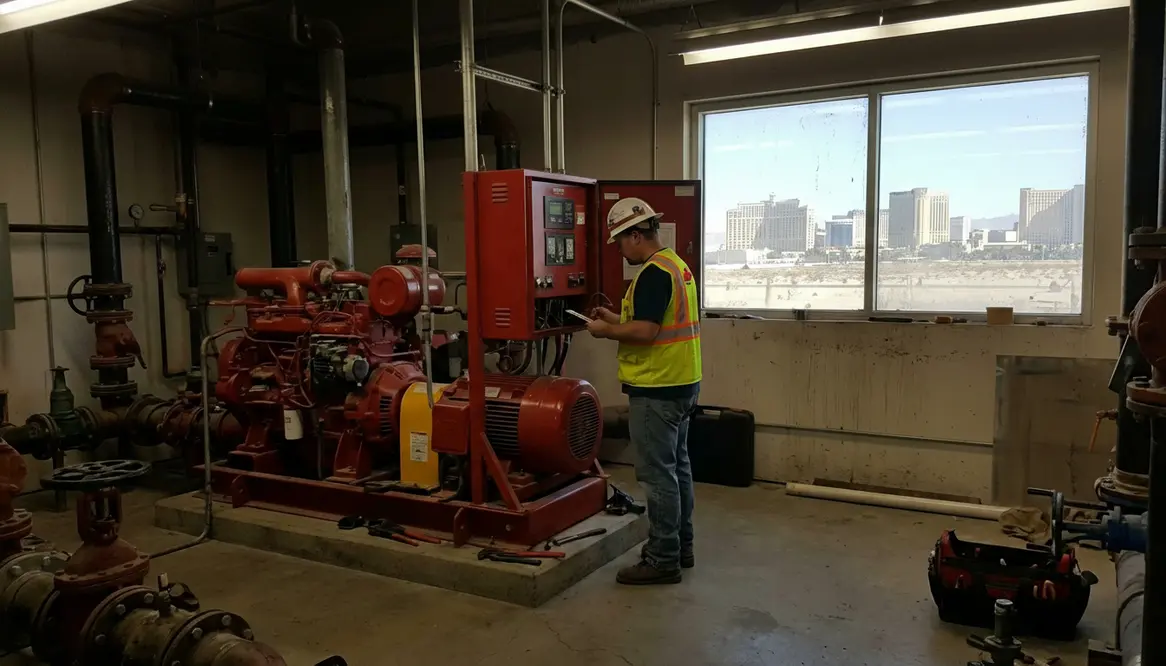
Las Vegas Fire Code and Fire Pump Inspection Prep
I have spent years walking through mechanical rooms where the steady hum of a fire pump feels like a heartbeat for the entire building. And before anything else, I always come back to one thing: fire pump inspection prep. In Las Vegas, that preparation is not just a checklist. It is the difference between passing inspection smoothly or watching your operations stall under compliance pressure. So let me walk you through how the Las Vegas fire code shapes commercial fire pump systems, and why a little preparation today saves a lot of headaches tomorrow.
Las Vegas Fire Reality Check
Las Vegas runs on high occupancies, complex structures, and zero tolerance for avoidable risk. The fire code reflects that. Treating fire pump inspection prep as an afterthought is the fastest way to run into violations that slow down business and frustrate everyone involved.
Your Fire Pump As A Business Asset
That pump in the corner of the fire room is quietly protecting revenue, life safety, and your ability to stay open. When inspections are smooth, no one notices. When they go badly, everyone suddenly cares.
How does Las Vegas fire code affect commercial fire pump systems?
Las Vegas does not play around with fire protection. And honestly, in a city packed with high rise hotels, sprawling casinos, and massive industrial facilities, that makes perfect sense. The local fire code builds on national standards like NFPA 20 and NFPA 25, but it adds its own expectations for reliability and documentation.
Because of that, I always tell facility managers that compliance here is not passive. You do not install a system and forget it. Instead, you actively maintain performance, testing frequency, and documentation. Moreover, inspectors expect clear proof that your system will perform under real world pressure, not just on paper.
And yes, inspectors in Vegas can be as sharp as a card dealer on the Strip. They notice everything.
Local code + national standards
Your Las Vegas authority having jurisdiction is looking at how well your fire pump inspection prep lines up with NFPA requirements and the local amendments that sit on top of them. That combination is what determines whether you pass, fail, or get a “fix it and call us back” outcome.
Documentation as proof of life
In this market, “we think it works” does not count. Inspectors expect time-stamped, accurate records that prove your fire pump will respond under real demand and that you have been maintaining it consistently, not just in the week before inspection.
Why fire pump inspection prep matters more in Las Vegas
Preparation is where most facilities either shine or stumble. With proper fire pump inspection prep, you walk into an inspection confident and ready. Without it, even a small oversight can trigger violations.
For example, Las Vegas code enforcement often emphasizes:
- Accurate flow test records that match system demand
- Controller functionality including alarms and automatic start
- Reliable water supply verification
- Clear maintenance logs with no gaps
In addition, the environment itself plays a role. Heat, dust, and constant system demand in large commercial properties can quietly wear down components. So while a system may look fine at a glance, deeper inspection often tells a different story.
Think of it like a Vegas magic show. Everything looks flawless until you know where to look.
What do inspectors actually look for in a fire pump system?
I get this question all the time, and the answer is both simple and detailed. Inspectors want proof that your system will perform instantly and reliably. However, they also want to see that you understand your system, not just rely on a vendor.
So I focus on three core areas during inspection readiness.
Three pillars of inspection readiness
First, mechanical integrity. Pumps, valves, and piping must show no signs of damage, corrosion, or improper installation. Even minor leaks can raise concerns.
Second, operational performance. Weekly churn tests and annual flow tests must demonstrate that the pump meets required pressure and flow. If your numbers drift, inspectors notice.
Third, documentation. This is where many facilities slip. Logs must be consistent, complete, and easy to follow. Because if it is not documented, it did not happen.
And just to keep things interesting, some inspectors will ask questions on the spot. Not a pop quiz, but close enough to make you wish you studied.
Fire pump inspection prep for large commercial properties
When I work with large scale facilities, I approach fire pump inspection prep as a system wide strategy, not a last minute scramble. After all, these buildings depend on uninterrupted protection.
Before inspection
- Review past inspection reports for unresolved issues
- Verify all gauges and sensors are calibrated
- Run a full system test under load conditions
- Check backup power integration
During inspection
- Provide organized documentation immediately
- Demonstrate system startup without delay
- Answer technical questions clearly
- Address minor issues on the spot if possible
Meanwhile, coordination across teams matters. Engineering, maintenance, and compliance staff must all stay aligned. Otherwise, small communication gaps can lead to big compliance problems.
It is a bit like running a casino floor. If one table is out of sync, the whole operation feels it.
Common compliance mistakes I see in Las Vegas facilities
Even well managed properties can miss key details. However, most issues follow familiar patterns.
One common mistake is inconsistent testing intervals. Facilities either test too late or fail to document properly. As a result, inspectors see gaps and assume risk.
Another issue is neglecting controller settings. Over time, adjustments get made without proper records. Consequently, systems may not respond as expected during emergencies.
Finally, I often see overlooked auxiliary components. Relief valves, jockey pumps, and sensing lines may seem secondary, but they play critical roles in system stability.
And here is the truth. In Las Vegas, small oversights rarely stay small. They tend to escalate quickly under inspection scrutiny.
How I stay ahead of Las Vegas fire code changes
Fire codes evolve, and Las Vegas keeps pace with growth and risk. So I stay proactive. I review updates, coordinate with local authorities, and adjust maintenance plans accordingly.
Additionally, I treat every inspection as a learning opportunity. Each visit reveals trends, expectations, and subtle shifts in enforcement priorities. Over time, that knowledge builds a stronger, more resilient system.
Because in this city, staying still is not an option. You either keep up, or you get left behind.
Bringing in expert support
If you are running high-rise, industrial, or large commercial properties in the region, partnering with a team that lives and breathes pumps, testing schedules, and documentation can change everything about how stressful inspections feel. Providers like specialized fire pump service teams stay focused on keeping your system inspection-ready long before anyone from the city walks through the door.
FAQ
A lot of commercial and industrial teams ask the same questions when they start tightening up their fire pump inspection prep, especially when they are bracing for their next Las Vegas fire code review.
Conclusion
Las Vegas fire code demands precision, consistency, and a proactive mindset. When I invest in proper preparation and stay aligned with evolving standards, inspections become predictable instead of stressful. If you manage a commercial or industrial facility, now is the time to tighten your process, refine your system, and ensure every component performs on cue. Connect with experts who understand these systems deeply, because in this city, readiness is not optional, it is essential.