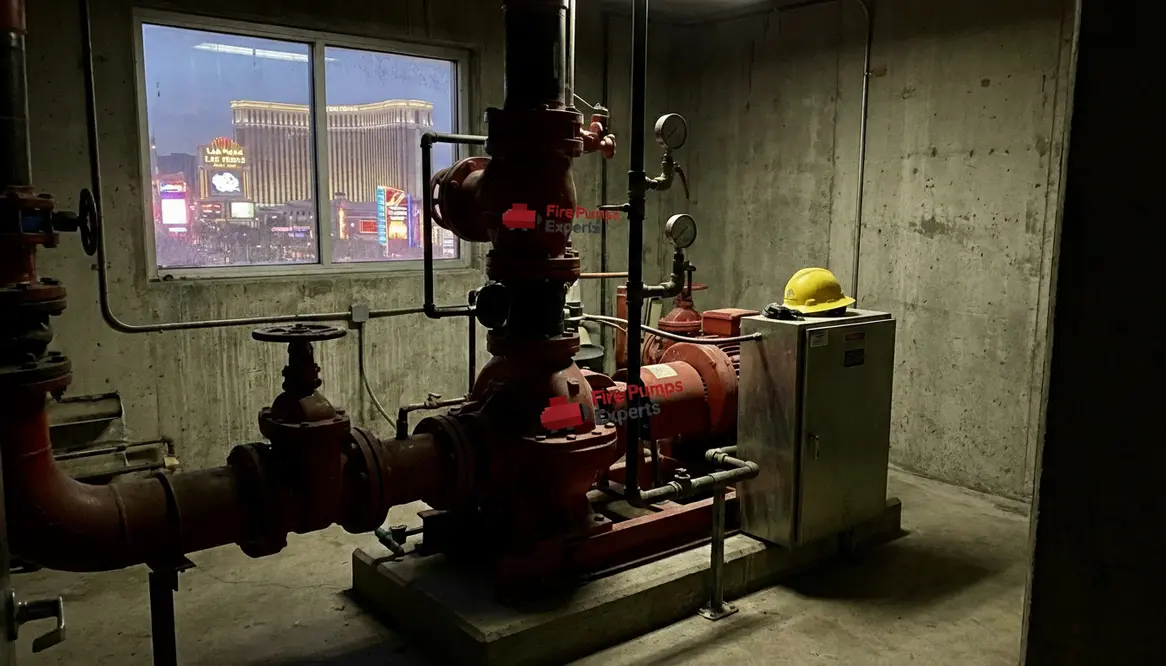
Las Vegas Hotel Fire Pumps Requirements Guide
I have spent years around commercial buildings in Las Vegas, and if there is one thing I never take lightly, it is fire protection. In a city that glows all night and hums with energy, safety systems have to work just as hard as the neon lights. That includes hotel fire pumps, which quietly stand guard behind the scenes. While guests think about room service and blackjack tables, I think about water pressure, system reliability, and code compliance. It may not sound glamorous, but trust me, when it matters, it matters a lot.
What fire pump requirements apply to commercial buildings in Las Vegas?
Right away, I can tell you Las Vegas does not play games when it comes to fire protection. The Southern Nevada amendments to the International Fire Code and NFPA 20 drive most of the requirements. Therefore, if I am working on a high rise, resort, or industrial facility, I expect strict enforcement.
Fire pumps become mandatory when municipal water pressure cannot meet system demand. In other words, if the sprinklers cannot get enough force to do their job, a pump steps in. Additionally, Clark County requires detailed hydraulic calculations, proper pump sizing, and reliable backup power for critical systems.
I always make sure systems meet:
- NFPA 20 installation standards
- NFPA 25 inspection and testing rules
- Local fire authority approvals
- Seismic and electrical code compliance
Because this is Las Vegas, inspections are not casual walkthroughs. They are thorough, and frankly, they should be.
How NFPA standards shape hotel fire pumps
For hotel fire pumps, NFPA 20 and NFPA 25 are more than code books on a shelf. They dictate how pumps are sized, installed, tested, and maintained so high rise towers and sprawling resorts actually get the water they need on every level when a sprinkler head opens up. In Las Vegas, you either respect those standards or you end up redesigning systems under a very unhappy inspector’s supervision.
Designing fire pump systems for large scale properties
When I approach a major property, I think beyond just installing equipment. I think about performance under pressure, literally. Casinos, resorts, and industrial facilities often span massive footprints. Consequently, the fire pump must deliver consistent flow across multiple zones.
I typically evaluate building height, system demand, and water supply limitations first. Then, I match those needs with the right type of pump. Electric pumps are common, however diesel driven units often serve as reliable backups.
And yes, redundancy is not optional here. If one system fails, another must take over. It is a bit like having a backup generator in a sci fi movie. You hope you never need it, but you definitely want it ready.
Key design focus
- Accurate hydraulic calculations
- Proper pump room layout
- Ventilation and drainage planning
- Easy access for maintenance
Common pitfalls I avoid
- Undersized pumps
- Poor suction conditions
- Ignoring backup power needs
- Tight or unsafe installation spaces
Coordinating design with real-world hotel operations
Hotel operators care about aesthetics, noise, uptime, and guest reviews. I care about all of that plus water supply curves and controller logic. The trick is designing hotel fire pumps and associated piping so they support 24/7 operations, stay mostly invisible to guests, and still pass the most unforgiving acceptance tests.
How do hotel fire pumps differ from standard commercial systems?
I get this question more often than you might think. At first glance, a pump is a pump. However, in hospitality settings, complexity rises quickly.
Hotel fire pumps must account for vertical distribution across dozens of floors. Moreover, guest safety expectations are higher, and evacuation timelines can be longer. Therefore, system reliability becomes even more critical.
I also consider occupancy patterns. Hotels operate 24 hours a day, which means maintenance windows are limited. Because of that, I design systems that allow testing without disrupting operations.
And let us be honest, no guest wants to hear a fire pump test while enjoying their morning coffee. It tends to ruin the vibe.
Unique design priorities in Las Vegas hotels
- Extended vertical reach for high rise guest towers
- Support for mixed-use spaces like casinos, retail, theaters, and parking structures
- Integration with intricate alarm and mass-notification systems
- Accommodation of luxury finishes and strict noise expectations
In short, hotel fire pumps work under the same fundamental rules as other commercial systems, but the margin for error shrinks when you have thousands of sleeping guests stacked over a casino floor.
Inspection, testing, and ongoing compliance
Installing a system is only the beginning. After that, regular inspection and testing keep everything ready for action. In Las Vegas, authorities expect strict adherence to NFPA 25 schedules.
I always plan for:
- Weekly or monthly churn tests
- Annual flow testing
- Controller and alarm verification
- Fuel system checks for diesel units
Additionally, documentation matters. Inspectors want records, not guesses. So I keep detailed logs because when it comes to safety, memory is not a strategy.
Interestingly, I often compare this to maintaining a classic car. You do not wait for it to break down on the highway. You keep it tuned so it never lets you down.
Keeping hotel fire pumps ready for real emergencies
In hotels, inspection routines need to thread the needle between disruption and diligence. I schedule tests around occupancy patterns, coordinate with operations so alarms and notifications do not send guests running to the elevators, and make sure every adjustment, repair, and test result is captured in a way that makes the next inspection go smoothly.
Power supply and redundancy in Las Vegas conditions
Las Vegas heat is no joke. Because of that, electrical reliability becomes a serious concern. Fire pumps must operate even during power disruptions, which means backup systems are essential.
I usually recommend dedicated feeders, automatic transfer switches, and in many cases, diesel driven pumps as secondary options. Furthermore, pump rooms must stay within temperature limits to avoid equipment failure.
In a city built in the desert, planning for extreme conditions is not optional. It is survival.
Why redundancy is non-negotiable for hotel fire pumps
- Primary and backup power sources sized and tested for full demand
- Pump controllers protected from heat, dust, and nuisance power events
- Pump rooms designed for safe access even during utility outages
- Clear procedures so staff know exactly what happens when normal power blinks off
When the strip goes dark in a storm or during a grid event, you want the only thing guests notice to be the emergency lighting and calm staff. Behind the scenes, properly designed hotel fire pumps are still ready to protect every corridor and guest room.
Planning hotel fire pumps with the bigger safety picture in mind
Hotel fire pumps are just one part of a much larger life safety strategy. They have to coordinate with risers, standpipes, sprinklers, alarms, smoke control, and emergency power. On large Las Vegas properties, it is common to have separate zones, multiple pump rooms, and complex interlocks that all need to function like a single, calm response when a detector trips.
That is why I work closely with design teams, hotel engineers, and local authorities long before concrete is poured. Getting the pump strategy right early saves a lot of headaches, change orders, and late night troubleshooting later.
If you want a deeper look at how professional fire pump service teams keep systems compliant and reliable, Kord Fire Protection’s overview of fire pump systems at https://kordfire.com/fire-pump/ is a solid reference point for inspection, maintenance, and testing expectations.
FAQ
What triggers the need for a fire pump?
When water pressure from the city supply cannot meet sprinkler system demand.
How often should fire pumps be tested?
They should undergo weekly or monthly no flow tests and annual full flow testing.
Are backup power sources required?
Yes, especially for critical commercial and high rise buildings.
Who enforces fire pump compliance in Las Vegas?
Local fire authorities along with Clark County code officials.
Can systems operate without regular maintenance?
No. Lack of maintenance can lead to failure during emergencies.
Conclusion
If you manage or develop a large commercial property in Las Vegas, now is the time to take fire pump requirements seriously. Hotel fire pumps sit quietly in their rooms, far from the lobby chandeliers, but when a sprinkler opens and smoke starts to build, they are the difference between a contained incident and a catastrophe.
I can help you design, evaluate, or upgrade systems that meet code and perform when it counts. Whether you are dealing with an existing tower that needs better redundancy, a new resort shaping its life safety strategy, or a renovation that suddenly pushes demand beyond what your current pump can handle, there are smart ways to improve protection without wrecking your schedule.
Reach out today, and let us make sure your building stays protected, compliant, and ready for anything the desert or the unexpected decides to throw your way. When the alarms sound and the pressure gauges jump, you will be glad your hotel fire pumps were designed and maintained to do exactly what they were built to do.