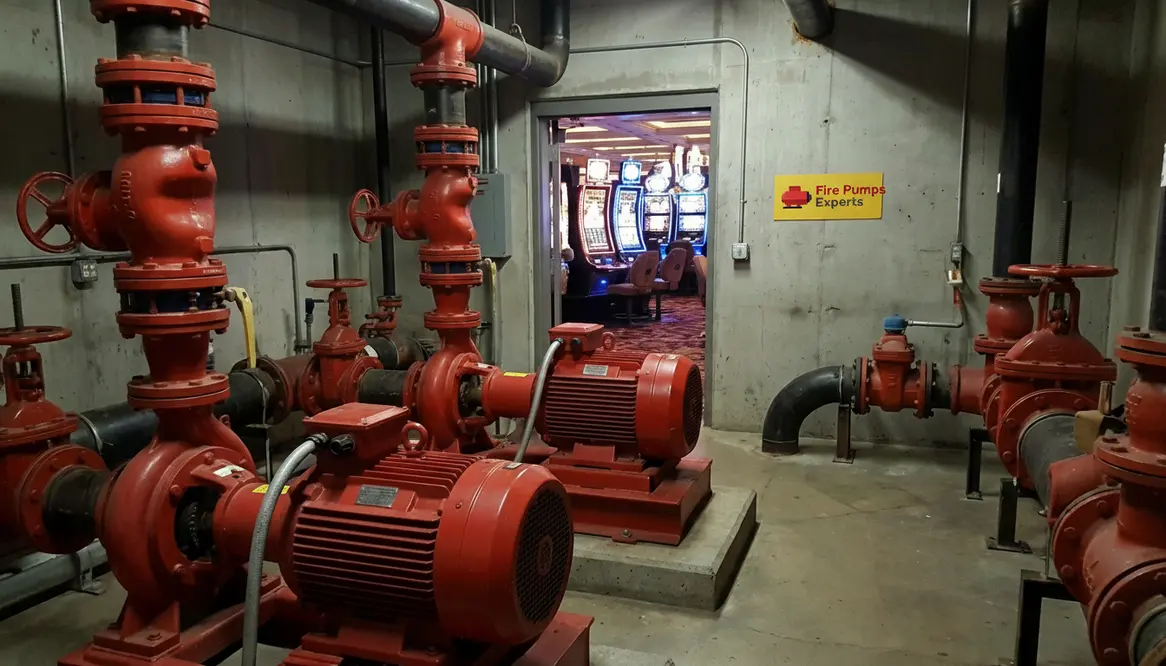
Las Vegas Fire Pump Installation for Large Buildings
I have walked through enough Las Vegas properties to know one thing for sure. Behind every neon glow and ringing slot machine, there is a serious responsibility quietly humming in the background. Fire protection. And yes, when I talk about casino fire pumps, I am not just talking about casinos. I am talking about the backbone of safety in large scale commercial and industrial buildings across this city.
Because in a place built on spectacle, safety cannot be left to chance. It must be engineered, installed, and maintained with precision. So let me walk you through what really matters when it comes to fire pump installation in Las Vegas, without putting you to sleep in the process.
What do Las Vegas property owners need to know before installing a fire pump?
First, I always tell owners this. Fire pump installation is not a plug and play situation. It is a carefully designed system that depends on your building’s size, layout, and risk level. In Las Vegas, where large resorts, warehouses, and high rise structures dominate, the stakes are higher.
Because of that, local codes and national standards like NFPA 20 guide every decision. And while that might sound like a stack of paperwork thick enough to stop a bullet, it actually ensures your system performs when it matters most.
Also, water supply plays a big role. Some properties have strong municipal pressure. Others need additional support. That is where fire pumps step in, boosting water flow so sprinklers and standpipes do their job without hesitation.
And let’s be honest. In a city where one busy weekend can bring in more people than a small country, you cannot afford to guess your way through fire protection.
That is why many owners in complex facilities look for partners who live and breathe fire pump standards, including NFPA 20 and NFPA 25, to help design, install, and test systems that do not flinch under pressure. For example, detailed guidance on compliant stationary pump installations and testing is laid out in resources like NFPA 20 overviews and dedicated fire pump service pages from specialists such as fire pump system experts, which is especially valuable when you are dealing with multi-story, high-occupancy buildings.
Understanding how casino fire pumps support large scale buildings
Now here is where things get interesting. Casino fire pumps are designed for high demand environments, and that same level of performance applies beautifully to other large properties.
These systems are built to deliver consistent water pressure across vast spaces. Think long corridors, massive gaming floors, industrial storage areas, and multi level structures. In other words, places where a standard system might struggle.
Moreover, redundancy is often part of the design. That means backup power sources like diesel engines or generators. Because if the power goes out during a fire, the fire pump still needs to show up like a dependable friend. Not the kind who says “I will be there” and never arrives.
And while it may not be as glamorous as a fountain show on the Strip, a properly installed fire pump system is just as impressive in its own quiet way. In fact, the discipline behind specifying, testing, and maintaining casino fire pumps is what allows those massive, people-heavy spaces to stay open and safe every single day.
Choosing the right fire pump system for your property
Not all fire pumps are created equal. And choosing the wrong one is a bit like bringing a spoon to a sword fight. Technically you showed up, but you are not winning.
Common pump types
- Electric driven pumps for reliable utility backed systems
- Diesel driven pumps for independent operation
- Vertical turbine pumps for deep water sources
Key selection factors
- Building size and height
- Water supply conditions
- Required pressure and flow rates
- Local code requirements
Additionally, I always recommend working with specialists who understand large scale commercial systems. Because the margin for error is slim, and the consequences are anything but small. This is especially true when adapting casino fire pumps level performance into mixed use towers and sprawling industrial campuses where water demand can change floor by floor.
A quick sizing mindset for Las Vegas properties
For high rises on or near the Strip, you are usually looking at pumps that can handle substantial vertical lift, friction loss in long risers, and significant simultaneous sprinkler and standpipe demand. For wide footprint warehouses and convention halls, it is less about height and more about maintaining pressure over long pipe runs and multiple zones. In both cases, proper hazard classification, occupancy loads, and water supply analysis should drive the selection, not guesswork or “what the last guy used.”
Installation mistakes I see too often and how to avoid them
You would be surprised how often critical details get overlooked. And unfortunately, fire pumps are not forgiving when installed incorrectly.
For example, improper pump room design can lead to overheating or flooding. Similarly, poor alignment during installation can reduce efficiency and lifespan. And then there is the issue of inadequate testing, which is like buying a parachute and never checking if it opens.
However, these problems are entirely avoidable. Proper planning, certified installers, and thorough commissioning tests make all the difference. In Las Vegas, inspections are strict for a reason. They ensure your system works before it is ever needed.
And trust me, that is not the moment you want surprises. Treat your pump room like mission control for fire protection: clear access, correct ventilation, drainage that can actually keep up, and equipment spacing that makes sense when someone is in there at 3 a.m. during an alarm.
Maintenance is not optional, it is survival
Once your fire pump is installed, the job is not over. In fact, this is where discipline comes in. Regular testing and maintenance keep your system ready at all times.
Weekly churn tests, monthly inspections, and annual performance evaluations are standard practice. And while that might sound like a lot, it becomes routine with the right team in place.
Because here is the truth. Fire pumps do not fail dramatically like in the movies. They fail quietly, often due to neglect. And in a city that runs twenty four hours a day, you need equipment that does the same.
Building a maintenance rhythm that actually works
In practice, that means:
- Scheduling weekly no-flow runs so moving parts never sit idle
- Documenting monthly visual checks of controllers, valves, and room conditions
- Bringing in certified technicians annually to run full flow tests and verify performance
- Reviewing records after major occupancy changes so your system keeps pace with real-world risk
Casino fire pumps, hotel pumps, warehouse pumps — they all share one thing: they only look expensive until the day they save a building full of people and operations. Skipping maintenance is the most expensive “savings plan” you can possibly choose.
How Las Vegas regulations shape fire pump installation
Las Vegas does not take fire safety lightly. Clark County and city authorities enforce strict codes that align with national standards. And while navigating these regulations can feel like decoding a secret language, they exist to protect lives and investments.
Permitting, inspections, and documentation are all part of the process. Therefore, working with experienced professionals ensures compliance from day one.
Also, large properties often require coordination with multiple systems like alarms, sprinklers, and emergency power. Everything must work together seamlessly. Like a well rehearsed show, except this one is about safety, not applause.
From design to final sign-off
For large commercial and industrial properties, you are not just installing equipment. You are building a documented, inspectable safety system that must prove it can deliver specific flows and pressures, under specific conditions, with specific backup power configuration. Get that right early, and every future inspection becomes a confirmation instead of a correction.
FAQ
These are some of the most common questions property owners ask when they start looking at fire pump upgrades or new installs in Las Vegas.
Keep your property ready before the unexpected happens
If you own or manage a large commercial or industrial property in Las Vegas, this is not an area to delay. A properly designed and installed fire pump system protects your building, your operations, and the people inside. Take action now, work with experienced professionals, and make sure your system is built to perform when it matters most. Because in this city, preparation is the difference between control and chaos.
When you hear the phrase casino fire pumps, think beyond slot machines and card tables. Think about the same level of robust, redundant, meticulously tested protection brought into every high rise, warehouse, and industrial facility that cannot afford to fail under stress. If your building fits that description, your next step is not “someday.” It is planning, designing, and maintaining a fire pump system that is as serious about safety as Las Vegas is about spectacle.