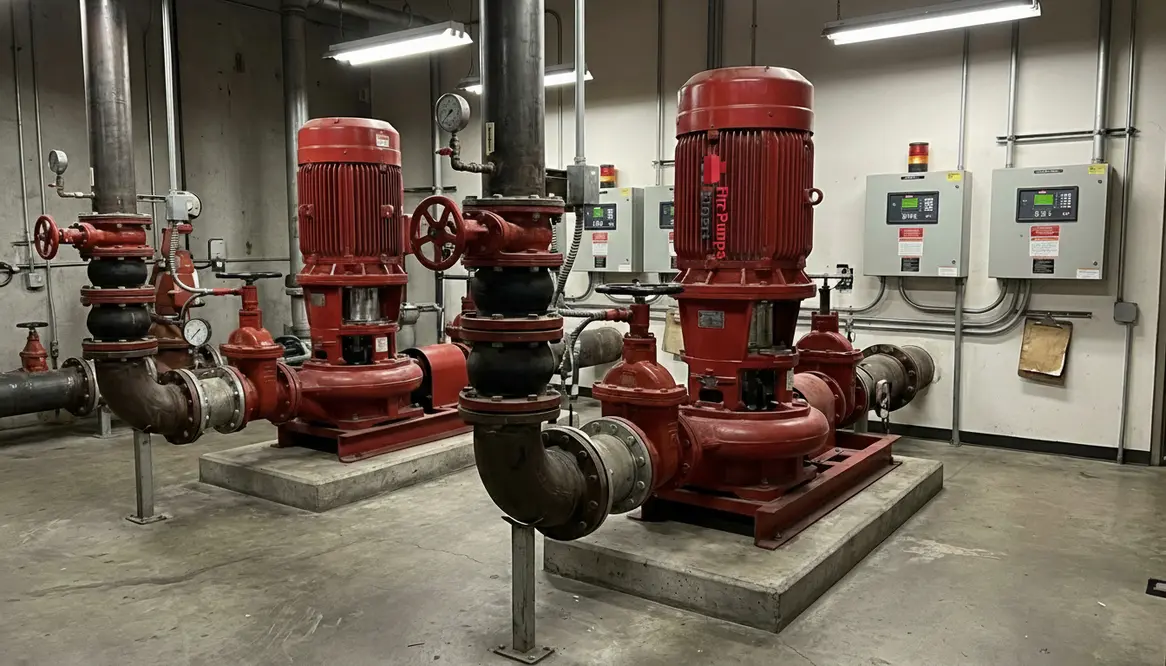
Fire Pump Redundancy Design Fresno Mistakes
I have spent years walking through large facilities in Fresno, listening to the quiet hum of systems that most people never notice until something goes wrong. And when it comes to fire pump redundancy design Fresno, I have seen how small oversights can grow into very expensive lessons. In buildings where operations never sleep, redundancy is not a luxury. It is the difference between control and chaos. So let me walk you through where things tend to go sideways, and how to keep your system steady, reliable, and ready when it matters most.
Understanding Fire Pump Redundancy Design Fresno in Large Facilities
Redundancy sounds simple. Add a backup, call it a day, and maybe grab a coffee. However, in reality, it is more like casting a movie. Every component has a role, and if one actor forgets their lines, the whole scene falls apart.
In large commercial and industrial buildings, redundancy means more than just installing a second pump. It involves coordinated controls, power reliability, and hydraulic balance. Moreover, each piece must respond instantly under stress. If not, your backup system becomes more of a decorative feature than a safety solution.
I have seen facilities assume that duplication equals protection. Unfortunately, without proper integration, that assumption can fail at the worst possible moment.
Where Most Designs Go Wrong
Let me be blunt. The most common errors are not dramatic. They are quiet, subtle, and often hiding in plain sight.
First, I often find mismatched pump capacities. One pump carries the load, while the backup struggles to keep up. As a result, the system performs well on paper but fails under real demand.
Next, control logic gets overlooked. Designers sometimes forget that pumps need to communicate clearly. Without synchronized controls, pumps can compete instead of cooperate. It is like two drivers trying to steer the same car. Spoiler alert, it does not end well.
Then there is power supply redundancy. A backup pump connected to the same vulnerable power source is like having a spare tire that is also flat. It looks reassuring, but it will not help when you need it.
How I Evaluate a Reliable Redundant System
When I step into a facility, I look for harmony. Every part should support the other without hesitation.
Core Elements I Check
- Independent power sources that truly isolate risk
- Balanced pump capacity for equal performance
- Clear and responsive control sequencing
- Routine testing protocols that mimic real conditions
Warning Signs I Watch For
- Shared electrical panels with no failover
- Delayed pump start times
- Uneven pressure distribution
- Maintenance logs that look suspiciously perfect
Interestingly, the difference between a solid system and a risky one often comes down to details that are easy to miss but costly to ignore.
Why Do Redundant Fire Pump Systems Fail When Needed Most?
It usually comes down to assumptions. People assume the backup will work because it exists. However, systems do not care about assumptions.
For example, I have seen backup pumps that were never fully tested under load. They passed inspections but failed reality. Similarly, I have seen control panels installed correctly but never calibrated for actual site conditions.
Another frequent issue is lack of real world simulation. A system that has never experienced a true demand scenario is like an actor who has only rehearsed in front of a mirror. When the spotlight hits, things get shaky.
And let us be honest. Sometimes budget shortcuts sneak in. Not dramatic cuts, just small compromises that quietly chip away at reliability.
Design Strategies That Actually Work in Fresno Facilities
Now, here is where things get encouraging. Strong redundancy is absolutely achievable when the design respects both engineering and real world behavior.
First, I always recommend true separation of critical components. Independent power feeds and physically separated equipment reduce shared risk. Moreover, this approach protects against localized failures.
Second, I prioritize intelligent control systems. Pumps should respond in sequence, not chaos. When one activates, the other should support seamlessly, almost like a well rehearsed duet.
Third, regular live testing is essential. Not just quick checks, but full operational simulations. Yes, it takes time. Yes, it can be inconvenient. But it beats discovering flaws during an emergency.
Finally, documentation matters. Clear records help teams understand the system and respond quickly. Without that clarity, even the best design can become confusing under pressure.
Fire Pump Redundancy Design Fresno for High Demand Buildings
Large facilities in Fresno face unique challenges. High occupancy, complex layouts, and continuous operations demand systems that perform without hesitation.
Therefore, redundancy must align with the building’s actual risk profile. A distribution center does not behave like a hospital, and a manufacturing plant has different demands than a high rise office. Each requires a tailored approach.
In my experience, the best systems are the ones designed with the end user in mind. Not just code compliance, but operational reality. Because when something goes wrong, nobody pulls out the design manual. They rely on the system to simply work.
If you are responsible for any kind of fire pump redundancy design Fresno strategy in a busy facility, this mindset shift is critical. The emphasis moves from “Does it meet the standard?” to “Will it perform on the worst day this building ever sees?”
FAQ
Final Thoughts and Next Steps
If your facility depends on performance without failure, then it is time to take a closer look at your system. I can help you uncover hidden risks, refine your design, and build a solution that holds steady under pressure. Reach out today and let us make sure your fire protection system does not just exist, but performs exactly when it is needed most.
Start by reviewing your current fire pump redundancy design Fresno approach against reality: true power separation, balanced capacity, tested controls, and honest maintenance records. If any of those feel uncertain, that is your invitation to act before the next emergency writes your system’s performance review for you.
For additional technical guidance and industry resources, one place to begin is https://firepumps.org, and then bring those principles back to the specific realities of your own building, your own team, and your own risk tolerance.