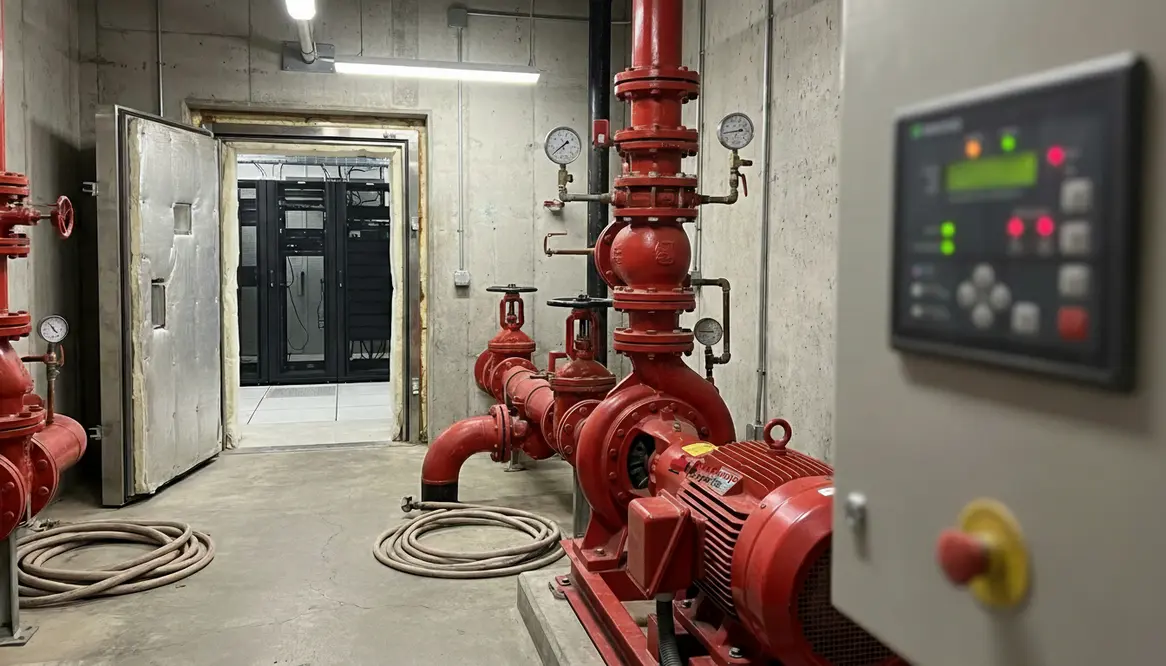
Fire Pump Data Center Ireland Design Guide
I have spent years around critical infrastructure, and if there is one thing I never gamble with, it is fire protection. When I talk about a fire pump data center Ireland strategy, I am talking about keeping the digital heartbeat of entire industries alive. Data centers do not get second chances. One spark, one delay, and suddenly your “always on” promise becomes a very public “we are working on it.” So today, I will walk you through how I approach fire pump system design for these facilities across Ireland, with a steady hand, a bit of humor, and zero tolerance for shortcuts.
Why Data Centers in Ireland Demand Precision
Ireland has become a magnet for global data infrastructure. The climate helps with cooling, the connectivity is world class, and the growth is relentless. However, with that growth comes risk. High power density, continuous uptime demands, and expensive hardware mean that fire protection cannot be an afterthought.
Because of this, I always design with redundancy in mind. Not just because standards say so, but because Murphy’s Law seems to have a summer home in server rooms. Moreover, Irish regulations and European standards require strict compliance, so I align every system with EN standards while ensuring performance exceeds the minimum.
In addition, I consider water supply reliability, especially in areas where municipal systems may not meet peak demand. That is where a properly engineered fire pump system becomes the quiet hero, waiting patiently like a bodyguard in a tuxedo.
What Makes a Fire Pump System Truly Reliable
Let me answer this plainly. A reliable system does not panic. It performs, instantly and consistently.
I start with pump selection. Electric pumps are common in Ireland due to grid reliability, but I often include diesel backup. Why? Because even the best grids can fail, and I prefer not to trust my reputation to a “should be fine” scenario.
Then comes flow and pressure calculation. I size pumps based on hazard classification, sprinkler demand, and hose allowances. Oversizing might sound safe, but it can cause pressure issues. Undersizing is simply not an option.
Control systems also matter. I specify intelligent controllers that provide clear diagnostics. When something goes wrong, I want answers, not riddles.
Finally, I focus on testing. A system that has not been tested is like a superhero who has never left the couch. Looks impressive, but unproven.
Designing for Redundancy in Fire Pump Data Center Ireland
Now we get into the part I enjoy the most. Redundancy is not just a feature. It is a mindset.
In a fire pump data center Ireland design, I typically implement a primary and backup pump configuration. Additionally, I separate power sources and ensure independent control pathways. If one component fails, another steps in without hesitation.
Furthermore, I design suction and discharge layouts to prevent single points of failure. That means looped systems, isolation valves, and thoughtful routing. It may sound excessive, but in this world, excessive is just another word for prepared.
And yes, I also consider maintenance access. Because even the best systems need care, and no technician wants to perform acrobatics just to reach a valve. This is engineering, not a Cirque du Soleil audition.
Core Components I Never Compromise On
Hydraulic Performance
- Accurate flow demand calculations
- Stable pressure curves
- Proper pipe sizing
Power Resilience
- Dual power feeds
- Diesel backup integration
- Automatic transfer systems
Control and Monitoring
- Smart controllers with alerts
- Remote monitoring capability
- Clear fault diagnostics
Physical Layout
- Accessible pump rooms
- Flood protection measures
- Ventilation for diesel units
How I Align with Irish Standards and Expectations
I do not treat compliance as a box ticking exercise. Instead, I treat it as a foundation. Irish data centers often follow a blend of EN 12845, NFPA guidance, and insurer requirements. So I design systems that satisfy all three without conflict.
Additionally, I coordinate closely with local authorities and insurers early in the design phase. This avoids surprises later. Because nothing slows a project like a last minute “we need to change everything.”
Weather also plays a role. Ireland’s climate may be mild, but I still account for freezing risks, drainage, and environmental factors. A pump system should not just work in ideal conditions. It should perform on a cold, wet morning when everything else feels like staying in bed.
Common Mistakes I See and How I Avoid Them
Over the years, I have seen patterns. Some are almost predictable.
First, underestimating demand. Designers sometimes rely on generic values instead of real calculations. I always verify based on actual layout and risk.
Second, poor integration. Fire pumps do not exist in isolation. They must work seamlessly with sprinklers, alarms, and building management systems.
Third, ignoring maintenance. If a system is difficult to test or service, it will eventually be neglected. And neglected systems fail at the worst possible moment.
So I design with clarity, access, and long term operation in mind. Because a system that is easy to maintain is a system that stays ready.
FAQ Quick Answers for Fire Pump Systems
Final Thoughts and Next Steps
Designing fire pump systems for data centers is not just engineering. It is responsibility at scale. If you are planning or upgrading a facility, now is the time to act. Work with specialists who understand commercial and industrial demands, and who design with precision, not guesswork. Reach out, start the conversation, and build a system that stands ready when it matters most.