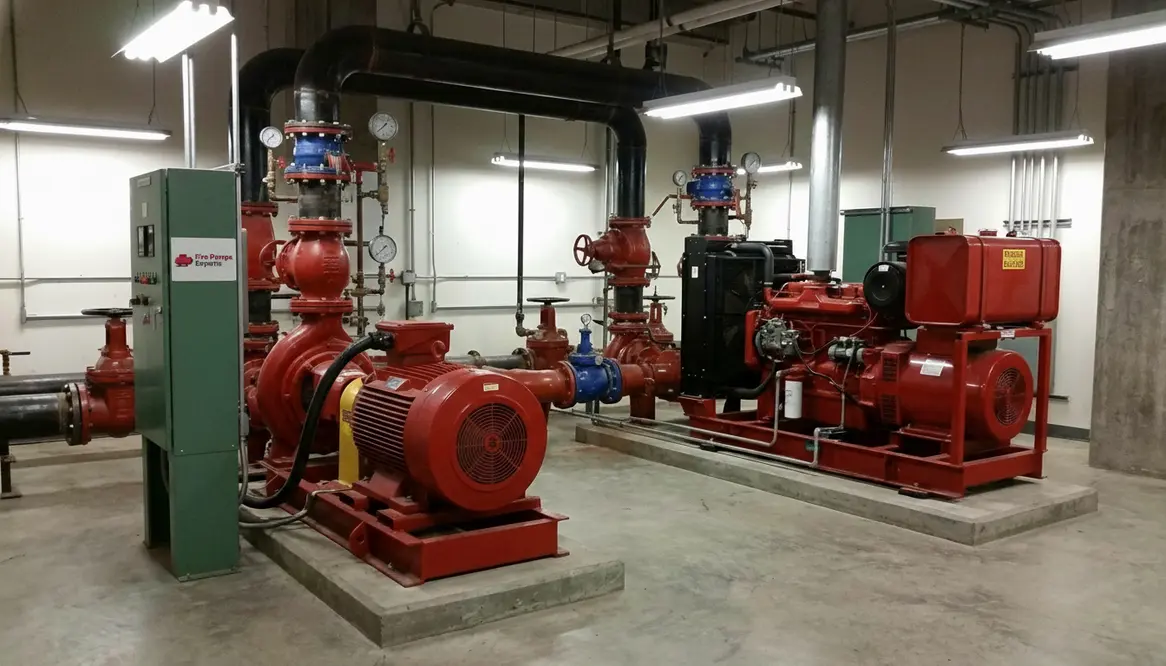
Fire Pump Redundancy Irvine Buildings Guide
I have spent enough time around mechanical rooms to know one truth. When water does not move, nothing else matters. In Irvine, where commercial and industrial facilities run like clockwork, fire pump redundancy Irvine buildings is not a luxury. It is a quiet safeguard that stands ready when everything else fails. And while it may not get the spotlight like a sleek lobby or a high speed elevator, it plays the hero when things turn serious. Think of it as the backup singer who saves the show when the lead forgets the lyrics. Not glamorous, but absolutely essential.
Understanding Fire Pump Types in Commercial Systems
I like to think of fire pumps as a team of specialists. Each type serves a role, and together, they keep water flowing where it is needed most. First, there are centrifugal pumps. These are the workhorses. They move large volumes of water quickly and are common in high rise and industrial facilities.
Then we have vertical turbine pumps. These step in when the water source sits below ground. I often see them in facilities that rely on wells or underground tanks. They pull water upward with steady precision.
Next come split case pumps, known for durability and ease of maintenance. When downtime is not an option, these are a solid choice. And finally, end suction pumps, compact and efficient, often used where space is tight but performance still matters.
Each type has a purpose. However, choosing the right combination is where redundancy planning begins to take shape.
Why Redundancy Planning Matters in Irvine Facilities
Let me be clear. Redundancy is not about excess. It is about certainty. In large scale properties across Irvine, fire protection systems must perform under pressure. Literally. A single point of failure can turn a controlled situation into chaos faster than you can say blockbuster disaster scene.
Therefore, redundancy ensures that if one pump fails, another takes over without hesitation. This is especially critical in data centers, manufacturing plants, and high occupancy commercial buildings. In these environments, even a brief lapse in fire protection can have serious consequences.
Moreover, local codes and insurance requirements often push for layered protection. And rightly so. When systems are backed up properly, risk drops significantly. It is not just about compliance. It is about resilience.
How I Approach Fire Pump Redundancy Irvine Buildings
When I evaluate fire pump redundancy Irvine buildings, I start with one simple question. What happens if this pump stops working right now? If the answer is anything less than seamless continuity, we have work to do.
I look at power sources first. Electric pumps are reliable, but pairing them with diesel driven pumps adds a layer of independence. If power goes out, the system still runs. It is the classic buddy system. No one gets left behind.
Next, I consider system configuration. Parallel pump setups allow one unit to take over instantly. Additionally, controllers and sensors must communicate clearly. Redundancy is not just hardware. It is coordination.
Finally, I examine maintenance access. Because even the best systems fail if they are ignored. A well designed redundant system allows for servicing without shutting everything down. That is the kind of foresight that keeps operations smooth.
What Makes a Redundant Fire Pump System Reliable?
Reliability is not magic. It is built step by step. First, proper sizing ensures pumps can handle demand without strain. Then, intelligent controls allow automatic switching between primary and backup units.
In addition, regular testing plays a major role. I have seen systems that looked perfect on paper but failed during testing because no one had checked them in months. It is like owning a sports car and never starting the engine. Impressive, but not very useful.
Furthermore, water supply consistency matters. Redundancy means nothing if the source runs dry. Therefore, storage tanks and supply lines must also be part of the plan.
Primary Focus
System performance under normal conditions
Efficient water delivery
Energy optimization
Redundancy Focus
Backup pump availability
Alternate power sources
Fail safe system switching
Common Pitfalls I See in Large Property Installations
Even well funded projects can miss the mark. One common issue is overconfidence in a single high capacity pump. Bigger is not always better. If it fails, everything stops.
Another misstep involves poor integration between systems. Pumps, alarms, and controls must work together. Otherwise, redundancy becomes a disconnected idea rather than a functioning reality.
Also, some facilities underestimate future demand. As buildings expand or operations grow, systems must scale. Planning for tomorrow is just as important as solving today.
And yes, sometimes maintenance gets pushed aside. I get it. It is not exciting. But ignoring it is like skipping oil changes and expecting your car to run forever. That story rarely ends well.
FAQ About Fire Pump Systems and Redundancy
Final Thoughts and Next Steps
When I think about protecting large facilities, I do not think in terms of equipment alone. I think in terms of continuity, safety, and trust. Fire pump redundancy Irvine buildings is not just a technical requirement. It is a commitment to keeping people, assets, and operations secure. If you are planning or upgrading your system, now is the time to act. Build smarter, plan deeper, and make sure your system stands ready when it matters most.