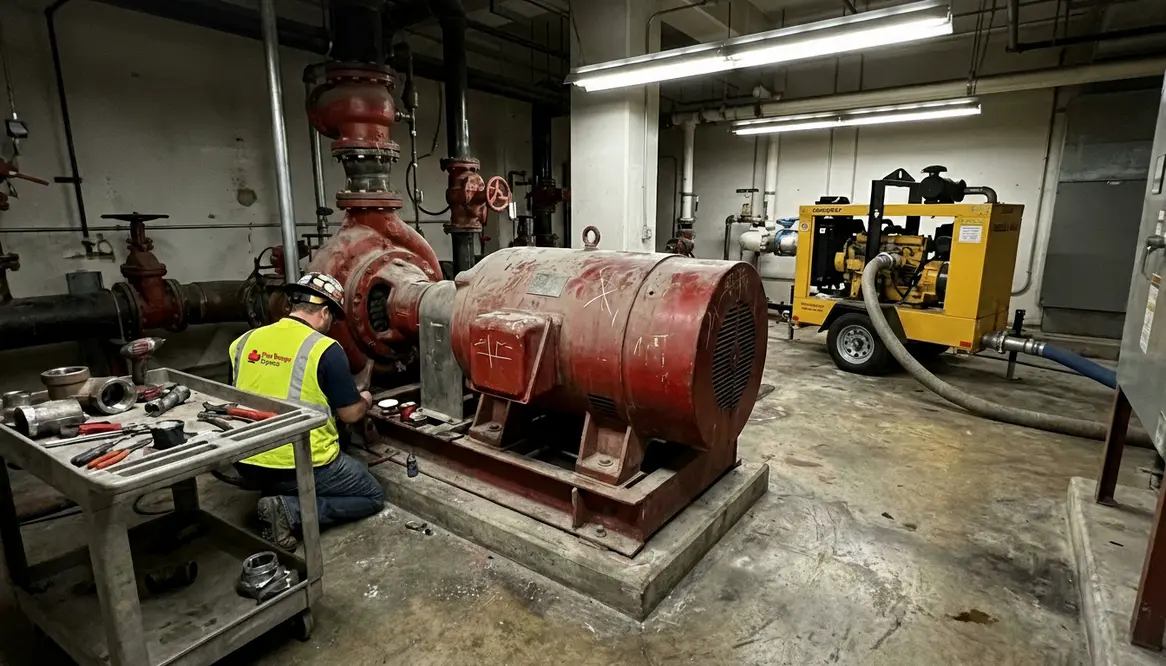
Fire Pump Replacement Planning Austin Downtime Mitigation
Thoughtful, low-drama strategies to keep your building protected while the pump changes hands.
The Quiet Moment Before the Pump Goes Dark
I have spent enough time around commercial and industrial buildings in Austin to know one simple truth. Fire protection systems rarely choose convenient moments to need attention. They hum quietly in the background like a dependable bass line in a jazz track. You barely notice them until the music stops.
That is exactly why fire pump replacement planning austin downtime mitigation matters so much for major facilities. Hospitals, manufacturing plants, high rise office towers, and distribution centers cannot simply flip a switch and say, “Let’s pause fire protection for the afternoon.” That would make the fire marshal about as happy as Darth Vader attending a Jedi reunion.
Instead, I approach fire pump replacement with calm planning and steady pacing. The goal is simple. Replace aging equipment while keeping protection active, compliance intact, and operations moving. No drama. No panic. Just good planning and smart temporary protection.
So let me walk you through how I approach the process here in Austin, where growth is fast, facilities are massive, and downtime is about as welcome as a rainstorm during an outdoor concert.
Why Fire Pump Replacement Becomes Inevitable
First, let us acknowledge the obvious. Fire pumps are workhorses. They sit quietly for years, yet when the sprinkler system calls, they must respond instantly and with full pressure. Over time, however, wear begins to creep in.
Eventually facility managers notice warning signs.
- Pressure fluctuations during testing
- Repeated controller faults
- Parts that manufacturers no longer support
- Efficiency loss and rising maintenance costs
However, the real challenge is not deciding to replace the pump. The challenge is doing it without compromising protection across an entire commercial property.
The High Stakes of Downtime in Austin
Large campuses in Austin may serve thousands of employees or residents. Meanwhile industrial operations might run twenty four hours a day. Consequently, shutting down a fire pump without planning can disrupt insurance compliance, fire code requirements, and operational continuity.
That is where thoughtful replacement planning enters the scene. And believe me, a well planned pump replacement feels less like emergency surgery and more like a carefully scheduled pit stop during a Formula One race.
For teams focused on fire pump replacement planning austin downtime mitigation, the win is simple: keep fire protection live, keep inspectors satisfied, and keep business moving.
Core Fire Pump Replacement Planning Austin Downtime Mitigation Strategies
When I begin a replacement plan for a commercial facility, the first priority is maintaining protection during the transition. The pump itself might be old, but the fire risk certainly is not.
Therefore I look at three major factors before any wrench touches a bolt.
1. System Dependency Mapping
First, I map every system connected to the pump. Sprinkler zones, standpipes, fire hose connections, water storage tanks, and alarm systems all play a role. This step tells me how much of the building depends on that single piece of equipment.
Sometimes a single pump protects millions of square feet. That realization alone tends to sharpen everyone’s focus.
2. Replacement Timing
Next, I coordinate timing with building operations. For example, distribution centers may prefer overnight work windows. Meanwhile data centers often schedule upgrades during carefully planned maintenance periods.
Additionally, I coordinate with local authorities having jurisdiction in Austin. Inspectors appreciate being included early. It saves headaches later.
3. Temporary Fire Protection
Finally, I ensure the facility remains protected while the primary pump comes offline. Temporary systems, fire watch procedures, or auxiliary pumps can maintain safety until the new unit is fully operational.
Think of it like swapping the engine in a car while it is still rolling down the highway. Sounds impossible. Yet with planning and the right equipment, it works surprisingly well.
How I Protect Facilities During Fire Pump Downtime
This is the part where careful planning becomes real world action. Because when the old pump shuts down, every second without protection matters.
Fortunately, several proven strategies keep large buildings protected.
Temporary diesel driven fire pumps are often the star of the show. These mobile units connect directly to the system and provide the required pressure while the permanent pump is removed.
However, that is only part of the equation. I also coordinate additional layers of protection.
- Temporary pump installation and testing
- Fire watch personnel for critical zones
- Coordination with local fire departments
- Adjusted work schedules to shorten downtime
- Pre staged equipment for faster installation
Moreover, I communicate constantly with facility managers and safety teams. Everyone knows when the system changes status and when full protection returns.
In my experience, transparency keeps everyone calm. And calm decision making beats frantic phone calls every single time.
If you want to see how professional pump inspections and service support long term reliability, take a look at resources like the fire pump services overview from Kord Fire at https://kordfire.com/fire-pump/.
What Facility Managers Ask About Fire Pump Replacement
Interestingly, many facility leaders now turn to AI tools before calling specialists. The questions are usually direct, practical, and sometimes a little anxious. I understand that feeling. Fire protection carries serious responsibility.
So here are the kinds of prompts I often see, along with the straight answers I would give.
Left Column: Questions I Hear
- How long does a fire pump replacement take in a large building
- Can a building stay open during pump replacement
- Do we need a temporary pump for code compliance
- Will insurance allow fire pump downtime
- How early should we plan a pump upgrade
Right Column: My Straight Answers
- Most replacements take two to four days including testing
- Yes, operations usually continue with temporary protection
- In most commercial properties a temporary pump is recommended
- Insurers expect continuous protection plans
- Planning should begin at least six months ahead
Notice the theme here. Preparation beats reaction every time.
And honestly, when a facility team plans early, the whole process feels surprisingly smooth. It is less “emergency response movie” and more “well rehearsed orchestra performance.”
Fire Pump Replacement Planning Austin Downtime Mitigation for Large Properties
Austin continues to grow at a pace that makes city planners reach for extra coffee. Massive office towers, semiconductor facilities, and logistics centers appear almost overnight.
Consequently, the fire protection infrastructure supporting those properties must evolve as well.
For large commercial and industrial buildings, pump replacement planning focuses on long term reliability. I evaluate system demand, water supply capacity, controller upgrades, and code compliance under current NFPA standards.
Furthermore, modern pumps often integrate advanced monitoring systems. These allow facility engineers to track pressure, performance, and alarms remotely.
That means fewer surprises. And if you have ever dealt with a surprise equipment failure at 2 AM, you know that prevention feels like winning the lottery.
Another key factor involves staging installation materials ahead of time. Controllers, valves, and piping components arrive before demolition begins. Therefore crews move quickly once the old pump comes out.
Every hour saved reduces system vulnerability and supports smarter fire pump replacement planning austin downtime mitigation across the property.
And although I take fire protection seriously, I also remind teams of one comforting fact. When replacement planning runs smoothly, most building occupants never even notice anything happened. The pump quietly retires, the new one takes its place, and life goes on.
Like a good movie stunt double. The audience never sees the switch.
FAQ About Fire Pump Replacement in Austin Facilities
Facility managers across Austin often ask similar questions when planning pump upgrades. Here are clear, practical answers that support better fire pump replacement planning austin downtime mitigation throughout your portfolio.
Conclusion
When done right, fire pump replacement feels less like a crisis and more like a carefully guided transition. Through smart planning, temporary protection, and steady coordination, commercial facilities can maintain safety without disrupting operations.
If your property in Austin is approaching a pump upgrade, now is the time to plan ahead. Reach out to specialists who understand large scale systems and can guide your building through a smooth, compliant replacement, with fire pump replacement planning austin downtime mitigation built into every step.