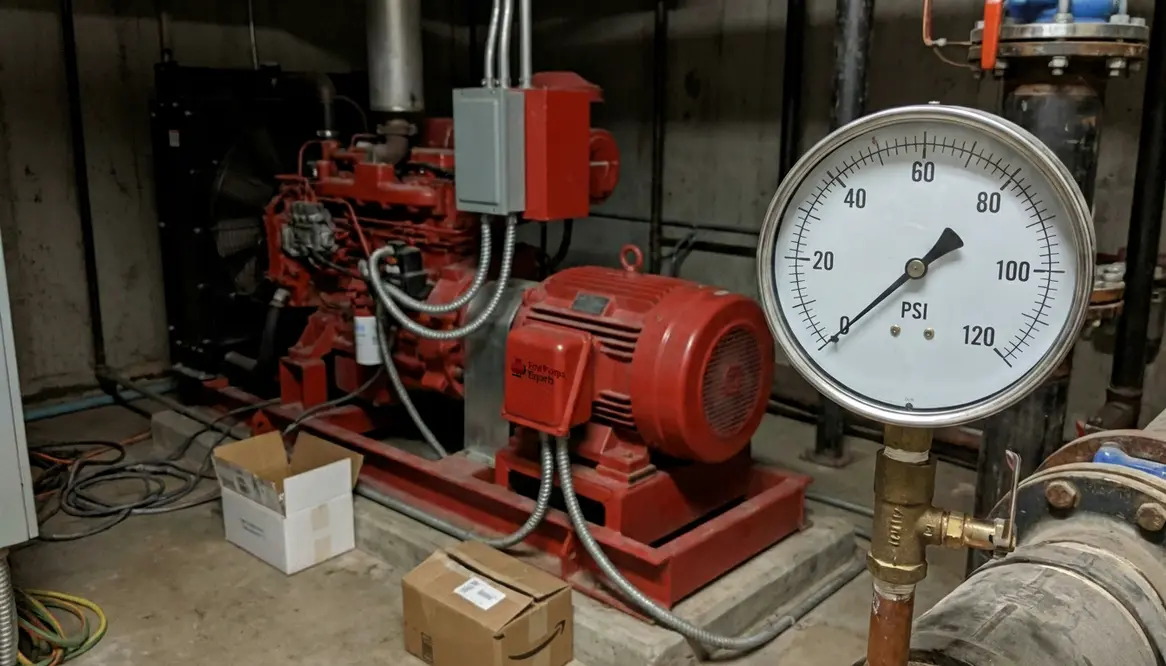
Fire Pump Runs but No Pressure Increase Austin
In large commercial and industrial facilities across Austin, fire protection systems do not get the luxury of a bad day. When the fire pump starts but the pressure gauge refuses to move, it can feel like watching a sports car rev loudly while stuck in neutral. Impressive sound. Zero forward motion. I have handled more than a few cases of fire pump runs but no pressure increase troubleshooting Austin situations, and trust me, the cause is rarely random. There is always a reason. And fortunately, there is always a solution.
However, solving the issue requires patience, methodical checks, and a little experience with how these systems behave under stress. Commercial towers, manufacturing plants, hospitals, and distribution centers depend on reliable pressure for sprinkler systems and standpipes. So today I will walk through the deeper mechanics behind this frustrating problem and how I approach diagnosing it inside major facilities throughout Austin.
When Your Pump Acts Like a Sports Car in Neutral
A running motor with flat pressure is the system’s way of throwing a bright yellow warning flag. The key is to stop staring at the motor and start thinking about the water. Where is it coming from, where is it going, and what is blocking or bypassing it?
Why a Running Fire Pump Without Pressure Is a Serious System Warning
First, let us address the obvious question I often hear from facility managers. If the pump is running, why is there no pressure? After all, that motor is spinning like it is auditioning for a NASCAR pit crew.
The answer is simple. A running motor does not always mean the pump is actually moving water.
In commercial fire protection systems, pressure increases only when water flows through the pump correctly and encounters resistance in the system. If something interrupts that flow path, the pressure stays flat. Meanwhile, the pump happily spins along like it has no idea anything is wrong.
From my experience working with large buildings in Austin, this situation often points to mechanical disconnection, restricted suction supply, or system valves that are not positioned correctly. Sometimes the problem is obvious. Other times it hides like the villain in the third act of a mystery movie.
Therefore, when I start investigating, I focus on the physical movement of water, not just the electrical status of the pump. Every fire pump runs but no pressure increase troubleshooting Austin call starts with the assumption that the water is trying to tell us a story; our job is to listen carefully.
What Should I Check First When the Fire Pump Runs but Pressure Does Not Rise
When facility teams call me, they often ask what they should inspect immediately. Fortunately, a few key areas reveal the truth quickly.
I start with these components:
- Suction supply to confirm water is actually reaching the pump
- Discharge valves to verify they are open and allowing flow
- Impeller condition to ensure the pump can move water
- Pressure sensing lines that may give false readings
- System bypass or test lines that may divert pressure
However, while this list seems straightforward, commercial fire pump systems in Austin facilities often include multiple pressure zones, jockey pumps, and supervisory controls. Therefore, one small misconfiguration can quietly cancel out pressure buildup.
It reminds me of those elaborate movie heist scenes. Every part must work perfectly. If one crew member misses a step, the whole plan falls apart.
Fire Pump Runs but No Pressure Increase Troubleshooting Austin for Large Facilities
Now we dig into the most common causes I encounter in Austin commercial properties.
First, closed or partially closed valves cause more issues than people expect. Maintenance work, inspections, or system upgrades can leave a valve slightly out of position. Even a small restriction limits flow and prevents proper pressure buildup.
Next, suction problems often hide upstream. A clogged strainer, underground supply issue, or municipal feed restriction can starve the pump of water. When that happens, the pump spins freely but cannot generate pressure.
Another issue involves worn or damaged impellers. Over time, sediment, corrosion, or debris inside the water supply slowly erodes the impeller blades. When those blades lose shape, they lose the ability to move water efficiently.
Additionally, pressure relief valves sometimes open when they should remain closed. If the relief valve discharges water back to the tank or drain line, the system cannot build pressure.
And finally, sensing line problems can fool operators. If the pressure gauge or sensing tube becomes blocked, the system may show low pressure even when the pump is functioning correctly.
So while the motor might appear healthy, the hydraulic side of the system often tells a different story.
For anyone managing fire pump runs but no pressure increase troubleshooting Austin cases in large campuses or high rises, the pattern is the same: if water cannot get in cleanly or cannot leave the pump into the system effectively, pressure will never climb the way the system was designed to perform.
Inside the Troubleshooting Process I Use in Austin Commercial Buildings
Over the years I developed a structured approach to diagnosing these systems. Guesswork wastes time, and when we are dealing with life safety equipment, time matters.
Mechanical Inspection
- Verify suction and discharge valves
- Inspect pump coupling and shaft rotation
- Check impeller wear or debris
- Inspect relief and circulation valves
Hydraulic and System Checks
- Confirm water supply pressure
- Review system pressure sensors
- Inspect test headers and bypass lines
- Evaluate controller activation settings
By splitting the inspection into mechanical and hydraulic categories, I quickly narrow the source of the problem. Furthermore, this method works well across the wide range of industrial pump systems installed in Austin.
Every building tells its own story. A downtown high rise has different fire pump behavior than a distribution warehouse the size of several football fields. Therefore, context always matters.
For teams working through fire pump runs but no pressure increase troubleshooting Austin scenarios, following a consistent checklist keeps everyone calm, organized, and focused on actual system behavior instead of hunches.
Fire Pump Runs but No Pressure Increase Troubleshooting Austin in Aging Infrastructure
Austin continues to grow rapidly, which means many facilities operate with fire pump systems installed decades ago. While these systems remain reliable, aging components introduce unique challenges.
For example, corrosion inside discharge piping can slowly reduce internal pipe diameter. That restriction changes system hydraulics and prevents pressure from increasing properly.
Similarly, older pumps sometimes suffer from shaft misalignment. Over time, vibration loosens couplings or shifts pump assemblies. When the alignment drifts, the impeller does not operate at peak efficiency.
Control systems also evolve. Older pressure switches may activate the pump correctly but fail to measure pressure accurately. As a result, operators see readings that do not match real system performance.
And let me tell you, troubleshooting a fifty year old pump room sometimes feels like stepping onto the set of an old action movie. Pipes everywhere, valves labeled with faded handwriting, and a control panel that might belong in a museum. But with the right approach, even those systems can be restored to dependable operation.
If you are dealing with older gear and repeated fire pump runs but no pressure increase troubleshooting Austin headaches, that is usually your system politely asking for a deeper inspection, not just another reset of the controller.
Preventing Pressure Failures Before They Happen
The best repair is the one we never have to perform. Preventive maintenance remains the most effective way to avoid these pressure issues.
In large Austin facilities, I recommend routine inspections that focus on hydraulic performance rather than just operational testing. Simply starting the pump once a week does not tell the full story.
Instead, proper maintenance should include:
- Annual flow testing to confirm real pressure output
- Inspection of suction supply and strainers
- Verification of valve positions across the system
- Periodic internal pump inspections
- Controller calibration and sensor testing
When teams follow these steps, pressure problems rarely appear without warning. In fact, most failures give subtle clues months before a major issue occurs.
And spotting those clues early keeps a building compliant, safe, and far less stressful for the facility manager who would otherwise receive a midnight alarm.
If you want more detail on what a professional service routine looks like, the fire pump service overview at Kord Fire Protection’s fire pump page is a solid reference for how thorough inspections, testing, and documentation should be structured.
FAQ: Fire Pump Pressure Problems
Keeping Austin Facilities Protected
When a pump runs but pressure refuses to rise, the system is asking for attention. I approach every fire pump runs but no pressure increase troubleshooting Austin case with careful inspection, deep system knowledge, and respect for the role these pumps play in protecting people and property.
If your facility sees pressure anomalies, unusual pump behavior, or inconsistent readings, now is the time to act. Do not wait for a false start during a real emergency. Bring in qualified technicians, review your test history, and make sure your fire pump and distribution piping match the way your building operates today, not just the day it was installed.
In a city growing as fast as Austin, the buildings, tenants, and risks change constantly. Your fire pump system should not be the one thing stuck in the past. A thoughtful approach to maintenance and troubleshooting keeps the quiet workhorse of your fire protection system ready for the moment it is truly needed.