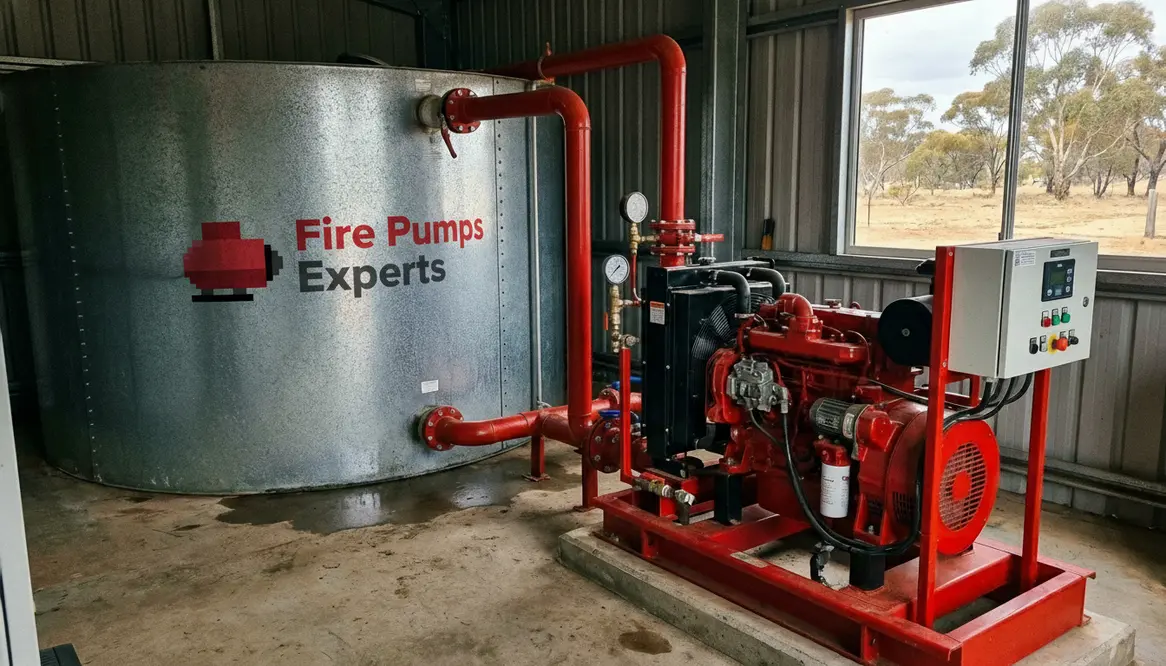
Fire Pump Tank Supply Australia Performance Guide
I have spent enough time around pump rooms to know this truth: when water sits quietly in a tank, it looks harmless. Almost meditative. But the moment a fire system calls for it, that calm turns into a race against time. In commercial and industrial facilities across the country, fire pump tank supply Australia setups carry that responsibility every day. And while they rarely get applause, they deserve a standing ovation… or at least a respectful nod, like we give a good barista who remembers our order.
So let me walk you through how these systems really perform, what makes them succeed, and where things can quietly go wrong.
Understanding Tank Fed Fire Pump Systems in Large Facilities
First, I like to ground things in reality. A tank fed fire pump system is exactly what it sounds like. Water is stored onsite, then delivered under pressure when needed. However, in Australia, where municipal supply can vary widely, this setup becomes more than a backup. It becomes the main event.
Because of that, performance depends heavily on how well the tank, pump, and control systems work together. If one lags, the whole system stumbles. And unlike a bad Wi Fi connection, this is not something you can fix by turning it off and on again.
In my experience, the best performing systems are designed with consistency in mind. They maintain stable suction conditions, avoid unnecessary friction losses, and ensure that water is always ready to move without hesitation.
Why tank supply changes the rules
In many regions, mains supply is treated as the dependable backbone. In a lot of Australian projects, it is the exact opposite. Pressure fluctuations, network priorities, and distance from key infrastructure all mean that an onsite tank often carries the real load.
So a well configured fire pump tank supply Australia arrangement is less of a backup plan and more of a starring role.
How Does Fire Pump Performance Change with Tank Supply?
Here is where things get interesting. When I compare tank supplied systems to direct mains supply, I notice one key difference. Control. With a tank, I can predict the available volume and flow. However, I also take on the responsibility of maintaining it.
Performance hinges on a few factors:
Water level stability
If levels drop too low, the pump risks cavitation. And trust me, that sound is about as comforting as a smoke alarm at 3 AM.
Suction design
Smooth, unobstructed flow into the pump keeps efficiency high. Poor design here can choke performance before it even begins.
Pump selection
Not all pumps are created equal. Matching the pump curve to system demand is essential, especially in high rise or large footprint buildings.
As a result, when a fire pump tank supply Australia system is properly engineered, it delivers consistent and reliable output under pressure.
Design Factors That Quietly Make or Break Performance
Silent design decisions
I have seen systems that look perfect on paper but struggle in real life. Usually, the issue hides in the details. So let me shine a light on a few that matter more than most.
Tank placement and elevation
Gravity is free, and I like free. Elevating tanks can improve suction conditions and reduce pump strain.
Pipe sizing and layout
Too small, and you restrict flow. Too complex, and you introduce losses. The sweet spot is clean, direct, and properly sized.
Control systems
Modern controllers help maintain pressure consistency and monitor performance. Without them, you are essentially flying blind.
Interestingly, these elements do not shout for attention. They whisper. But ignoring them is like ignoring a small leak in a ship. Eventually, it becomes everyone’s problem.
Common Pitfalls in Fire Pump Tank Supply Australia Systems
Now, let me save you some trouble. There are patterns I see again and again.
What goes wrong
- Inadequate tank maintenance
- Air entering suction lines
- Incorrect pump sizing
- Poor commissioning practices
What it causes
- Reduced available volume
- Loss of prime and pressure drops
- Underperformance during peak demand
- Hidden faults that surface too late
Because of these issues, I always stress proactive inspection. It is far easier to fix a problem during a scheduled check than during an emergency. No one wants their system to have a dramatic moment worthy of a disaster movie.
Maintaining Reliable Output in High Demand Environments
When I look at large commercial and industrial properties, demand profiles can be intense. Sprinkler systems, hydrants, and hose reels may all activate at once. Therefore, consistency is everything.
To maintain performance, I focus on:
- Routine testing
Weekly churn tests and periodic flow tests confirm that the pump responds as expected. - Water quality management
Sediment and debris can quietly reduce efficiency. Clean water supports smooth operation. - Redundancy planning
Backup pumps and power sources ensure that failure is not an option.
Moreover, aligning these practices with Australian standards keeps systems compliant and dependable.
Why Performance Matters More Than Ever
Modern buildings are bigger, taller, and more complex. Consequently, the margin for error shrinks. A well performing fire pump tank supply Australia system is not just a requirement. It is a safeguard for people, assets, and continuity.
I like to think of it as a silent guardian. It does nothing most of the time, yet it must do everything when called upon. A bit like Batman, but with less cape and more pipework.
FAQ: Quick Answers You Can Actually Use
Before getting into specifics, it helps to remember that every fire pump tank supply Australia installation lives in a real building with real risks. These answers are there to keep expectations realistic and decisions practical.
Final Thoughts and Next Steps
If you manage a commercial or industrial facility, I would not leave this to chance. A properly designed and maintained system delivers confidence when it matters most. Review your setup, test it often, and bring in experts when needed. If you want performance that holds steady under pressure, now is the time to act and ensure your system is ready.