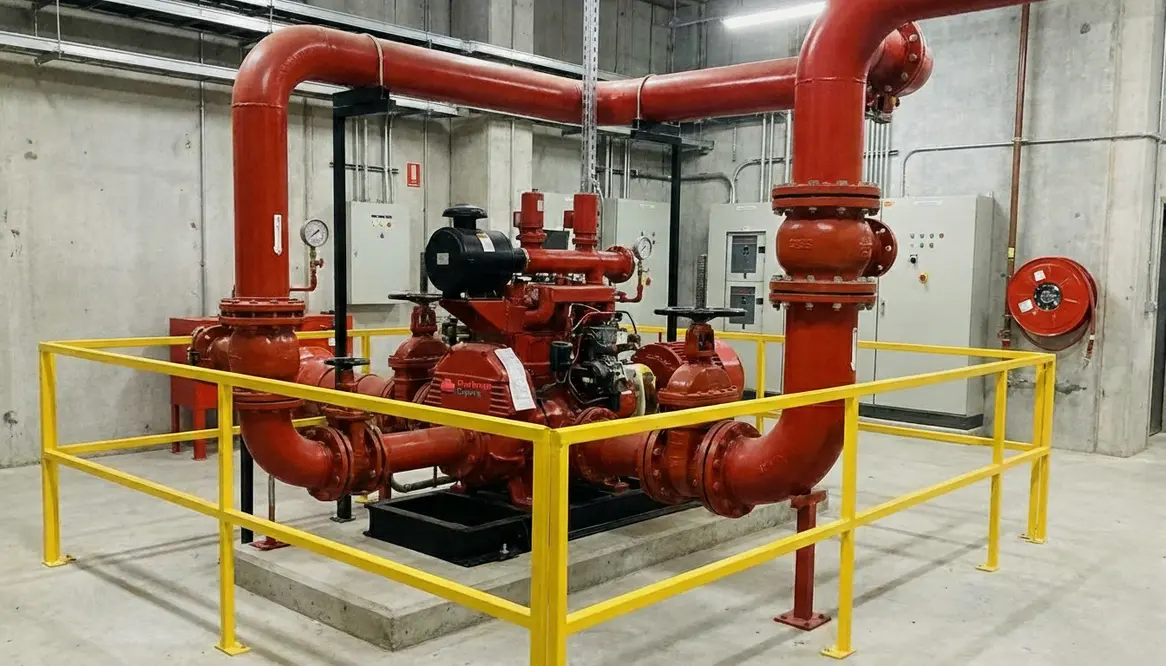
FM Approved Fire Pump Installation Guide for Facilities
FM Approved fire pump installation work is about building a system that is ready for the worst day a facility ever has, not just satisfying paperwork. When a fire kicks off in a large warehouse, plant, or high-rise, nobody cares how tidy the submittal package looked. They care that water moves where it needs to go, at the pressure it was promised, without drama.
When I talk about an FM Approved installation, I am talking about more than a box to check. I am talking about a fire pump setup built for commercial and industrial properties that need real protection when things go sideways. In large buildings, plants, warehouses, and other major properties, the fire pump is not the star of the show until the day it absolutely has to be. Then, like the opening scene of a good action movie, it matters a lot. So, I focus on the details that help the system perform well, stay compliant, and avoid ugly surprises later.
In this article, I walk through the key points I look at before, during, and after installation. I keep my eye on FM expectations, system flow, space, power, water supply, and testing. Because when a fire pump is installed right, it works quietly in the background. That is the dream. No drama. No fire pump version of a school talent show disaster.
What I check before installation begins
Before I install anything, I start with the site itself. I look at the building use, hazard level, water demand, and layout. Commercial and industrial facilities often have high occupancy, heavy equipment, or valuable inventory, so the pump must match the real risk. I also review the FM Approved fire pump requirement against the project design, because a pump that looks fine on paper can still fail if the room, suction piping, or power source does not support it.
I also make sure the fire protection team, the engineer, and the owner agree on the performance target. That matters because a good pump cannot fix a bad plan. First, I confirm the water supply can support the system. Then I check whether the pump is sized for the worst case demand, not the best case mood. Buildings do not get to pick easy days.
How I size the pump and match the water supply
Proper sizing sits at the heart of any FM Approved fire pump installation. If I choose a pump too small, pressure drops when the system needs help most. If I choose one too large, I can create extra stress, poor efficiency, and test headaches. So, I work from the actual sprinkler and standpipe demand, plus any site specific losses.
I also pay close attention to suction conditions. A fire pump needs a steady water source and the right inlet setup. Therefore, I check pipe size, length, fittings, elevation, and available pressure. A weak suction line can turn a strong pump into a very expensive prop from a superhero movie that forgot to read the script.
Where I place the pump room and what I demand from it
The pump room is not just a closet with a badge on the door. It needs enough space for service, ventilation, drainage, lighting, and safe access. In industrial and major property settings, I prefer a room that lets staff work without playing human Tetris around the equipment. That means clear access to valves, controllers, gauges, and the driver.
Here is how I usually think about the room setup:
Pump room priorities at a glance
Item
Why it matters
Clear working space
Lets crews inspect, test, and repair the system safely
Heat control and ventilation
Protects the pump and driver from damage and bad performance
Drainage
Removes water from tests, leaks, and maintenance work
Secure access
Keeps the pump available and reduces tampering risk
Lighting and labels
Helps people respond fast during inspection or emergency work
Why power and driver choice deserve serious attention
Power reliability can make or break the system. So, I look closely at the driver type, electrical feed, and backup arrangement. If the pump uses electric power, I make sure the source stays dependable under emergency conditions. If the system uses diesel, I check fuel supply, exhaust routing, battery support, and engine room ventilation. Either way, I want the driver ready to start without a fuss.
FM Approved fire pump installation work often lives or dies on the quality of these support systems. A strong pump with weak power is like Batman with no gadget belt. Technically present, but not exactly ready for prime time.
What I verify during piping, alignment, and controls
Piping layout matters more than many people expect. I keep suction piping straight, properly supported, and sized to limit turbulence. Also, I avoid sharp bends and bad reducer placement that can harm flow. On the discharge side, I make sure the piping supports system pressure without adding unnecessary resistance.
Alignment matters too. If the pump, driver, and base are not aligned correctly, vibration can build up and damage the unit over time. I also check controllers, alarms, pressure settings, and test connections. The goal is simple: when the pump starts, it should do its job without complaining, rattling, or throwing a tantrum.
How I handle testing, inspection, and final sign off
I never treat testing as an optional encore. I run flow tests, verify starting behavior, and confirm that pressures match the design intent. Then, I inspect the entire setup for leaks, loose hardware, bad wiring, and access issues. Since commercial and industrial facilities depend on uptime, I want the team to know how to inspect the pump and who to call when something changes.
After that, I review the records and make sure the project supports long term maintenance. Good documentation helps the owner stay ahead of problems instead of chasing them after the fact. For a useful technical reference, I often point teams to FM Global fire pump installation guidance for commercial properties when they want to compare their plan against recognized protection standards. A solid FM Approved installation is easier to maintain when the team understands why each decision was made, not just what was installed.
Common questions about FM Approved fire pump installation
A lot of facility teams ask the same questions when they are staring down a new FM Approved fire pump installation. They want to know what “FM Approved” really means for their day-to-day, how much the room layout matters, and whether testing is a one-time headache or an ongoing habit. The answers tend to shape budgets, schedules, and how confident people feel when the system finally goes live.
Conclusion
If I want a fire pump installation to protect a commercial or industrial property with confidence, I start with the right design, the right room, the right power, and the right testing. I do not leave those choices to chance. So, if your facility needs a dependable FM Approved installation, now is the time to review the layout, confirm the supply, and tighten the details before the system goes live. That way, the pump stands ready when the building needs it most.
When the design team, installer, and owner all understand the stakes, an FM Approved fire pump installation stops feeling like a checklist and starts feeling like an asset. The system becomes part of the facility’s resilience plan, not just another line on a drawing. If you want a deeper look at how this ties into broader fire protection strategy, you can explore resources at https://firepumps.org and compare your approach against proven practices for demanding occupancies.