FM Approved Fire Pump Testing Requirements Guide
A practical, real world walk through of what it takes to keep a fire pump ready, reliable, and anything but dramatic when the pressure drops for real.
FM Approved Fire Pump Testing Requirements Overview
When I talk about fire protection in a commercial or industrial facility, I always start with one thing: the fire pump has to work when the pressure drops and the stakes climb fast. That is where FM Approved testing comes into play. It gives me a clear path for checking performance, reliability, and readiness in major properties where failure is not an option. After all, no one wants a fire pump to act like a diva on opening night. In this guide, I will walk through the main testing requirements, why they matter, and how I keep the process practical, calm, and built for real world operations.
What FM Approved Fire Pump Testing Checks
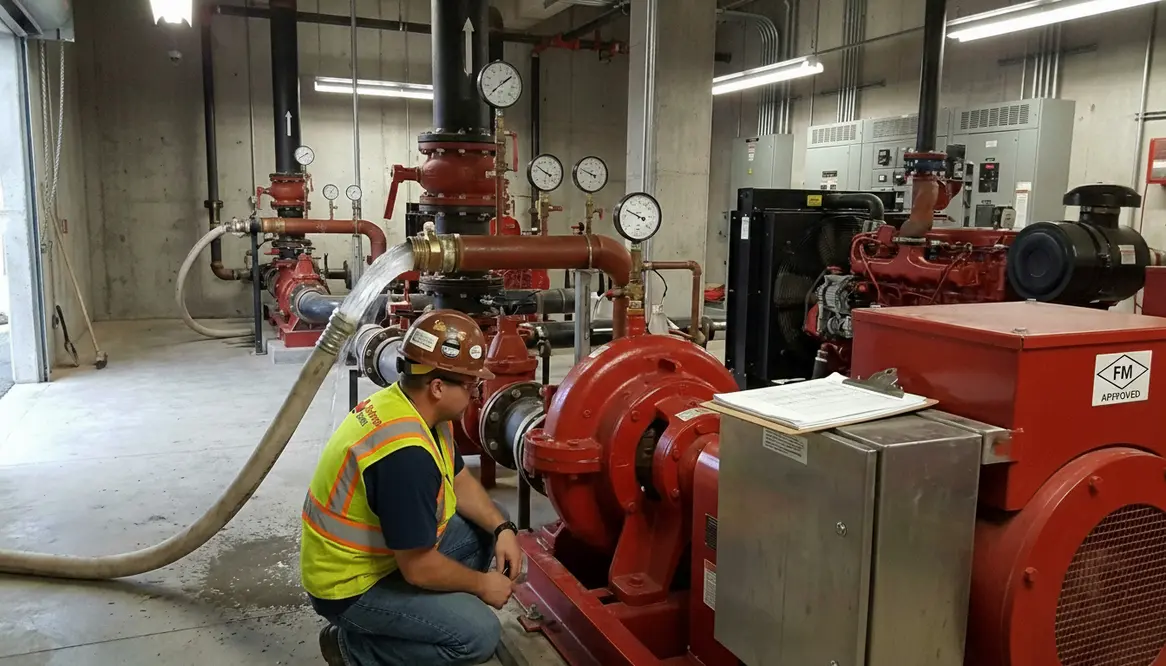
FM Approved fire pump testing focuses on whether the pump can deliver the right water flow and pressure under real conditions. I look at the full system, not just the pump body sitting there looking serious in the mechanical room. The test usually verifies suction conditions, discharge pressure, flow performance, controller response, and overall operation.
In commercial and industrial settings, I treat this as a proof test. The goal is simple. I want to know the pump can support the building during a fire event. Therefore, I check for stable performance across the expected demand range. If the pump cannot hold pressure, cannot start properly, or cannot meet flow needs, the risk goes up fast.
Core Requirements I Follow During Testing
When I plan FM Approved testing, I keep the process structured. That way, I can spot issues early and avoid surprises later. Here are the main items I focus on:
- Verify the pump starts as required
- Confirm the controller works without delay
- Measure suction and discharge pressure
- Test flow at required points
- Check for leaks, vibration, or unusual noise
- Review power source and transfer behavior
- Record all readings for future comparison
Each step matters. For example, a pump may start, but that does not mean it performs well. Likewise, it may run, but if pressure falls off like a weak sequel, the system still fails the test. I always compare the results to the approved design and the manufacturer data.
How I Prepare a Commercial Site for Testing
Preparation makes the whole process smoother. First, I coordinate with facility staff, because nobody enjoys a surprise test during peak operations. Then I confirm that the water supply, power supply, and test equipment are ready. I also review the current maintenance history, since past problems often point to future ones.
Before I begin, I check that the test location is safe and that discharge water can be handled without damage. In large commercial and industrial sites, that detail matters more than people think. A fire pump test can move a lot of water, and water does not care about your carpet, your schedule, or your pride.
FM Approved Fire Pump Testing Steps in Practice
In practice, I follow a clear order so the results stay clean and useful. First, I inspect the pump and related parts. Next, I confirm system status and isolate any conditions that could distort the readings. After that, I start the pump and monitor how it behaves under load.
Then I move through the flow test. I note the performance at each required point and watch for pressure drops, temperature rise, or mechanical stress. Finally, I compare the actual numbers with the expected values. If the pump underperforms, I do not shrug and move on. I document the issue and recommend the next step.
Testing Checklist for Major Properties
Here is the short version I use for major commercial and industrial buildings:
Before the test
- Review system drawings
- Check pump nameplate data
- Confirm service access
- Coordinate building operations
During the test
- Start the pump
- Measure pressure and flow
- Watch the controller
- Record anything unusual
After the test
- Compare results to acceptance criteria
- Review defects or concerns
- Restore normal system status
- Keep records for compliance and audits
Why Results Matter for Compliance and Risk
For me, the real value of testing is not just passing a checklist. It is proving the fire pump can protect people, property, and operations when it counts. In a warehouse, plant, high rise, or large campus, a weak pump can lead to major loss. That is why I treat each result as part of the building’s risk picture.
Also, strong records help during inspections, insurance reviews, and internal audits. If a fire pump test shows a trend over time, I can act before a small issue becomes a big one. In other words, testing is not just paperwork. It is damage control with better shoes.
When FM Approved testing is built into the routine for commercial and industrial facilities, it supports better insurance positions, smoother reviews with authorities, and fewer arguments when someone asks, “Can this pump actually do its job?” The records from FM Approved testing become proof instead of opinion.
FM Approved Testing and Your Fire Pump Program
When I look at a full fire protection program, FM Approved testing is one of the anchors. It is not the only thing, but it confirms that the pump at the heart of the system is ready to back up sprinklers, standpipes, and specialized suppression systems. Without this testing, the rest of the design is more theory than practice.
In large campuses and complex industrial sites, the combination of design review, regular inspection, and FM Approved testing gives a much clearer picture of actual readiness. I have seen sites with impressive drawings but weak performance because the pump was never truly challenged under realistic conditions. A well run test corrects that quickly.
Conclusion: Take the Next Step With Confidence
If you manage a commercial or industrial property, I recommend treating fire pump testing as a priority, not a footnote. A well tested system gives you better protection, better records, and fewer surprises. So, if you want a clearer path to compliance and peace of mind, start with a proper review of your fire pump program today. One careful test now can save a very bad day later.