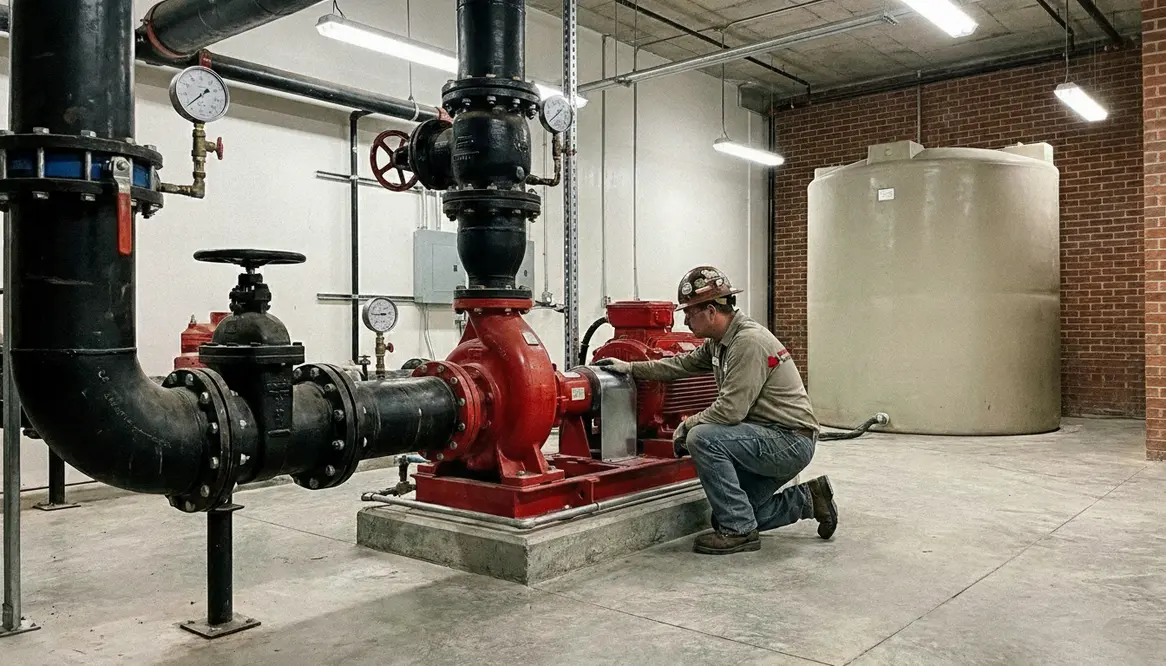
FM Global Fire Pump Water Supply Guide
FM Global Fire Pump Water Supply Considerations for Commercial and Industrial Properties
When I look at FM Global water supply planning, I do not see a box to tick. I see the quiet backbone of a fire protection system that has to work when the heat is real, the clock is loud, and nobody wants surprises. For commercial and industrial facilities, the water supply behind a fire pump can make the difference between fast control and a long, costly mess. So, I take this topic seriously, but I also know it helps to keep the conversation clear, practical, and a little human. Fire protection should not feel like a mystery novel written by a sprinkler head.
In this article, I will walk through the core water supply points that matter most, from source reliability to storage, testing, and the way FM Global expectations shape the design. And yes, I will keep it business casual, because nobody needs a lecture dressed like a tax form.
What I check first in the water source
I always start with the source itself, because a fire pump is only as strong as the water feeding it. For commercial and industrial buildings, I look at whether the supply comes from a municipal main, tank, reservoir, or another approved source. Then I ask a simple question: can it deliver the needed flow and pressure under stress?
That question matters because a normal day can hide weak points. A city main may look fine until peak demand hits. A tank may hold enough water, but only if the refill rate supports the hazard. Therefore, I treat the source as a living system, not a static number on a drawing. I also check whether the supply can stay stable during a fire event, since pressure swings can turn a solid setup into a tired one fast. Think of it like a backup singer trying to headline a stadium tour. Not ideal.
Why FM Global cares about reliability and duration
FM Global expects more than “we have water.” I focus on reliability, duration, and performance under real conditions. If the hazard calls for a certain flow for a set time, the water supply must support that demand without falling apart halfway through the job.
That means I review the available water volume, the refill rate, and the potential for shutdowns or interruptions. I also think about seasonal issues. Cold weather can affect exposed lines, while drought can reduce supply from some sources. Moreover, industrial sites often have heavy process loads, so I do not assume the fire pump gets to borrow water from a system already running at full tilt. The pump needs its own clear lane, not a hallway full of office chairs.
How I size storage and pump support
When I plan storage, I think in terms of risk first and hardware second. A water tank, suction tank, or other stored supply often gives a site the cushion it needs when the main source cannot keep up. However, the tank must match the hazard and the fire pump demand.
Here is how I break it down:
Supply item
Water source
Storage tank
Pump suction
Backup support
What I verify
Available flow, pressure, and steadiness
Required volume, refill rate, and protection from damage
Clear piping, good layout, and low loss
Redundancy and emergency planning
After that, I look at suction conditions. Poor piping layout can create loss, air issues, or flow trouble. So, I want short, direct routes with clean access and correct sizing. In addition, I want the system arranged so maintenance crews can inspect it without turning the room into a scene from a heist movie.
Testing and maintenance inside major properties
Testing keeps the whole setup honest. I do not trust a fire pump water supply because it looks polished on paper. I trust it after flow tests, inspection records, and routine checks prove it can perform.
For major properties, I pay close attention to test results over time. A single good test helps, but trends tell the real story. If pressure drops, refill slows, or the source behaves oddly, I want to catch that early. Furthermore, maintenance teams should verify valves, strainers, gauges, and suction conditions on a regular schedule. Small issues grow in silence, which is rude but common.
To keep things practical, I also recommend using a trusted industry resource such as fire pump water supply guidance for industrial facilities when reviewing system planning and compliance details. That kind of reference helps teams align the water supply with the fire pump design before trouble shows up uninvited.
How I align design with FM Global expectations
Design is where the details either come together or start arguing with each other. I always make sure the fire pump water supply fits the hazard, the building size, and the site operations. For commercial and industrial facilities, that often means planning for high demand, complex layouts, and limited downtime.
Core design points I keep in view
- Keep the source dependable and easy to verify.
- Match storage volume to the required fire duration.
- Protect suction piping from loss and damage.
- Plan for inspection access and routine testing.
- Account for future building changes before they create a headache.
Also, I do not like designs that only work in a perfect world. Real sites deal with expansion, weather, utility limits, and the occasional surprise from operations. Therefore, I build with margin, review the assumptions, and keep the water supply plan honest. It is the fire protection version of wearing a seatbelt and checking the spare tire. Not glamorous, but deeply wise.
FM Global water supply focus in real facilities
In real projects, FM Global water supply planning shows up in design reviews, insurance discussions, and long before concrete is poured. When I walk a site, I pay attention to how operations could clash with the fire pump water supply: shared process lines, closed valves, or storage plans that looked fine on paper but do not age well when the building grows.
At existing facilities, revisiting FM Global water supply assumptions after major upgrades is just smart housekeeping. New production lines, expanded warehouses, and reworked utilities can all tilt the balance between “enough water” and “almost enough,” and that is not a line I like to stand on.
Frequently asked questions
Conclusion
If I want a fire pump to perform when it matters, I start with the water supply and I never treat it as an afterthought. For commercial and industrial facilities, FM Global expectations push me to verify source reliability, storage, testing, and design fit with care. If your site needs a stronger plan, now is the time to review it, tighten the weak points, and protect the building before a fire writes the next chapter.