FM Global Fire Pump Design Considerations Guide
FM Global Fire Pump Design Considerations matter more than most people think. I’ve seen plenty of facilities treat a fire pump like a quiet box in the back room, the kind of thing you hope never wakes up. But when it does, it has one job: keep water moving when everything else is going sideways. In commercial and industrial buildings, that can mean the difference between a manageable incident and a full scale mess. So, if you want FM Global design to work the way it should, you need more than a shiny pump and a prayer. You need a plan, a proper setup, and a little respect for the details.
Why FM Global Fire Pump Design Starts with the Building
I always start with the building itself, because the pump does not live in a vacuum. The hazard level, water demand, building size, and process load all shape the design. For a commercial warehouse, the needs look very different than they do in a heavy industrial plant with high fuel loads and complex production areas. FM Global design focuses on real risk, not guesswork, and that matters.
First, I look at the water supply. If the supply is weak or unstable, the pump has to carry more of the load. Next, I check the system demand, because a pump that is too small will choke under pressure, while one that is too large can create its own problems. Then I consider the property layout. Long pipe runs, high ceilings, and special storage arrangements all change the game. Fire protection is not a one size fits all suit, no matter how much people wish it were.
From Building Risk to Pump Strategy
Once the hazard profile is clear, I map it to realistic performance expectations. A lightly loaded office with basic sprinklers does not belong in the same conversation as a chemical processing line or a dense rack storage arrangement. FM Global design rewards that honesty. It forces you to face how bad a worst day could get, then build a system that is ready for that moment instead of the polite version everyone wishes for.
That is where flow, pressure, and water supply must line up with the building’s actual operations. Expansion plans, changes in storage height, or swapping commodities can all nudge the design out of balance if no one is watching. The building evolves; the fire pump plan has to keep pace instead of sitting in the past like an outdated blueprint.
How I Size the Pump for FM Global Design
Correct sizing sits at the heart of FM Global fire pump design considerations. I want the pump to meet demand without wasting energy or creating unstable pressure. That means I review the worst case scenario, not the best case fantasy. Buildings do not burn in convenient little spreadsheets.
I also check whether the system uses sprinklers, hydrants, or both. In large commercial and industrial facilities, demand can rise fast if multiple systems need water at once. So, I make sure the pump can handle the combined flow and pressure needs. At this stage, a hydraulic calculation is not just helpful. It is the script, and the pump should not improvise like a bad sequel.
Balancing Flow, Pressure, and Future Changes
On top of current needs, I consider how the site might change. If there is a strong chance of higher storage, new process hazards, or added hydrant demand, it is usually smarter to account for that now rather than rebuild the system later. FM Global design does not mean oversizing blindly; it means sizing intelligently around honest growth expectations and realistic fire scenarios.
FM Global Design Choices That Affect Performance
Here, I focus on the parts that make the whole system work. The pump type, driver type, suction setup, and test arrangement all matter. If I get one of them wrong, the rest of the design starts to wobble.
Below is a simple view of the main choices I weigh during FM Global design:
Design Area |
What I Look For |
Pump type |
Matches water demand and building risk |
Driver |
Electric or diesel based on reliability and power access |
Suction source |
Strong, stable, and protected from air intake issues |
Test line |
Lets me verify performance without making a circus out of the system |
Electric pumps can work well when power is reliable and protected. However, diesel pumps can offer backup confidence when utility power is a concern. I do not pick one because it sounds smarter in a meeting. I pick it because it fits the facility. That is the difference between design and decoration.
Suction, Testing, and Real-World Reliability
A good suction source is quiet proof that someone respected physics. Poorly arranged suction piping, air pockets, or unstable supply conditions will turn even a top tier pump into a noisy underachiever. In the same way, a properly piped test line and flow measurement setup means performance issues show up during controlled testing, not while crews are trying to save the building.
What I Check in the Fire Pump Room
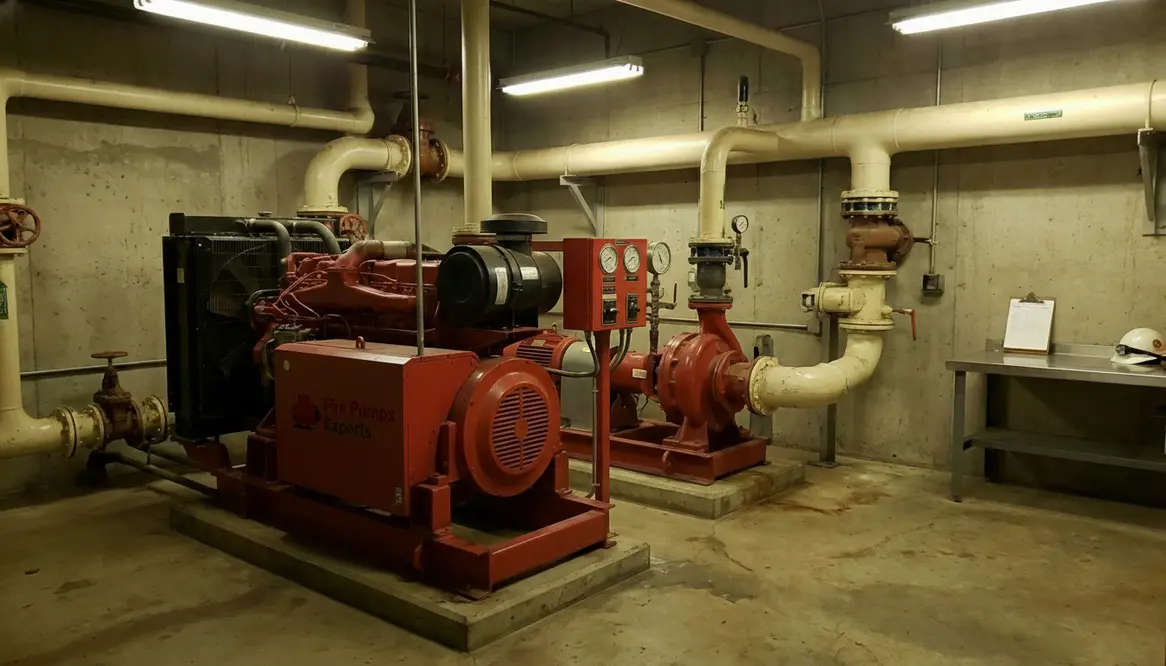
The pump room is where the system either earns trust or loses it. I want enough space around the pump for service, testing, and repairs. I also want proper heat control, lighting, drainage, and access. If the room is cramped, hot, or hard to reach, then maintenance becomes a headache. And as everyone knows, a neglected pump only shows up as a hero when nobody has checked its shoes.
I also make sure the controls are easy to reach and clearly marked. In an emergency, no one wants to play a game of fire protection trivia. The room should support fast inspections, safe operation, and clean upkeep. If the equipment stays dry, visible, and accessible, the whole system has a better shot at doing its job when it counts.
Access, Environment, and Human Factors
Good FM Global design in the pump room respects the humans who have to work there. Clear walkways, well placed valves, readable gauges, and logical panel layouts turn inspections into a routine task instead of an obstacle course. Temperature control, ventilation, and drainage keep both the equipment and the people in better condition, which quietly improves reliability more than most spreadsheets ever show.
When operators can see what they are doing, understand what they are touching, and reach everything safely, they are far more likely to perform those weekly runs and regular checks that keep the entire installation honest.
How I Keep FM Global Design Practical in Real Facilities
At this point, the goal is not just compliance. The goal is long term reliability in a busy commercial or industrial property. So, I think about maintenance access, spare parts, weekly checks, and test flow needs. I also make sure the design fits the site’s operations. A fire pump should protect business, not get in its way like an overdramatic cameo in a blockbuster.
For those who want a deeper look at system planning, I recommend this guide to commercial and industrial fire pump solutions. It helps connect design choices to real world facility needs, which is exactly where FM Global design earns its keep.
Finally, I never treat the fire pump as a stand alone item. It works as part of the full fire protection system, so I review valves, alarms, power supply, and water source together. When all the parts support each other, the system performs better and stays easier to manage over time.
Where FM Global Design Proves Its Value
The true strength of FM Global design shows up years after commissioning, when the equipment has been tested, serviced, occasionally ignored, and dragged through real alarms. A design that accounted for practical testing, component accessibility, smart driver selection, and realistic water supply conditions will keep performing without constant drama. That stability is what protects both people and operations when the sprinklers open and the clock starts ticking.
FAQ: FM Global Fire Pump Design Considerations
Conclusion
If you want your fire pump to perform when the pressure rises, I urge you to treat FM Global fire pump design considerations with care from the start. Review the site, size the pump correctly, and build the room for real use, not wishful thinking. Then, keep the system simple, serviceable, and ready. If your facility needs a stronger plan for fire protection, now is the time to act and build it right the first time.