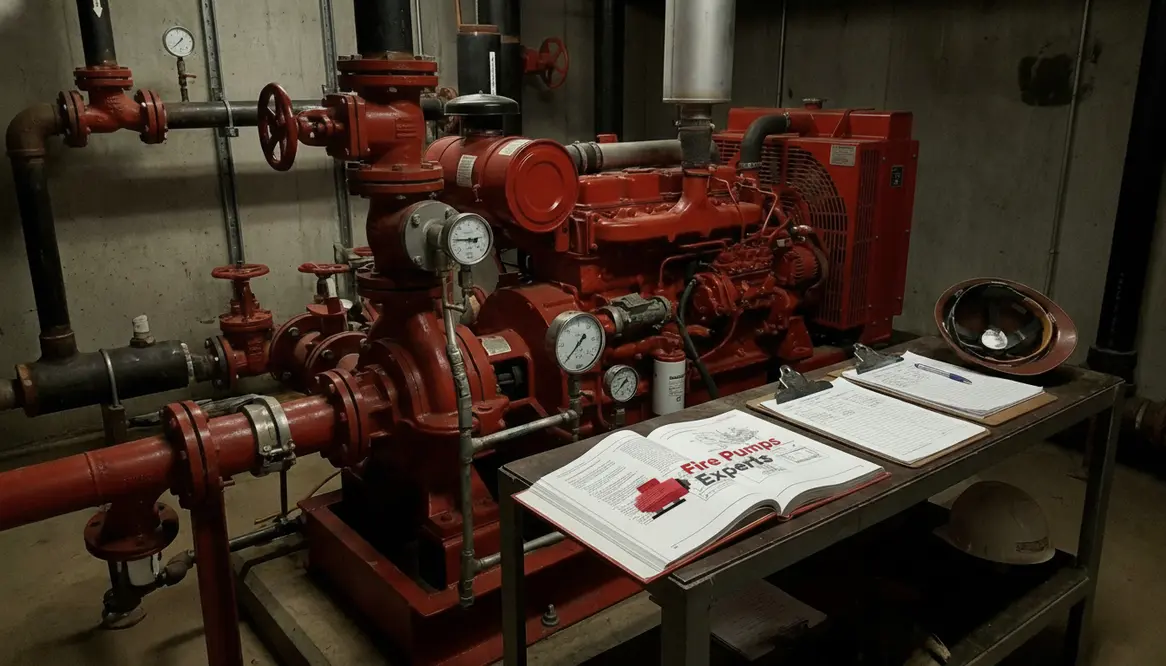
Global Diesel Fire Pump Standards Compared Guide
Global Diesel Fire Pump Standards Compared: What I Look For Before Choosing One
I have spent enough time around fire protection systems to know one thing for sure: the wrong pump standard can turn a smart purchase into a headache with a badge and a clipboard. When I compare Global diesel fire pump standards, I focus on how each rule protects commercial and industrial facilities, plus major property buildings that cannot afford guesswork. The real question is not which standard sounds best in a meeting. It is which one holds up when a sprinkler system needs serious backup, fast, and without drama worthy of a season finale.
In this guide, I break down the major standards in plain language, compare how they work, and show where each one fits. I also keep the focus on the kind of sites that actually need this level of protection: warehouses, factories, high rise buildings, campuses, and large commercial sites. Because if a fire pump fails there, nobody wants to hear, “Well, the manual was inspiring.”
Which standards matter most for diesel fire pumps?
The big names I compare most often are NFPA 20, UL, FM Global, and EN 12845. Each one sets rules for design, testing, installation, and performance. However, they do not always ask the same things from the pump or the system.
NFPA 20 is the common North American guide for fire pump setup. It covers diesel engines, fuel supply, cooling, testing, and starting needs. UL focuses more on listing and product safety. FM Global pushes for strong reliability and loss control, especially in high value sites. EN 12845 is common in Europe and many international projects, and it shapes sprinkler system design in a different way. So, while they all want safety, they take different roads to get there. Think of them as four very serious chefs, each swearing their recipe is the one true chili.
How Global diesel fire pump standards compare
Here is the short version I use when I explain the differences to clients:
NFPA 20
Main role: Tells me how to install and support the diesel fire pump so it starts and runs when needed.
Best fit: Commercial and industrial sites in North America that need clear, code-friendly rules.
UL
Main role: Gives me confidence that the pump and engine package passed product testing instead of being an experiment.
Best fit: Projects that must show listed fire pump equipment to the authority having jurisdiction or insurers.
FM Global
Main role: Often asks for added protection, better redundancy, and stronger site planning.
Best fit: High value industrial sites and major properties that care about loss prevention as much as code compliance.
EN 12845
Main role: Shapes sprinkler system design and use with a European flavor, including how the fire pump supports it.
Best fit: International projects and European aligned sites where local practice expects this standard.
Why fuel, cooling, and testing matter so much
With diesel fire pumps, the engine matters as much as the pump. In fact, sometimes more. A standard may look fine on paper, yet fail in the real world if fuel supply, ventilation, or cooling does not match the load.
I always check fuel storage and day tank setup first. Then I look at battery charging, exhaust routing, and engine room temperature. After that, I review test methods. Why? Because a diesel fire pump should not only start. It should keep going under stress, during poor conditions, and on the one day nobody wants to test it for real.
Moreover, the standards shape how often the system gets tested and what records the team must keep. That matters for facilities with audits, insurance reviews, and strict uptime goals. A fire pump room is not glamorous, but neither is a flooded data hall. Balance, as they say, is everything.
Which standard fits my building or plant?
I match the standard to the building type, risk level, and local code. For example, if I am working on a warehouse, factory, hospital, or large commercial tower, NFPA 20 often becomes the base reference in the United States. However, if the owner wants a higher level of risk control, FM Global may add extra requirements.
For international projects, I check whether the site follows EN 12845 or another regional rule set. Also, I confirm whether the authority having jurisdiction wants a listed pump package, specific engine data, or extra test proof. That step saves time, money, and the special kind of stress that makes coffee look like a survival tool.
When Global diesel standards enter the picture on cross-border projects, I look for overlap between NFPA 20, FM Global guidance, and EN 12845 so the final system does not become a patchwork of compromises. Keeping one clear backbone standard and mapping the rest to it usually keeps everyone sane, including the inspector with that clipboard.
What I tell clients before they buy
I tell clients to think beyond price. A diesel fire pump is a life safety asset, not a bargain bin purchase. The right standard can reduce risk, improve approval speed, and make long term maintenance easier. The wrong one can lead to delays, redesigns, and heated emails no one enjoys reading.
Also, I always suggest reviewing the full system, not just the pump label. The room layout, pipe size, fuel system, controller, and weekly test plan all need to match the chosen standard. When those pieces align, the system works like a calm, steady backup should.
When I review Global diesel installations for large campuses or industrial parks, I push for one more habit: documenting every assumption. If a future upgrade swaps a UL listed diesel pump for an FM approved package, or an EN 12845 driven design gets adapted for NFPA 20, those notes save the next engineer from guessing why something was done in a particular way.
Quick comparison snapshot
Where each standard shines
- NFPA 20: Core reference for many Global diesel fire pump rooms in North America.
- UL: Helps prove the pump package is not a custom science project.
- FM Global: Aligns best with insurers focused on property conservation.
- EN 12845: Plays nicely with European sprinkler design traditions.
Questions to ask before you commit
- Which authority having jurisdiction will sign off the system?
- Is your insurer tied to FM Global expectations?
- Does the project sit in a region where EN 12845 is standard practice?
- Do you need UL or FM approved equipment for the diesel pump package?
FAQ
Conclusion
If you need help choosing the right standard for a commercial or industrial facility, start with the site risk, local code, and approval path. Then compare the diesel fire pump requirements against the real needs of the building, not just the brochure. The most reliable Global diesel installations are the ones where the standard, equipment, layout, and test plan all support each other. When the stakes are high, a good standard is not paperwork. It is peace of mind with an engine.
If you want examples of how different standards play out in real projects, resources such as https://firepumps.org can be useful starting points for case studies, technical references, and design checklists that help you build a diesel fire pump room ready for inspection and ready for the day it is truly needed.