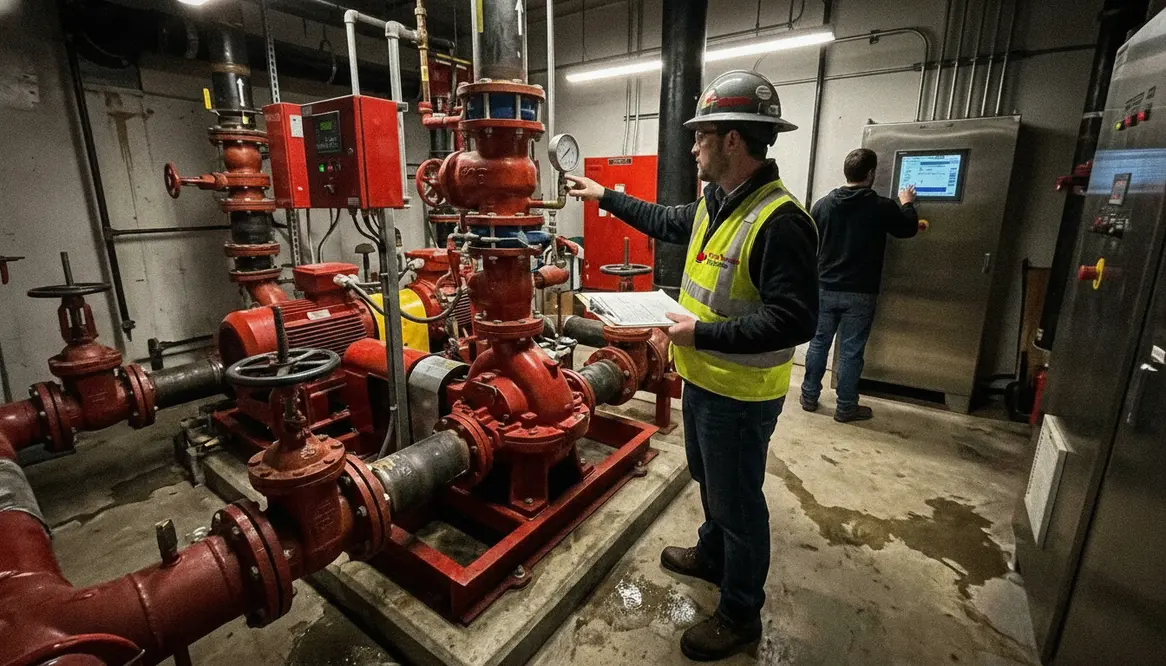
Global Fire Pump Testing Requirements by Region
Global Fire Pump Testing Requirements Compared
When I look at Global testing for fire pumps, I see one big truth: every country wants the same thing, but they do not always speak the same language to get it done. Some places lean hard on weekly checks, others want monthly records, and a few treat performance tests like a courtroom drama with far too many witnesses. Still, the goal stays simple: make sure a fire pump works when a commercial tower, industrial plant, or major property building needs it most. And yes, that moment never waits for a convenient time.
In this article, I compare the main testing expectations across regions, so I can help you see where they align, where they differ, and how a facility team can stay ready without turning the maintenance room into a panic zone.
What Global testing usually means for fire pumps
At the core, Global testing checks whether a fire pump can deliver the right pressure and flow during an emergency. I usually break it into three parts: routine inspection, no flow or churn testing, and full performance testing. The first keeps an eye on basic readiness. The second confirms the pump runs under normal standby conditions. The third measures real output against design needs. In plain terms, it is the difference between hearing a car start and actually taking it on the highway.
Most standards ask for clean records, trained staff, and proof that the pump system stays reliable over time. However, the exact schedule and test method change by region. That is where things get interesting, and a little messy, like a group project where everyone swears they read the instructions.
How fire pump rules differ by region
Here is a simple comparison of how major regions approach testing for commercial and industrial facilities.
Regional snapshot
North America
In the United States and Canada, I see strong use of NFPA based testing. Weekly or monthly inspections often support annual flow testing. Many sites also follow strict recordkeeping rules, especially large campuses, warehouses, and high rise properties.
Europe
European practice often follows EN based standards and local fire codes. Testing may focus more on planned inspection intervals, pump room condition, and system readiness checks tied to building risk.
Middle East
Many projects blend NFPA, local civil defense rules, and owner specs. As a result, large commercial towers and industrial sites may face tighter documentation and frequent witness testing.
Asia Pacific
Requirements vary widely. Some countries use NFPA style testing, while others apply national codes with strong emphasis on certification, commissioning, and periodic re testing.
Dual column overview
Test focus
Most regions require operational checks, pressure checks, and annual performance proof.
Schedule style
Some regions use fixed intervals, while others tie testing to risk level, local law, and insurer demands.
Documentation
Nearly all regions demand logs, results, corrections, and proof that issues got fixed.
Where Global testing gets strict for major properties
I notice that large commercial buildings and industrial facilities face the toughest oversight. That makes sense. A fire pump at a hospital tower, logistics hub, data center, refinery, or high rise office block protects more than assets. It protects people, uptime, and business continuity. Nobody wants a pump surprise during an emergency. That would be the worst kind of plot twist.
In these sites, inspectors often look beyond the pump itself. They check power supply, controller function, suction and discharge pressure, valves, water source, and alarm signals. They also want proof that the pump starts when required and holds stable performance under load. If the facility runs critical operations, the testing plan often grows more detailed. In other words, the bigger the property, the fewer shortcuts anyone can get away with.
How I compare testing schedules and records
When I compare fire pump testing requirements, I focus on three things: frequency, method, and evidence. Frequency tells me how often the team must test. Method tells me how they must test. Evidence tells me what records they need to keep.
Frequency and method
Some codes ask for weekly no flow runs to confirm the pump starts cleanly. Others prefer monthly checks with visual inspection and controller review. Full annual testing then verifies the pump can still meet design flow and pressure. Meanwhile, some regions add special checks after repairs, power loss, flooding, or any major system change.
Evidence and recordkeeping
Records matter just as much as the test itself. I always tell teams that if the log is weak, the compliance story gets weak too. Regulators, insurers, and owners all want a clear trail. So, I recommend keeping date stamps, test results, corrective actions, and technician notes in one place. That way, when someone asks what happened six months ago, you do not need a detective series and a flashlight.
Why local rules and owner specs can change everything
Even when two countries use the same base standard, local rules can still change the outcome. City fire marshals, civil defense offices, and insurance groups often add their own layers. Then owner specs enter the scene and make things even more exact. For example, a data center owner may demand tighter intervals than the code requires. Likewise, a port facility may want more frequent witness tests because shutdown risk costs too much money.
So, I always treat the local authority, the site risk, and the insurance view as equal parts of the plan. That approach saves time later, and it prevents the classic excuse of “but the other site did it this way.” That line rarely ages well.
What I recommend for a better testing program
If I were building a fire pump program for a commercial or industrial property, I would keep it simple but firm:
- Review the governing code and match it with local law.
- Set a clear testing calendar for weekly, monthly, and annual checks.
- Train staff properly so the test does not depend on one person’s memory.
- Track results in one system with photos, notes, and repairs.
- Re test after major changes to keep the system honest.
That process keeps the pump ready and the compliance team calmer. And calm, in fire protection, is a luxury worth keeping.
FAQ
Conclusion and CTA
If you manage a commercial tower, industrial site, or major property, I recommend taking fire pump testing seriously and planning it with local code in mind. The right testing program protects people, limits risk, and keeps your building ready for the real thing. If you want a stronger compliance path, now is the time to review your schedule, tighten your records, and make sure your system can perform when it matters most.