India High Rise Fire Pump Requirements Guide
India Fire Pump Requirements for High Rise Buildings
In any India high rise, fire safety is not a box to tick. It is the quiet system that stands guard when everything else turns chaotic. I say that because when a tower goes up, so does the risk. Water pressure drops, escape time shrinks, and panic likes to show up uninvited. That is where fire pumps step in, doing the heavy lifting so sprinklers, hydrants, and wet risers can keep working when the building needs them most. And yes, it is serious work, but I will keep this readable, because fire safety should not feel like reading a tax manual on a Monday morning.
In this guide, I break down the fire pump setup that matters for commercial towers, industrial facilities, and major properties across India. I will cover what the system needs, how the parts work together, and what building owners should check before they trust the equipment to do its job.
What fire pumps do in a high rise
Fire pumps push water where gravity and long pipe runs cannot. In tall buildings, the upper floors often need higher pressure than a normal water supply can deliver. So, the pump boosts flow to the fire network. As a result, sprinklers can activate properly, hydrants can deliver enough water, and firefighters can use the system without fighting the building itself. That is the whole point: let the fire fight the fire, not the plumbing.
For an India high rise, the pump room usually supports the full fire system, including internal hydrants, hose reels, sprinkler zones, and terrace tanks. Therefore, the pump is not a side note. It is the engine room of fire safety. If it fails, the whole chain weakens fast.
How I choose the right pump setup for India high rise projects
I start with building height, total floor load, water demand, and fire zone design. Then I look at the main pump, standby pump, and jockey pump. Each has a role, and each matters. The main pump handles the fire demand. The standby pump takes over if the main unit fails. Meanwhile, the jockey pump keeps pressure steady and stops small leaks from triggering the big pump like an overcaffeinated security guard.
Core fire pump roles in an India high rise
Main pump
Meets full fire demand during an emergency.
Standby pump
Activates if the main pump stops working.
Jockey pump
Maintains system pressure and reduces unnecessary starts.
Diesel backup
Keeps the system alive during power loss.
For tall commercial and industrial properties, I also check whether the pump set can deliver the required pressure at the highest outlet. That matters because water at the ground floor is easy. Water at the top floor is where the real test begins. After all, a system that works only downstairs is like a hero who quits before the final act.
What standards and site checks I follow
In India, I always review the fire safety design against local fire authority rules, NBC guidance, and project specific approvals. However, code compliance is only the starting point. Site conditions can change everything. Pipe length, friction loss, tank level, suction arrangement, and pump room layout all affect performance. So, I never trust paper alone.
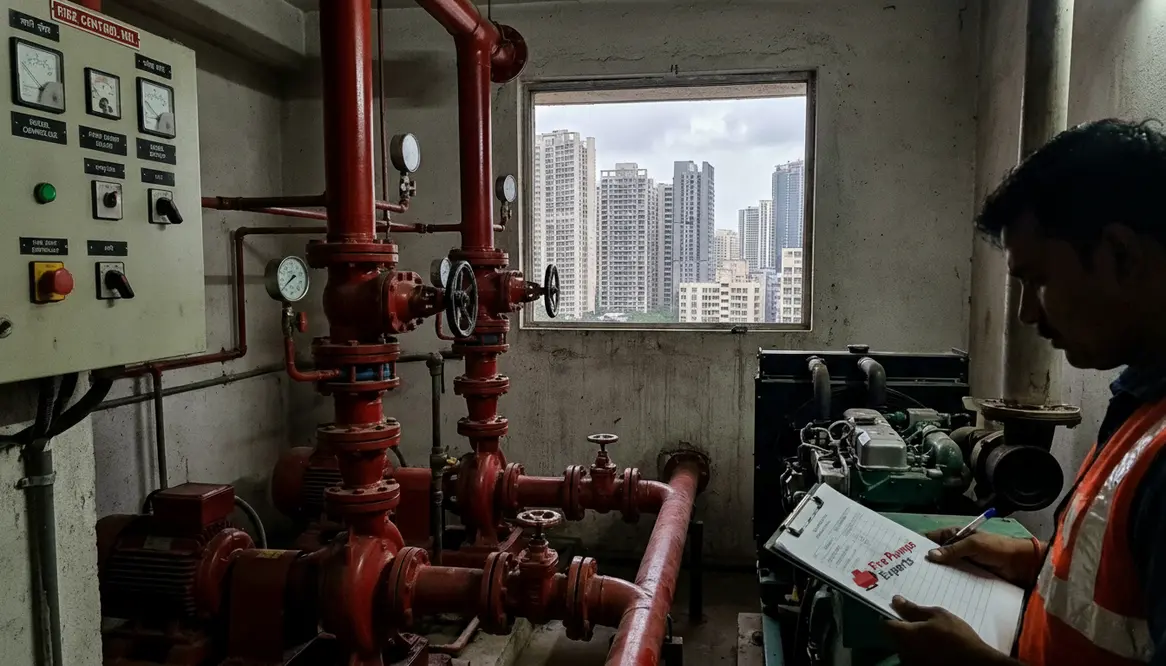
I also check the pump room itself. It should have proper access, drainage, ventilation, power supply, and enough space for maintenance. If the room feels cramped, hot, or badly placed, trouble usually follows. And trouble, as we know, loves bad planning.
For a commercial tower or industrial block, I make sure the fire pump room supports quick testing and safe repair. Moreover, I confirm that alarms, controllers, valves, and gauges are easy to reach. A good system should not force a technician to play hide and seek with a pressure switch.
How I inspect the pump room and system performance
Once the system is installed, I test it under real conditions. I check starting time, discharge pressure, flow rate, and automatic changeover. I also confirm that the diesel pump starts without delay during power failure. That step matters because power cuts do not send a polite calendar invite before arriving.
Signs of a healthy fire pump system
- Stable pressure in idle mode
- Fast pump start during demand
- No leaks around valves, joints, or headers
- Clear labels on all controls
- Proper fuel and battery backup for emergency use
Regular testing also helps catch small issues early. For example, weak pressure, strange noise, or delayed startup may point to suction problems, worn parts, or controller faults. Therefore, I treat every odd sound as a clue. The pump room can be dramatic, but it usually tells the truth if you listen closely.
Why maintenance matters for long term safety
A fire pump system is not a one time install. It needs routine inspection, weekly checks, and planned servicing. Over time, valves seize, seals wear, and batteries lose strength. Meanwhile, dust and heat do their usual villain work. Because of that, I always recommend a service schedule that covers pumps, controllers, tanks, nozzles, and diesel engine health.
For commercial properties and industrial sites, maintenance also protects business continuity. A failed pump can mean shutdown risk, safety risk, and costly damage. So, I see maintenance as insurance with a pulse. It keeps the system ready, and it helps owners avoid the kind of surprise nobody wants, especially not after the building is already full of people.
For teams looking for expert support, I also suggest reviewing fire pump solutions for commercial and industrial properties to align the right system with the right site needs.
Key India high rise considerations
Any India high rise that relies on stacked occupancy, heavy electrical loads, and complex HVAC systems needs a disciplined pump strategy. That means confirming that each fire zone has reliable coverage, that vertical mains are sized and supported correctly, and that the pump room can handle both routine tests and full load emergencies without becoming a bottleneck.
From office towers and tech parks to mixed-use developments and industrial campuses, the same principle applies: if the fire pump cannot consistently deliver pressure and flow to the top floor, the India high rise design is incomplete, no matter how impressive the façade or amenities look on opening day.
FAQ
Final thoughts
If you manage a commercial tower, industrial site, or major property, I recommend treating fire pumps as core infrastructure, not spare equipment. First, verify the design. Then, test the installation. After that, keep up with maintenance so the system stays ready when it matters most. If you want a safer, stronger fire protection plan for your building, take the next step now and review your pump setup with a specialist who understands high demand properties inside and out.