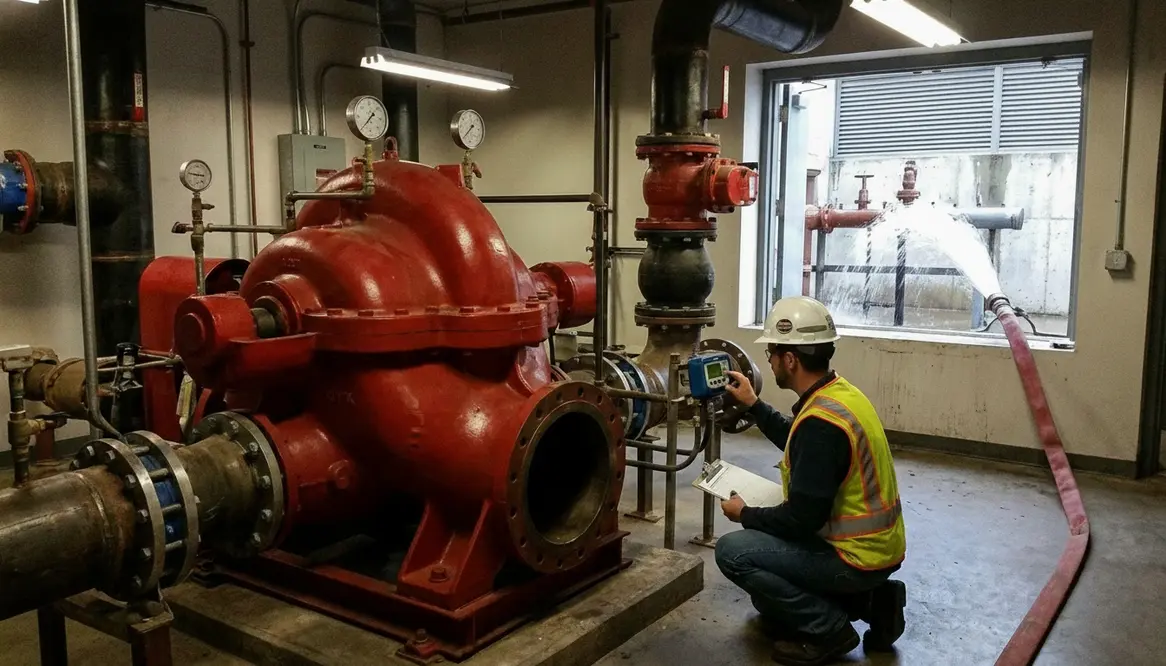
ISO Fire Pump Testing for Global Facilities
ISO Fire Pump Testing Concepts for Global Facilities
When I look at fire protection in a global facility, I see one thing that never gets a second chance: the fire pump. That machine sits there like the quiet hero in an action movie, hoping it never gets famous. Yet when it matters, it has to perform on cue. That is where ISO testing comes in. It gives me a clear, repeatable way to check whether a fire pump can deliver pressure and flow when a commercial tower, industrial plant, or major property building needs it most.
In global operations, I do not rely on guesswork. I use a test plan that helps me compare results across sites, countries, and equipment types. Then I can spot weak points before they turn into real problems. That matters because a fire pump does not care about time zones, busy schedules, or anybody saying, “It worked last year.”
What I Check Before I Start a Fire Pump Test
I always begin with the basics. First, I confirm the pump type, system layout, and the facility use. A plant with heavy process loads has different needs than a high rise office tower. Next, I review the water source, suction conditions, controller status, and any signs of wear. Since I work with commercial and industrial sites, I keep my focus on equipment that supports large scale property risk, not small side buildings or low demand systems.
Then I verify the test method. A good test needs stable conditions, the right gauges, and a clear record of expected values. If the setup looks messy, the results will likely be messy too. And honestly, a bad test sheet helps no one except confusion.
Here is the simple flow I follow:
Dual column overview
Step
Visual check
Supply review
Performance check
Record review
What I Look For
Leaks, vibration, heat, corrosion, and controller alarms
Water level, suction pressure, and valve position
Pressure, flow, churn, and response time
Past tests, service notes, and trend changes
How I Use ISO Testing to Measure Real Performance
Once the system is ready, I focus on what the pump actually does under load. That is the heart of ISO testing. I compare the pump’s output to the expected curve, then I watch how it behaves at churn, rated flow, and peak demand. In plain words, I want proof that the pump can wake up, work hard, and not throw a tantrum.
I also pay close attention to pressure drop and flow stability. A good fire pump should respond fast and hold steady. If pressure falls too quickly, I look for suction issues, blockages, air leaks, or worn parts. If the pump runs loud or shakes more than usual, I treat that as a clue, not background music.
For global facilities, consistency matters just as much as raw output. I use the same test logic across sites so I can compare one plant in Singapore with another in Texas or Dubai without rewriting the whole playbook. That consistency helps me support compliance, maintenance planning, and risk control.
Why Global Facilities Need Local Test Discipline
Every site faces different weather, utility quality, water supply limits, and rule sets. So while the test concept stays the same, the local conditions shape the result. For example, heat can affect equipment wear, while poor water quality can leave deposits inside the system. Because of that, I never copy and paste one site’s numbers into another site’s plan and call it a day. That is how problems hide in plain sight.
I also work with site teams to make sure they understand the purpose of the test. When operators know what normal sounds like, they catch trouble early. A small noise today can become a major failure later. And yes, the fire pump usually gives hints before it fully quits. It is dramatic like that.
For large properties, I treat ISO testing as part of the broader protection plan. It supports insurance reviews, internal audits, and long term asset care. It also shows that the facility values readiness, not just paperwork. Paperwork is useful, sure, but I trust water under pressure a lot more.
What I Look for in Test Results and Trends
Test data means little unless I read it over time. So I compare current results with past records. If performance slips a little each quarter, I do not shrug it off. Instead, I look for patterns. Maybe the suction line is getting weaker. Maybe the driver needs service. Maybe the pump is aging out of its comfort zone.
I also watch for changes in run time, noise, vibration, and controller response. These signs may seem minor at first, yet they often point to bigger issues. That is why I prefer trend review over one time checks. One good test can make everyone feel warm and safe. However, three solid tests in a row tell a much better story.
When the results land outside the expected range, I move quickly. I recommend repairs, retesting, and deeper inspection where needed. For global portfolios, that speed matters because downtime in one major facility can ripple into operations, safety, and cost. Nobody wants a fire pump to become the plot twist in a board meeting.
FAQ: ISO Fire Pump Testing for Commercial Sites
Conclusion
If I want a fire pump program that holds up across global facilities, I start with disciplined testing and honest records. That is the difference between hoping for safety and proving it. So I encourage every commercial and industrial property team to review their current process, tighten the test plan, and act on the results. If you want a stronger, cleaner, more reliable approach, now is the time to put it in motion.